The Recombinant Human CXCL12/SDF-1 Protein is a biologically active recombinant protein that plays a significant role in various cellular processes and signaling pathways in human biology. This protein is widely employed in immunological research, cell biology studies, protein-protein interaction analyses, and therapeutic development, providing researchers with a reliable tool for investigating CXCL12/SDF-1 function and its implications in health and disease.
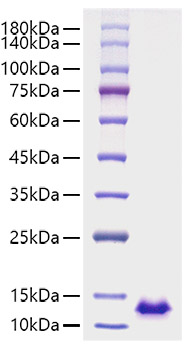
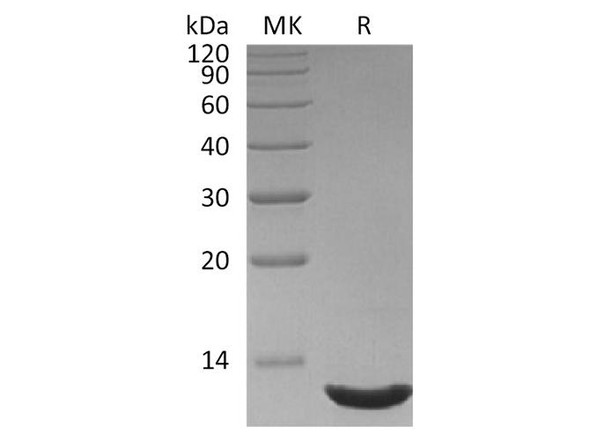
This product (SKU: RPCB1496) is produced using Pichia and features a NO-tag tag for convenient detection and purification. The protein exhibits a calculated molecular weight of 7.96 kDa with an observed molecular weight of 12 kDa under denaturing conditions, achieving ≥ 95 % as determined by SDS-PAGE.. Functional bioactivity has been validated through rigorous quality control assays, confirming its suitability for demanding research applications.
High quality, high purity and low endotoxin recombinant Recombinant Human CXCL12/SDF-1 Protein (RPCB1496), tested reactivity in Pichia and has been validated in SDS-PAGE.100% guaranteed.
Endotoxin:
< 0.1 EU/μg of the protein by LAL method.
Purity:
≥ 95 % as determined by SDS-PAGE.
Formulation:
Lyophilized from a 0.22 μm filtered solution of PBS, pH 7.4.
Bio-Activity:
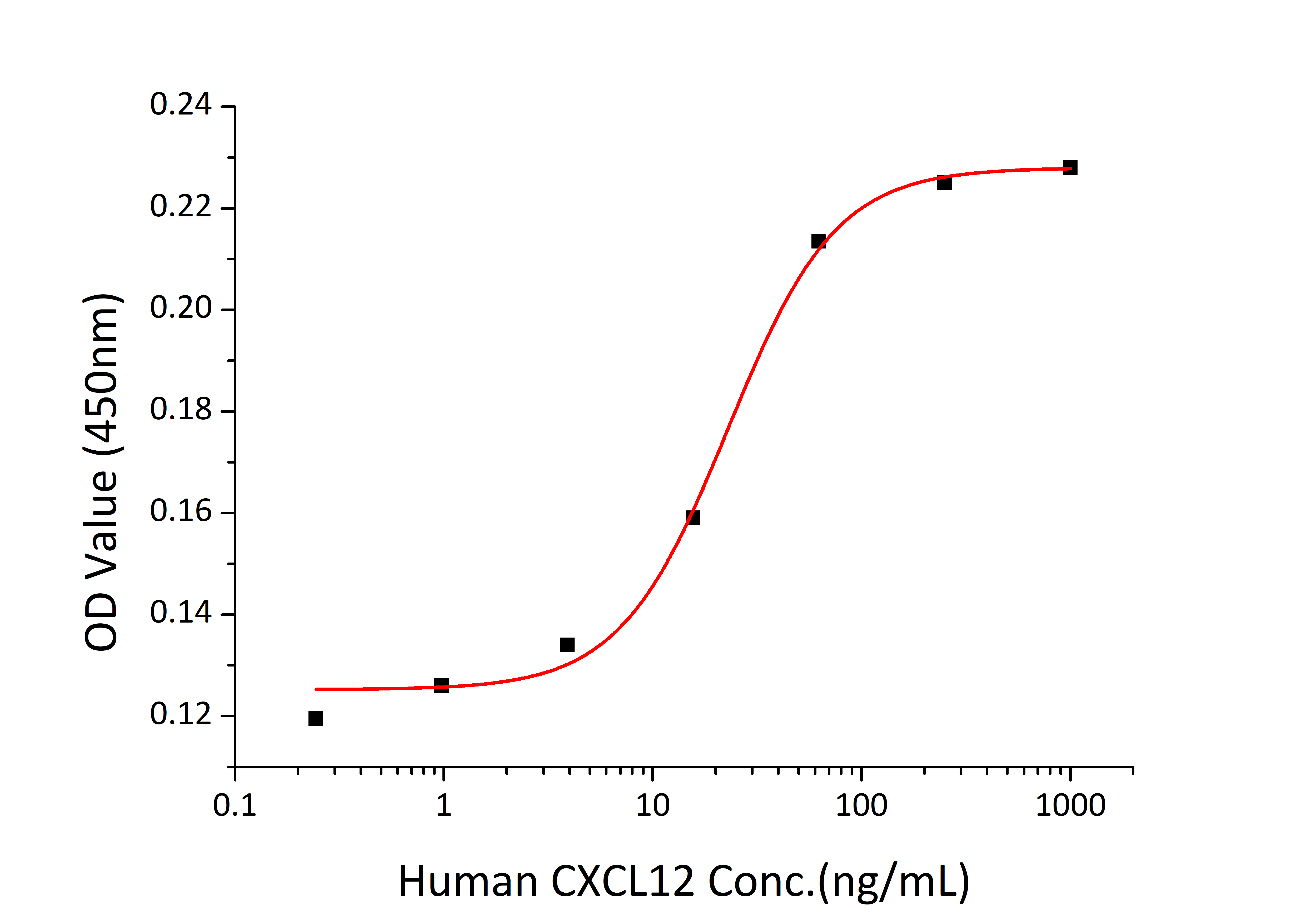
Measured by its ability to chemoattract MOLT4 cells. The ED 50 for this effect is 11.47-45.86 ng/mL, corresponding to a specific activity of 2.18×10 4 ~8.72×10 4 units/mg.
Reconstitution:
Centrifuge the vial before opening. Reconstitute to a concentration of 0.1-0.5 mg/mL in sterile distilled water. Avoid vortex or vigorously pipetting the protein. For long term storage, it is recommended to add a carrier protein or stablizer (e.g. 0.1% BSA, 5% HSA, 10% FBS or 5% Trehalose), and aliquot the reconstituted protein solution to minimize free-thaw cycles.
Storage:
Store at -20℃.Store the lyophilized protein at -20℃ to -80 ℃ up to 1 year from the date of receipt. After reconstitution, the protein solution is stable at -20℃ for 3 months, at 2-8℃ for up to 1 week.
Acts as a positive regulator of monocyte migration and a negative regulator of monocyte adhesion via the LYN kinase. Stimulates migration of monocytes and T-lymphocytes through its receptors, CXCR4 and ACKR3, and decreases monocyte adherence to surfaces coated with ICAM-1, a ligand for beta-2 integrins. SDF1A/CXCR4 signaling axis inhibits beta-2 integrin LFA-1 mediated adhesion of monocytes to ICAM-1 through LYN kinase. Inhibits CXCR4-mediated infection by T-cell line-adapted HIV-1. Plays a protective role after myocardial infarction. Induces down-regulation and internalization of ACKR3 expressed in various cells. Has several critical functions during embryonic development; required for B-cell lymphopoiesis, myelopoiesis in bone marrow and heart ventricular septum formation. Stimulates the proliferation of bone marrow-derived B-cell progenitors in the presence of IL7 as well as growth of stromal cell-dependent pre-B-cells (By similarity).
Recombinant Human CXCL12/SDF-1 Protein was determined by SDS-PAGE under reducing conditions with Coomassie Blue.
Recombinant Human CXCL12/SDF-1 Protein chemoattract MOLT4 cells. The ED50 for this effect is 11.47-45.86 ng/mL, corresponding to a specific activity of 2.18×10⁴ ~8.72×10⁴ units/mg.