The Recombinant Human Mature TGF-beta 2 Protein is a biologically active recombinant protein that plays a significant role in various cellular processes and signaling pathways in human biology. This protein is widely employed in immunological research, cell biology studies, protein-protein interaction analyses, and therapeutic development, providing researchers with a reliable tool for investigating Mature TGF-beta 2 function and its implications in health and disease.
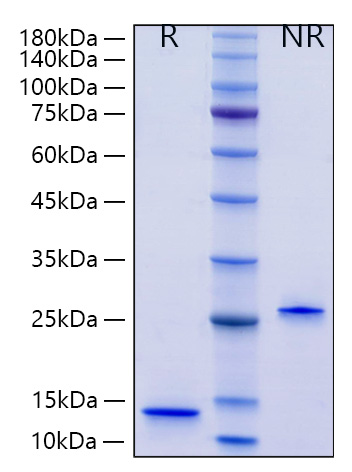
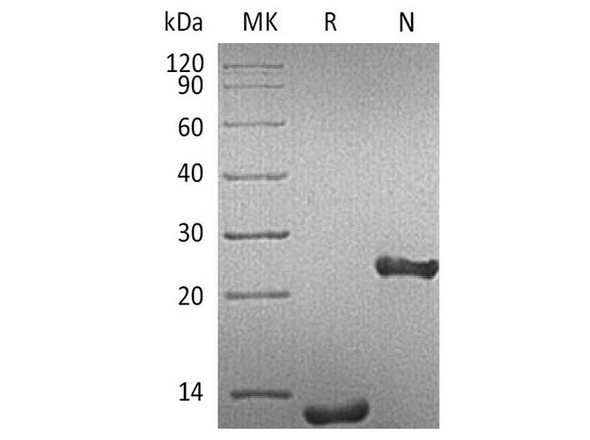
This product (SKU: RPCB0620) is produced using HEK293 cells and features a No tag tag for convenient detection and purification. The protein exhibits a calculated molecular weight of 12.72 kDa with an observed molecular weight of 13-15 kDa under denaturing conditions, achieving ≥ 95 % as determined by SDS-PAGE.. Functional bioactivity has been validated through rigorous quality control assays, confirming its suitability for demanding research applications.
High quality, high purity and low endotoxin recombinant Recombinant Human Mature TGF-beta 2 Protein (RPCB0620), tested reactivity in HEK293 cells and has been validated in SDS-PAGE.100% guaranteed.
Endotoxin:
< 1 EU/μg of the protein by LAL method.
Purity:
≥ 95 % as determined by SDS-PAGE.
Formulation:
Lyophilized from a 0.2 μm filtered solution of 4 mM HCl.Contact us for customized product form or formulation.
Bio-Activity:
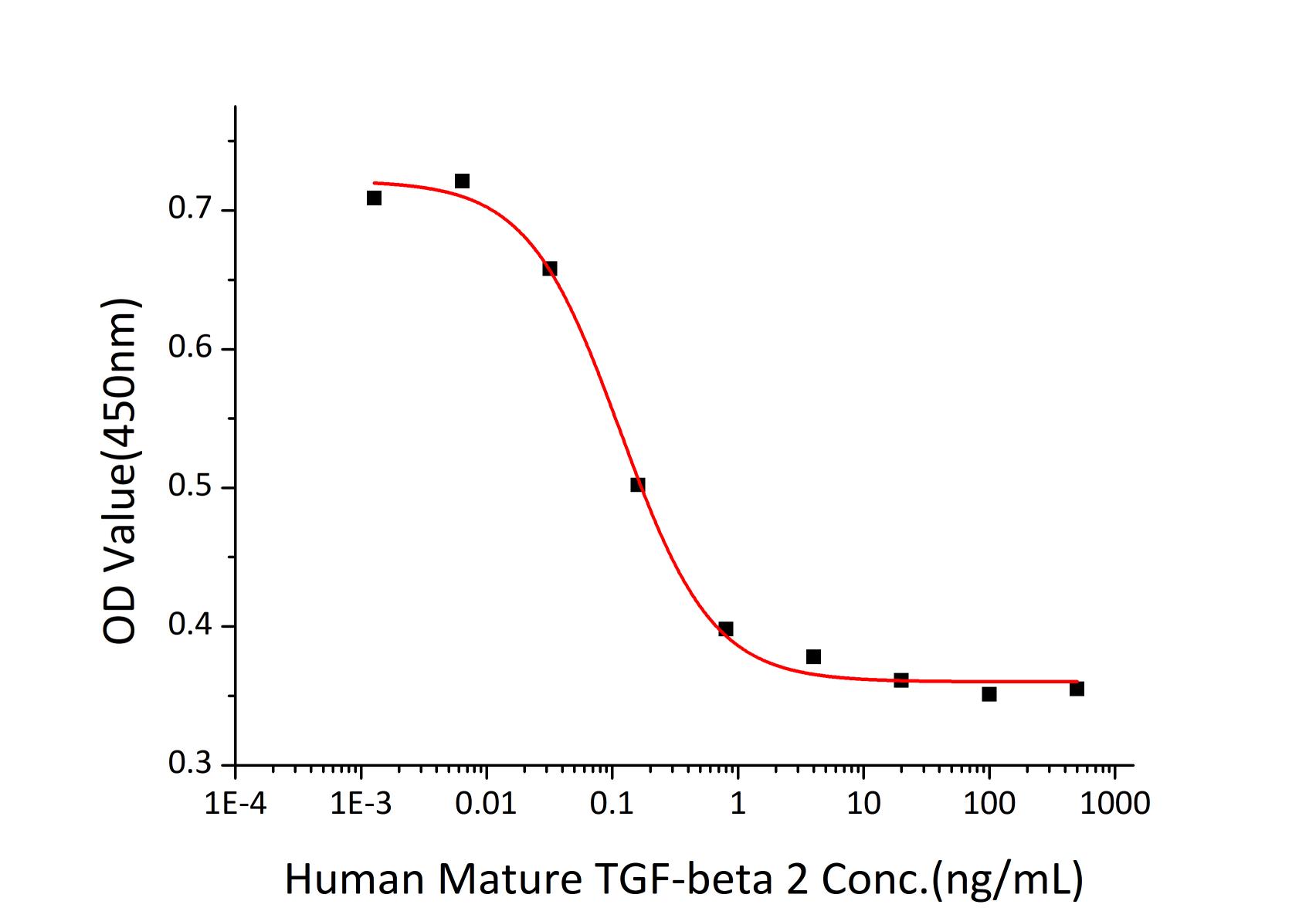
Recombinant Human Mature TGF-beta 2 Protein inhibit the IL-4-dependent proliferation of HT-2 mouse T cells. The ED50 for this effect is 0.058-0.232 ng/mL, corresponding to a specific activity of 4.3×10⁶~1.72×10⁷ units/mg.
Reconstitution:
Centrifuge the tube before opening. Reconstitute to a concentration of 0.1-0.5 mg/mL in sterile distilled water. Avoid vortex or vigorously pipetting the protein. For long term storage, it is recommended to add a carrier protein or stablizer (e.g. 0.1% BSA, 5% HSA, 10% FBS or 5% Trehalose), and aliquot the reconstituted protein solution to minimize free-thaw cycles.
Storage:
Store at -20℃.Store the lyophilized protein at -20℃ to -80 ℃ up to 1 year from the date of receipt. After reconstitution, the protein solution is stable at -20℃ for 3 months, at 2-8℃ for up to 1 week.
This protein belongs a member of the transforming growth factor beta (TGFB) family of cytokines, which are multifunctional peptides that regulate proliferation, differentiation, adhesion, migration, and other functions in many cell types by transducing their signal through combinations of transmembrane type I and type II receptors (TGFBR1 and TGFBR2) and their downstream effectors, the SMAD proteins. Disruption of the TGFB/SMAD pathway has been implicated in a variety of human cancers. The encoded protein is secreted and has suppressive effects of interleukin-2 dependent T-cell growth. Translocation t(1;7)(q41;p21) between this gene and HDAC9 is associated with Peters' anomaly, a congenital defect of the anterior chamber of the eye. The knockout mice lacking this gene show perinatal mortality and a wide range of developmental, including cardiac, defects. Alternatively spliced transcript variants encoding different isoforms have been identified.
Recombinant Human Mature TGF-beta 2 Protein was determined by SDS-PAGE under reducing (R) and non-reducing (NR) conditions.
Recombinant Human Mature TGF-beta 2 Protein inhibit the IL-4-dependent proliferation of HT-2 mouse T cells. The ED50 for this effect is 0.058-0.232 ng/mL, corresponding to a specific activity of 4.3×10⁶~1.72×10⁷ units/mg.