Description
Recombinant Mouse CSF-2/GM-CSF Protein
The Recombinant Mouse CSF-2/GM-CSF Protein is a high-quality recombinant protein designed for murine biological research applications. This protein serves as an essential reagent in mouse model studies, comparative immunology research, and preclinical therapeutic evaluations, enabling scientists to investigate CSF-2/GM-CSF biology and its relevance to human disease mechanisms through translational research approaches.
This product (SKU: RPCB0808) is produced using HEK293 cells and features a N-His tag for convenient detection and purification. The protein exhibits a calculated molecular weight of 14.95 kDa with an observed molecular weight of 20-35 kDa under denaturing conditions, achieving ≥ 95 % as determined by SDS-PAGE;≥ 90 % as determined by HPLC.. Functional bioactivity has been validated through rigorous quality control assays, confirming its suitability for demanding research applications.
Key Features
| High Purity by Affinity Chromatography | |
| Mammalian & Bacterial Expression Systems | |
| High lot-to-lot consistency via strict QC |
| Product Name: | Recombinant Mouse CSF-2/GM-CSF Protein |
| SKU: | RPCB0808 |
| Size: | 10 μg , 20 μg , 50 μg , 100 μg |
| Reactivity: | Mouse |
| Synonyms: | GMCSF, CSF2 |
| Tag: | N-His |
| Expression Host: | HEK293 cells |
| Calculated MW: | 14.95 kDa |
| Observed MW: | 20-35 kDa |
| Gene ID: | 12981 |
| Protein Description: | High quality, high purity and low endotoxin recombinant Recombinant Mouse CSF-2/GM-CSF Protein (RPCB0808), tested reactivity in HEK293 cells and has been validated in SDS-PAGE.100% guaranteed. |
| Endotoxin: | < 0.1 EU/μg of the protein by LAL method. |
| Purity: | ≥ 95 % as determined by SDS-PAGE;≥ 90 % as determined by HPLC. |
| Formulation: | Lyophilized from a 0.22 μm filtered solution of PBS, pH 7.4.Contact us for customized product form or formulation. |
| Bio-Activity: | Measured in a cell proliferation assay using FDC-P1 cells. The ED 50 for this effect is typically 0.04-0.17 ng/mL, corresponding to a specific activity of 5.88×10 6 ~2.5×10 7 units/mg. |
| Reconstitution: | Centrifuge the vial before opening. Reconstitute to a concentration of 0.1-0.5 mg/mL in sterile distilled water. Avoid vortex or vigorously pipetting the protein. For long term storage, it is recommended to add a carrier protein or stablizer (e.g. 0.1% BSA, 5% HSA, 10% FBS or 5% Trehalose), and aliquot the reconstituted protein solution to minimize free-thaw cycles. |
| Storage: | Store at -20℃.Store the lyophilized protein at -20℃ to -80 ℃ up to 1 year from the date of receipt. After reconstitution, the protein solution is stable at -20℃ for 3 months, at 2-8℃ for up to 1 week. |
Granulocyte-macrophage colony-stimulating factor (GM-CSF) is also known as Colony stimulating factor 2 (granulocyte-macrophage), is a cytokine initially characterized by its ability to induce colonies of granulocytes and macrophages from myeloid progenitor cells, and is secreted by macrophages, T cells, mast cells, endothelial cells and fibroblasts. GM-CSF is a cytokine that functions as a white blood cell growth factor. GM-CSF stimulates stem cells to produce granulocytes (neutrophils, eosinophils, and basophils) and monocytes. Monocytes exitthe circulation and migrate into tissue, whereupon they mature into macrophages and dendritic cells. Thus, it is part of the immune/inflammatory cascade, by which activation of a small number of macrophages can rapidly lead to an increase in their numbers, a process crucial for fighting infection. The active form of the protein is found extracellularly as a homodimer. Human GM-CSF glycosylated in its mature form. As a part of the immune/inflammatory cascade, GM-CSF promotes Th1 biased immune response, angiogenesis, allergic inflammation, and the development of autoimmunity, and thus worthy of consideration for therapeutic target. GM-CSF has also recently been evaluated in clinical trials for its potential as a vaccine adjuvant in HIV-infected patients. The preliminary results have been promising. GM-CSF is also used as a medication to stimulate the production of white blood cells following chemotherapy.
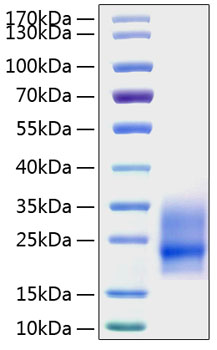 | Recombinant Mouse CSF-2/GM-CSF Protein was determined by SDS-PAGE under reducing conditions with Coomassie Blue. |
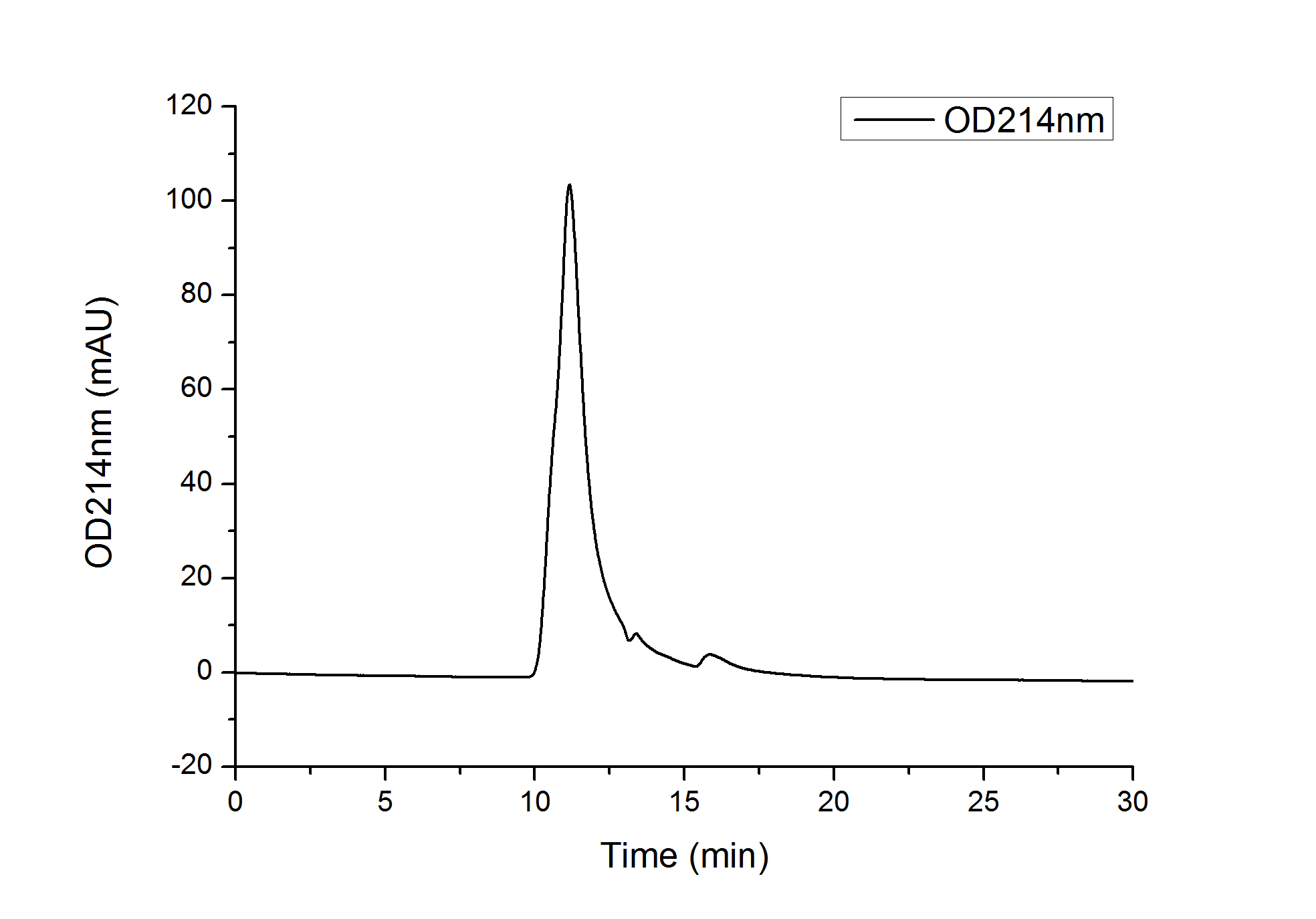 | The purity of Mouse GM-CSF/CSF2 Protein (RPCB0808) was greater than 90% as determined by SEC-HPLC. |