

Description
Recombinant Mouse IL-11 Protein
The Recombinant Mouse IL-11 Protein is a high-quality recombinant protein designed for murine biological research applications. This protein serves as an essential reagent in mouse model studies, comparative immunology research, and preclinical therapeutic evaluations, enabling scientists to investigate IL-11 biology and its relevance to human disease mechanisms through translational research approaches.
This product (SKU: RPCB1854) is produced using E. coli and features a No tag tag for convenient detection and purification. The protein exhibits a calculated molecular weight of 19.15 kDa with an observed molecular weight of 20-25 kDa under denaturing conditions, achieving ≥ 95% as determined by SDS-PAGE.. Functional bioactivity has been validated through rigorous quality control assays, confirming its suitability for demanding research applications.
Key Features
| High Purity by Affinity Chromatography | |
| Mammalian & Bacterial Expression Systems | |
| High lot-to-lot consistency via strict QC |
| Product Name: | Recombinant Mouse IL-11 Protein |
| SKU: | RPCB1854 |
| Size: | 10 μg , 20 μg |
| Reactivity: | Mouse |
| Synonyms: | IL11, IL-11, IL-11Oprelvekin, interleukin 11, interleukin-11, Oprelvekin |
| Tag: | No tag |
| Expression Host: | E. coli |
| Calculated MW: | 19.15 kDa |
| Observed MW: | 20-25 kDa |
| Gene ID: | 16156 |
| Protein Description: | High quality, high purity and low endotoxin recombinant Recombinant Mouse IL-11 Protein (RPCB1854), tested reactivity in E. coli and has been validated in SDS-PAGE.100% guaranteed. |
| Endotoxin: | < 1 EU/μg of the protein by LAL method. |
| Purity: | ≥ 95% as determined by SDS-PAGE. |
| Formulation: | Lyophilized from a 0.22 μm filtered solution of PBS, pH 7.4. |
| Bio-Activity: | Measured in a cell proliferation assay using TF-1 Human erythroleukemic cells. The ED 50 for this effect is 2.64-10.56 ng/mL, corresponding to a specific activity of 9.47×10 4 ~3.79×10 5 units/mg. |
| Reconstitution: | Centrifuge the vial before opening. Reconstitute to a concentration of 0.1-0.5 mg/mL in sterile distilled water. Avoid vortex or vigorously pipetting the protein. For long term storage, it is recommended to add a carrier protein or stablizer (e.g. 0.1% BSA, 5% HSA, 10% FBS or 5% Trehalose), and aliquot the reconstituted protein solution to minimize free-thaw cycles. |
| Storage: | Store at -20℃.Store the lyophilized protein at -20℃ to -80 ℃ up to 1 year from the date of receipt. After reconstitution, the protein solution is stable at -20℃ for 3 months, at 2-8℃ for up to 1 week. |
IL-11 (Interleukin 11) is a pleiotropic cytokine in the IL-6 family, which also includes LIF, CNTF, Oncostatin M, Cardiotrophin-1, IL-27 and IL-31 (1-4). In humans, IL-11 was also independently discovered as an adipogenesis inhibitory factor (AGIF) (3). The mouse IL-11 cDNA encodes a 199 amino acid (aa) precursor, which generates a 178 aa, 19 kDa mature unglycosylated protein. Mature mouse IL-11 shares 88%, 97%, and 89% aa sequence identity with human, rat and canine IL-11, respectively. IL-11 is secreted by osteoblasts, synoviocytes, fibroblasts, chondrocytes, intestinal myofibroblasts, and trophoblasts, among other cell types (1). It is found in the plasma mainly during inflammation, such as that associated with viral infection, cancer, or inflammatory arthritis, and is considered to be primarily anti?inflammatory (1). It stimulates hematopoiesis and thrombopoiesis, regulates macrophage differentiation, and confers mucosal protection in the intestine (1). It has also been found to enhance T cell polarization toward Th2, promote B cell IgG production, increase osteoclast bone absorption, protect endothelial cells from oxidative stress, and regulate epithelial proliferation and apoptosis (1). IL-11 synergizes with several other cytokines to produce these effects, and its effects overlap with those of IL-6 (1). IL-11 receptor activation requires formation of a complex of two IL-11 molecules with two molecules of the ligand-binding IL-11 R alpha subunit and two molecules of the ubiquitously expressed cell signaling beta subunit, gp130 (5). A soluble form of IL-11 R alpha can bind IL-11 and either form a signaling complex with gp130 on the cell surface, or inhibit cell surface IL-11 R alpha /gp130 signaling (6-8).
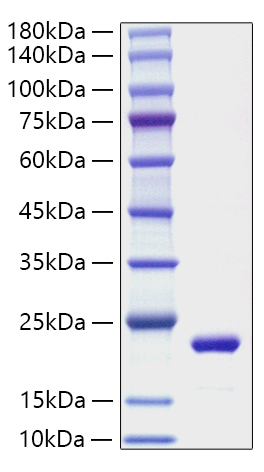 | Recombinant Mouse IL-11 Protein was determined by SDS-PAGE under reducing conditions with Coomassie Blue. |
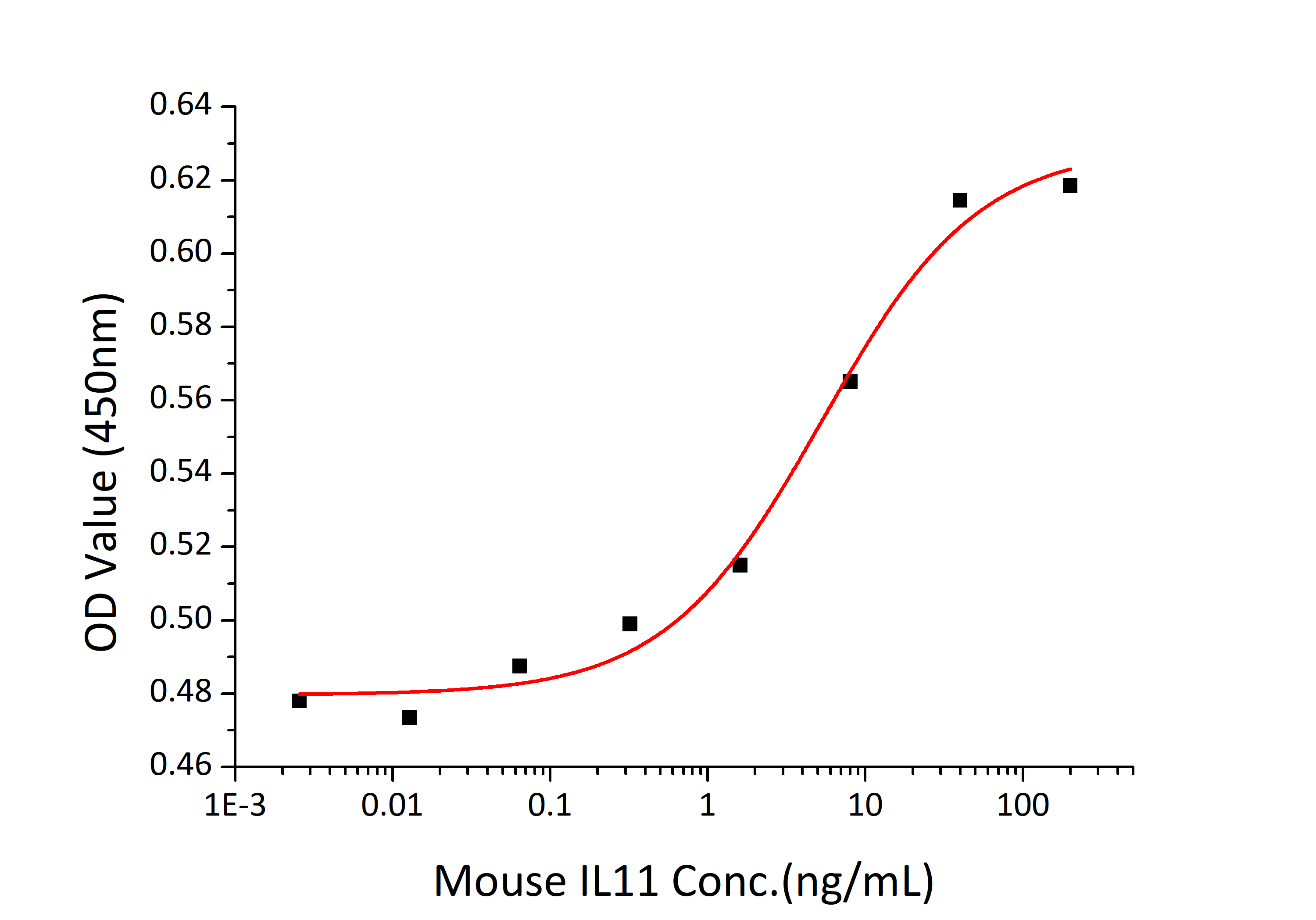 | Recombinant Mouse IL-11 promotes the proliferation assay using TF-1 Human erythroleukemic cells. The ED50 for this effect is 2.64-10.56 ng/mL, corresponding to a specific activity of 9.47×10⁴~3.79×10⁵ units/mg. |


