The Recombinant Mouse Osteopontin/SPP-1 Protein is a high-quality recombinant protein designed for murine biological research applications. This protein serves as an essential reagent in mouse model studies, comparative immunology research, and preclinical therapeutic evaluations, enabling scientists to investigate Osteopontin/SPP-1 biology and its relevance to human disease mechanisms through translational research approaches.
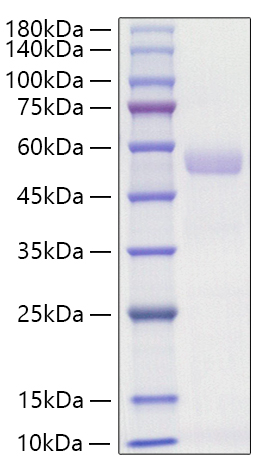
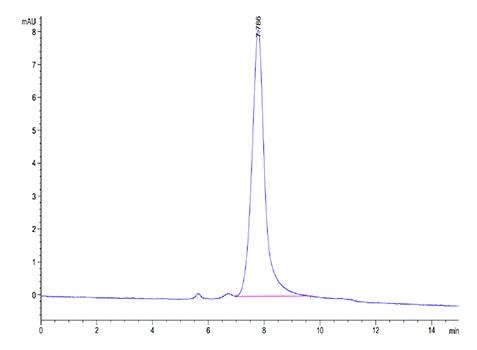
This product (SKU: RPCB1839) is produced using HEK293 cells and features a C-His tag for convenient detection and purification. The protein exhibits a calculated molecular weight of 31.59 kDa with an observed molecular weight of 45-60 kDa under denaturing conditions, achieving ≥ 95 % as determined by SDS-PAGE;≥ 95 % as determined by HPLC.. Functional bioactivity has been validated through rigorous quality control assays, confirming its suitability for demanding research applications.
High quality, high purity and low endotoxin recombinant Recombinant Mouse Osteopontin/SPP-1 Protein (RPCB1839), tested reactivity in HEK293 cells and has been validated in SDS-PAGE.100% guaranteed.
Endotoxin:
< 1 EU/μg of the protein by LAL method.
Purity:
≥ 95 % as determined by SDS-PAGE;≥ 95 % as determined by HPLC.
Formulation:
Lyophilized from a 0.22 μm filtered solution of PBS, pH 7.4.
Bio-Activity:
Measured by the ability of the immobilized protein to support the adhesion of B16 cells.When 5×10 4 cells/well are added to a Recombinant Mouse (rm) Osteopontin/OPN coated plate, cell adhesion is enhanced in a dose-dependent manner after 1 hour
Reconstitution:
Centrifuge the tube before opening. Reconstitute to a concentration of 0.1-0.5 mg/mL in sterile distilled water. Avoid vortex or vigorously pipetting the protein. For long term storage, it is recommended to add a carrier protein or stablizer (e.g. 0.1% BSA, 5% HSA, 10% FBS or 5% Trehalose), and aliquot the reconstituted protein solution to minimize free-thaw cycles.
Storage:
Store at -20℃.Store the lyophilized protein at -20℃ to -80 ℃ up to 1 year from the date of receipt. After reconstitution, the protein solution is stable at -20℃ for 3 months, at 2-8℃ for up to 1 week.
Secreted phosphoprotein 1 (SPP1) expression in TAMs isolated from lung adenocarcinoma tissues and PMA-treated THP-1 cells were measured. Macrophage polarization was identified by flow cytometric analysis. Cell migration and apoptosis were assessed by Transwell migration assays and flow cytometric analysis, respectively. SPP1 is highly expressed in tumor tissues and TAMs isolated from patients with an advanced TNM stage, and also in PMA-treated THP-1 cells.
Recombinant Mouse Osteopontin/SPP-1 Protein was determined by SDS-PAGE under reducing conditions with Coomassie Blue.
The purity of Mouse Osteopontin/SPP1 is greater than 95% as determined by SEC-HPLC.