Description
Recombinant Mouse TNFSF11/RANKL/CD254 Protein
The Recombinant Mouse TNFSF11/RANKL/CD254 Protein is a high-quality recombinant protein designed for murine biological research applications. This protein serves as an essential reagent in mouse model studies, comparative immunology research, and preclinical therapeutic evaluations, enabling scientists to investigate TNFSF11/RANKL/CD254 biology and its relevance to human disease mechanisms through translational research approaches.
This product (SKU: RPCB0011) is produced using HEK293 cells and features a N-His&N-hFC tag for convenient detection and purification. The protein exhibits a calculated molecular weight of 55.63 KD with an observed molecular weight of 60-75 KD under denaturing conditions, achieving ≥ 95 % as determined by SDS-PAGE;≥ 95 % as determined by HPLC.. Functional bioactivity has been validated through rigorous quality control assays, confirming its suitability for demanding research applications.
Key Features
| High Purity by Affinity Chromatography | |
| Mammalian & Bacterial Expression Systems | |
| High lot-to-lot consistency via strict QC |
| Product Name: | Recombinant Mouse TNFSF11/RANKL/CD254 Protein |
| SKU: | RPCB0011 |
| Size: | 10 μg , 20 μg , 50 μg , 100 μg |
| Reactivity: | Mouse |
| Synonyms: | ODF, OPGL, RANKL, Ly109l, Trance, TNFSF11 |
| Tag: | N-His&N-hFC |
| Expression Host: | HEK293 cells |
| Calculated MW: | 55.63 KD |
| Observed MW: | 60-75 KD |
| Gene ID: | 21943 |
| Protein Description: | High quality, high purity and low endotoxin recombinant Recombinant Mouse TNFSF11/RANKL/CD254 Protein (RPCB0011), tested reactivity in HEK293 cells and has been validated in SDS-PAGE.100% guaranteed. |
| Endotoxin: | < 0.01 EU/μg of the protein by LAL method |
| Purity: | ≥ 95 % as determined by SDS-PAGE;≥ 95 % as determined by HPLC. |
| Formulation: | Lyophilized from a 0.22 μm filtered solution of PBS, pH 7.4. |
| Bio-Activity: | M-CSF (50 ng/mL) and RANKL (100 ng/mL) can induced differentiation of osteoclasts from primary mouse bone marrow cells for 3 days; RANKL (100 ng/mL) can induced differentiation of osteoclasts from RAW264.7 cells for 5 days. |
| Reconstitution: | Centrifuge the vial before opening. Reconstitute to a concentration of 0.1-0.5 mg/mL in sterile distilled water. Avoid vortex or vigorously pipetting the protein. For long term storage, it is recommended to add a carrier protein or stablizer (e.g. 0.1% BSA, 5% HSA, 10% FBS or 5% Trehalose), and aliquot the reconstituted protein solution to minimize free-thaw cycles. |
| Storage: | Store at -20℃.Store the lyophilized protein at -20℃ to -80 ℃ up to 1 year from the date of receipt. After reconstitution, the protein solution is stable at -20℃ for 3 months, at 2-8℃ for up to 1 week. |
Tumor necrosis factor ligand superfamily member 11, also known as Receptor activator of nuclear factor kappa-B ligand, Osteoprotegerin ligand, TNFSF11, RANKL, TRANCE, OPGL and CD254, is a single-pass type II membrane protein that belongs to the tumor necrosis factor family. The receptor activator of nuclear factor-kappaB ligand (RANKL), its cognate receptor RANK, and its natural decoy receptor osteoprotegerin have been identified as the final effector molecules of osteoclastic bone resorption. RANK and RANKL are key regulators of bone remodeling and regulate T cell/dendritic cell communications, and lymph node formation. Moreover, RANKL and RANK are expressed in mammary gland epithelial cells and control the development of a lactating mammary gland during pregnancy. Genetically, RANKL and RANK are essential for the development and activation of osteoclasts and bone loss in response to virtually all triggers tested. Inhibition of RANKL function via the natural decoy receptor osteoprotegerin (OPG, TNFRSF11B) prevents bone loss in postmenopausal osteoporosis and cancer metastases. Importantly, RANKL appears to be the pathogenetic principle that causes bone and cartilage destruction in arthritis. RANK-RANKL signaling not only activates a variety of downstream signaling pathways required for osteoclast development, but crosstalk with other signaling pathways also fine-tunes bone homeostasis both in normal physiology and disease. In addition, RANKL and RANK have essential roles in lymph node formation, establishment of the thymic microenvironment, and development of a lactating mammary gland during pregnancy.
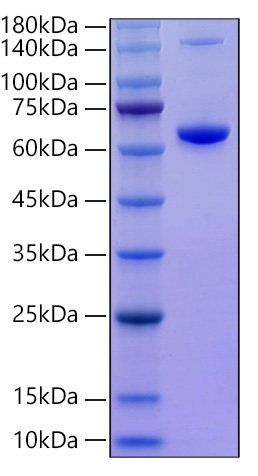 | Recombinant Mouse TNFSF11/RANKL/CD254 Protein was determined by SDS-PAGE under reducing conditions with Coomassie Blue. |
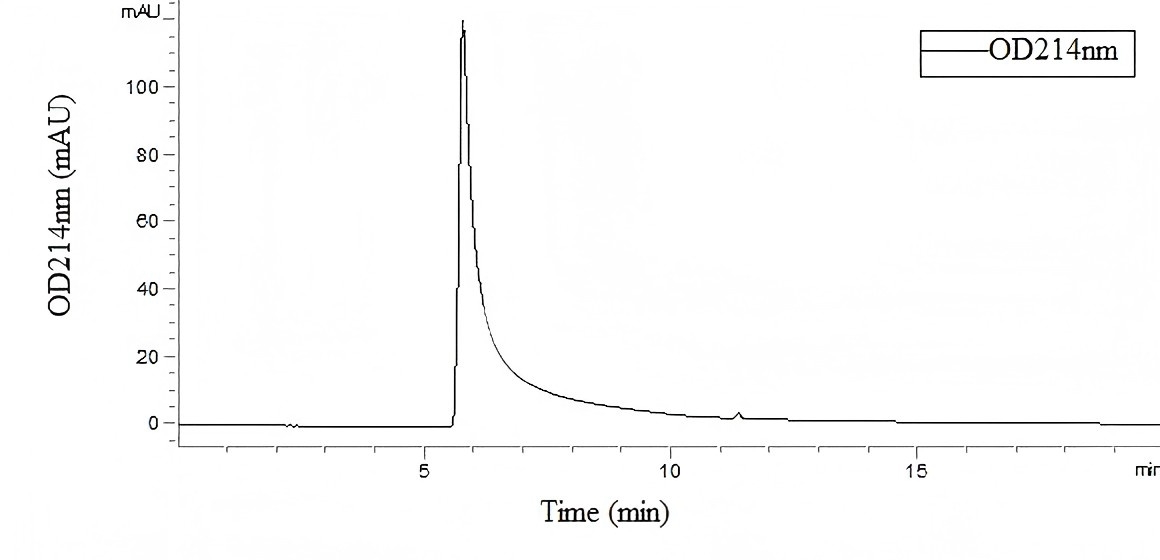 | Recombinant Mouse TNFSF11/RANKL/CD254 Protein is greater than 95% as determined by SEC-HPLC. |