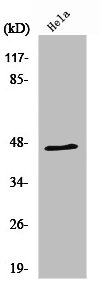
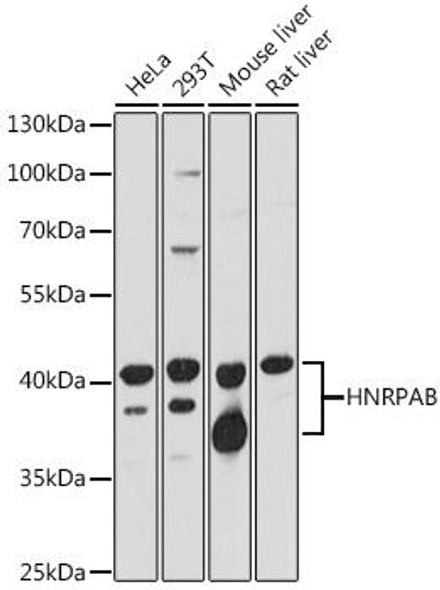
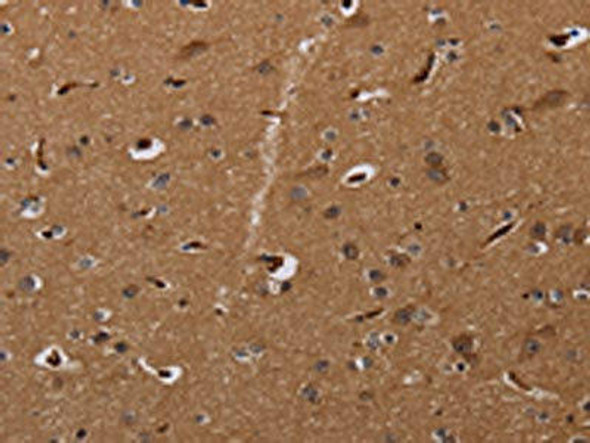
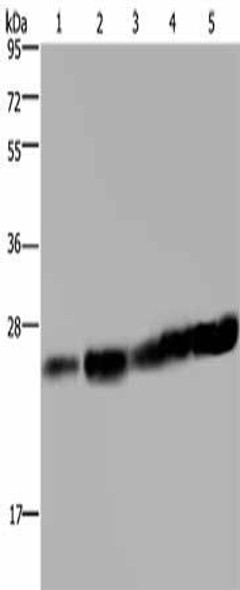
The RNF130 Antibody (PAC001456) is a valuable tool for researchers studying RNF130, a protein involved in regulating cellular processes such as protein degradation and intracellular signaling. This polyclonal antibody, produced in rabbits, is highly specific to human samples, making it ideal for studying RNF130 in various cell types.RNF130, also known as Ring Finger Protein 130, plays a crucial role in maintaining cellular homeostasis and is implicated in diseases such as cancer and neurodegenerative disorders. By targeting RNF130 with this antibody, researchers can gain insights into its function and potential therapeutic applications.
Validated for use in Western blot applications, this antibody allows for the detection and analysis of RNF130 protein levels, enabling a better understanding of its role in cellular processes. Its high reactivity and specificity make it a valuable tool for studies in cell biology, oncology, and neurology. Investigating RNF130 with this antibody may lead to breakthroughs in the development of targeted therapies for various diseases.
Antibody Name:
RNF130 Antibody
Antibody SKU:
PACO01456
Size:
50ug
Host Species:
Rabbit
Tested Applications:
ELISA, WB
Recommended Dilutions:
WB:1:500-1:2000
Species Reactivity:
Human, Mouse, Rat
Immunogen:
synthesized peptide derived from the C-terminal region of human RNF130.
Form:
Liquid
Storage Buffer:
Liquid in PBS containing 50% glycerol, 0.5% BSA and 0.02% sodium azide.
Purification Method:
The antibody was affinity-purified from rabbit antiserum by affinity-chromatography using epitope-specific immunogen.
Clonality:
Polyclonal
Isotype:
IgG
Conjugate:
Non-conjugated
Synonyms:
RNF130; E3 ubiquitin-protein ligase RNF130; Goliath homolog; H-Goliath; RING finger protein 130
UniProt Protein Function:
May have a role during the programmed cell death of hematopoietic cells (). Acts as an E3 ubiquitin-protein ligase.
UniProt Protein Details:
NCBI Summary:
The protein encoded by this gene contains a RING finger motif and is similar to g1, a Drosophila zinc-finger protein that is expressed in mesoderm and involved in embryonic development. The expression of the mouse counterpart was found to be upregulated in myeloblastic cells following IL3 deprivation, suggesting that this gene may regulate growth factor withdrawal-induced apoptosis of myeloid precursor cells. Alternative splicing results in multiple transcript variants. [provided by RefSeq, Jul 2013]