The RXRalpha Monoclonal Antibody (CAB19105) is a high-quality antibody developed for reliable detection and analysis of target proteins. This antibody, generated in rabbits, demonstrates high specificity and sensitivity in detecting RXRalpha protein levels in human samples, making it suitable for use in Western blot and immunohistochemistry applications.RXRalpha is a key player in mediating the effects of retinoids, which are essential for cell growth, differentiation, and apoptosis.
This antibody is validated for use in WB, IF/ICC, IP, ChIP, ChIP-seq, ELISA applications and has demonstrated reactivity against Human, Mouse, Rat samples.
Product Name:
RXRalpha Monoclonal Antibody
SKU:
CAB19105
Size:
20μL, 100μL
Reactivity:
Human, Mouse, Rat
Clone Number:
ARC0468
Conjugate:
Unconjugated
Immunogen:
Synthetic peptide. This information is considered to be commercially sensitive.
0.5μg-4μg antibody for 200μg-400μg extracts of whole cells
ELISA
Recommended starting concentration is 1 μg/mL. Please optimize the concentration based on your specific assay requirements.
ChIP
5μg antibody for 10μg-15μg of Chromatin
ChIP-seq
1:50 - 1:100
Synonyms:
NR2B1, RXRalpha, RXR-alpha, RXRα
Positive Sample:
MCF7, Hep G2, BxPC-3, Mouse lung, Rat lung, Rat liver
Cellular Localization:
Nucleus, Cytoplasm, Mitochondrion .
Calculated MW:
51kDa
Observed MW:
51kDa
Retinoid X receptors (RXRs) and retinoic acid receptors (RARs) are nuclear receptors that mediate the biological effects of retinoids by their involvement in retinoic acid-mediated gene activation. These receptors function as transcription factors by binding as homodimers or heterodimers to specific sequences in the promoters of target genes. The protein encoded by this gene is a member of the steroid and thyroid hormone receptor superfamily of transcriptional regulators. Alternative splicing of this gene results in multiple transcript variants.
Purification Method
Affinity purification
Gene ID
6256
RRID
AB_2862598
Buffer Information
Store at -20℃. Avoid freeze / thaw cycles. Buffer: PBS containing 50% glycerol and 0.05% BSA, preserved with proclin300 or sodium azide, pH 7.3.
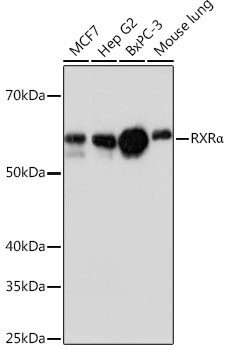
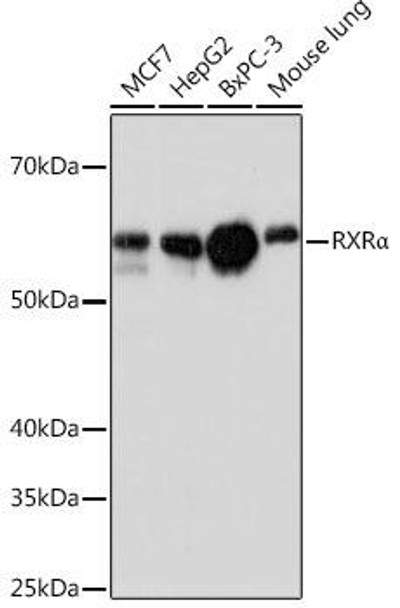
Western blot analysis of various lysates using RXRα Rabbit mAb (CAB19105) at 1:1000 dilution. Secondary antibody: HRP-conjugated Goat anti-Rabbit IgG (H+L) (CABS014) at 1:10000 dilution. Lysates/proteins: 25μg per lane. Blocking buffer: 3% nonfat dry milk in TBST. Detection: ECL Basic Kit (AbGn00020). Exposure time: 3min.
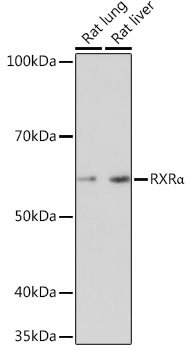
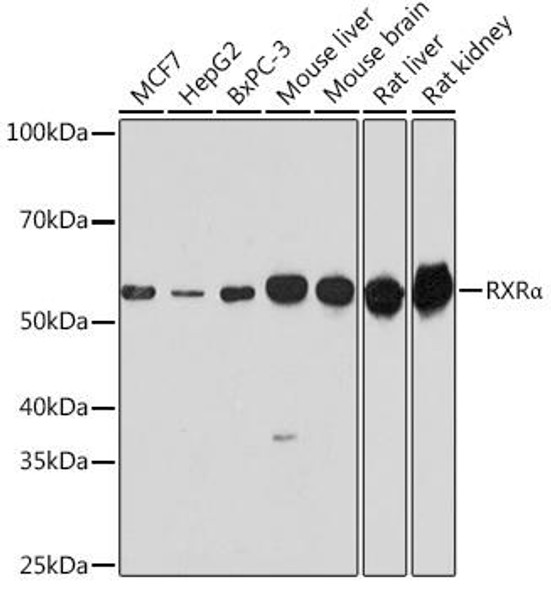
Western blot analysis of various lysates using RXRα Rabbit mAb (CAB19105) at 1:1000 dilution. Secondary antibody: HRP-conjugated Goat anti-Rabbit IgG (H+L) (CABS014) at 1:10000 dilution. Lysates/proteins: 25μg per lane. Blocking buffer: 3% nonfat dry milk in TBST. Detection: ECL Enhanced Kit (AbGn00021). Exposure time: 90s.
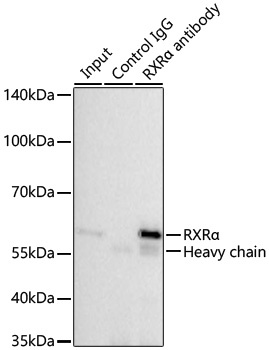
Immunoprecipitation of RXRα from 600 µg extracts of Hep G2 cells was performed using 3 µg of RXRα Rabbit mAb (CAB19105). Rabbit IgG isotype control (AC005) was used to precipitate the Control IgG sample. IP samples were eluted with 1X reducing Laemmli Buffer. The Input lane represents 10% of the total input. Western blot analysis of immunoprecipitates was conducted using RXRα Rabbit mAb (CAB19105) at a dilution of 1:500.
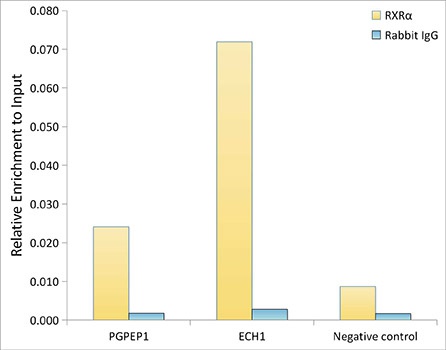
Chromatin immunoprecipitation analysis of extracts from Hep G2 cells, using RXRα Rabbit mAb (CAB19105) and rabbit IgG.The amount of immunoprecipitated DNA was checked by quantitative PCR. Histogram was constructed by the ratios of the immunoprecipitated DNA to the input.
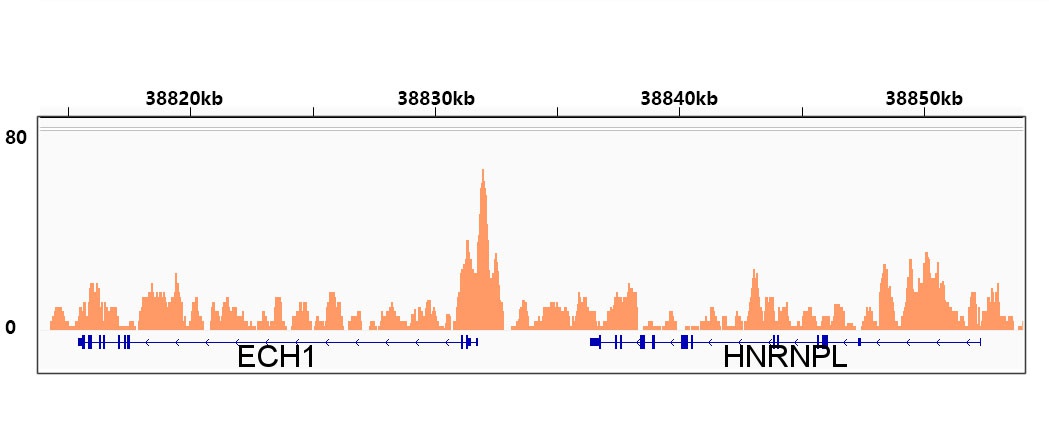
Chromatin immunoprecipitation was performed with 25 μg of cross-linked chromatin from Hep G2 cells using 5 μg of RXRα Rabbit mAb (CAB19105). DNA libraries were prepared using Scale ssDNA-seq Lib Prep Kit for Illumina V2 (RK20228). The ChIP sequencing results indicate the enrichment pattern of RXRα in the representative genomic region surrounding ECH1 gene.