The SGOL1 Antibody (CAB16174) is a high-quality antibody developed for reliable detection and analysis of target proteins. This antibody, generated in rabbits, is highly specific for human samples and has been validated for use in Western blot applications. By binding to the SGOL1 protein, this antibody allows for accurate detection and analysis in a variety of cell types, making it essential for studies in molecular biology and cancer research.SGOL1, also known as shugoshin-like 1, plays a crucial role in ensuring the accurate distribution of chromosomes during cell division.
This antibody is validated for use in WB, IF/ICC, ELISA applications and has demonstrated reactivity against Human, Mouse, Rat samples.
Product Name:
SGOL1 Antibody
SKU:
CAB16174
Size:
20μL, 100μL
Reactivity:
Human, Mouse, Rat
Conjugate:
Unconjugated
Immunogen:
Recombinant protein (or fragment).This information is considered to be commercially sensitive.
Recommended starting concentration is 1 μg/mL. Please optimize the concentration based on your specific assay requirements.
Synonyms:
SGO, CAID, SGOL1, NY-BR-85
Positive Sample:
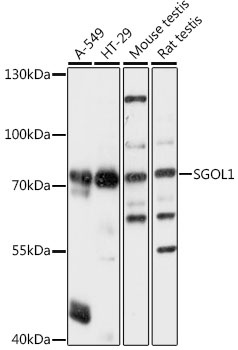
A-549, HT-29, Mouse testis, Rat testis
Cellular Localization:
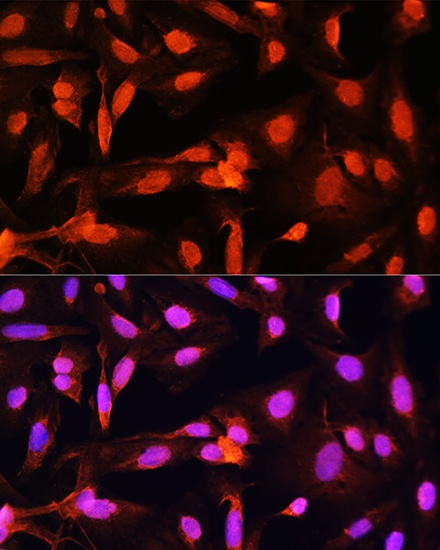
Chromosome, Cytoplasm, Nucleus, Centromere, Centrosome, Cytoskeleton, Kinetochore, Microtubule Organizing Center, Spindle Pole.
Calculated MW:
64kDa
Observed MW:
75kDa
The protein encoded by this gene is a member of the shugoshin family of proteins. This protein is thought to protect centromeric cohesin from cleavage during mitotic prophase by preventing phosphorylation of a cohesin subunit. Reduced expression of this gene leads to the premature loss of centromeric cohesion, mis-segregation of sister chromatids, and mitotic arrest. Evidence suggests that this protein also protects a small subset of cohesin found along the length of the chromosome arms during mitotic prophase. An isoform lacking exon 6 has been shown to play a role in the cohesion of centrioles (PMID: 16582621 and PMID:18331714). Mutations in this gene have been associated with Chronic Atrial and Intestinal Dysrhythmia (CAID) syndrome, characterized by the co-occurrence of Sick Sinus Syndrome (SSS) and Chronic Intestinal Pseudo-obstruction (CIPO) within the first four decades of life (PMID:25282101). Fibroblast cells from CAID patients exhibited both increased cell proliferation and higher rates of senescence. Pseudogenes of this gene have been found on chromosomes 1 and 7. Alternative splicing results in multiple transcript variants.
Purification Method
Affinity purification
Gene ID
151648
RRID
AB_2763624
Buffer Information
Store at -20℃. Avoid freeze / thaw cycles. Buffer: PBS with 0.01% thimerosal,50% glycerol,pH7.3.
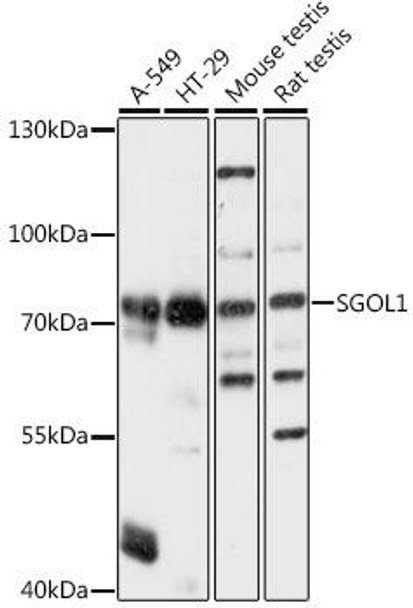
Western blot analysis of various lysates using SGOL1 Rabbit pAb (CAB16174) at 1:1000 dilution. Secondary antibody: HRP-conjugated Goat anti-Rabbit IgG (H+L) (CABS014) at 1:10000 dilution. Lysates/proteins: 25μg per lane. Blocking buffer: 3% nonfat dry milk in TBST. Detection: ECL Basic Kit (AbGn00020). Exposure time: 3s.
Immunofluorescence analysis of U20S cells using SGOL1 Rabbit pAb (CAB16174) at dilution of 1:100. Blue: DAPI for nuclear staining.