Similarly, the THAP6 Polyclonal Antibody (PAC017233) is an essential tool for researchers studying THAP6, a transcription factor involved in gene regulation and cell differentiation. This antibody, produced in rabbits, exhibits high specificity for human samples and is recommended for use in Western blotting and immunohistochemistry applications. By targeting the THAP6 protein, researchers can investigate its role in various cellular processes and pathways, particularly in the contexts of development, cancer, and genetic disorders.
THAP6, or Thanatos-associated protein 6, has been shown to interact with DNA and modulate gene expression, influencing cell fate and function. Dysregulation of THAP6 has been implicated in diseases such as cancer, neurodegenerative disorders, and developmental abnormalities, underscoring the importance of studying its function and mechanisms of action. The THAP6 Polyclonal Antibody provides a reliable tool for researchers to explore the biology of THAP6 and its implications in human health and disease.
Antibody Name:
THAP6 Antibody (PACO17233)
Antibody SKU:
PACO17233
Size:
50ul
Host Species:
Rabbit
Tested Applications:
ELISA, IHC
Recommended Dilutions:
ELISA:1:2000-1:5000, IHC:1:25-1:100
Species Reactivity:
Human
Immunogen:
Full length fusion protein
Form:
Liquid
Storage Buffer:
-20°C, pH7.4 PBS, 0.05% NaN3, 40% Glycerol
Purification Method:
Antigen affinity purification
Clonality:
Polyclonal
Isotype:
IgG
Conjugate:
Non-conjugated
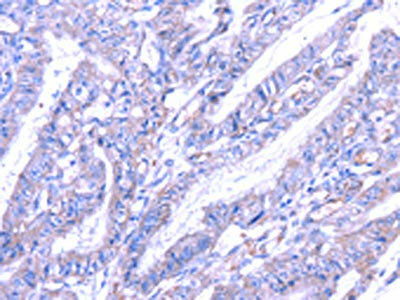
The image on the left is immunohistochemistry of paraffin-embedded Human esophagus cancer tissue using PACO17233(THAP6 Antibody) at dilution 1/30, on the right is treated with fusion protein. (Original magnification: x200).
Background:
THAP6 (THAP domain-containing protein 6) is a 222 amino acid, protein that contains one THAP-type zinc finger and exists as two alternatively spliced isoforms. The gene that encodes THAP6 consists of approximately 36,528 bases and maps to human chromosome 4q21.1. Chromosome 4 represents approximately 6% of the human genome and contains nearly 900 genes. Notably, the Huntingtin gene, which is found to encode an expanded glutamine tract in cases of Huntington's disease, is encoded by a gene that maps to chromosome 4. FGFR-3 is also encoded by a gene located on chromosome 4 and has been associated with thanatophoric dwarfism, achondroplasia, Muenke syndrome and bladder cancer. Chromosome 4 is also tied to Ellis-van Creveld syndrome, methylmalonic acid, mia and polycystic kidney disease.
Synonyms:
THAP domain containing 6
UniProt Protein Function:
THAP6: 2 isoforms of the human protein are produced by alternative splicing.Chromosomal Location of Human Ortholog: 4q21.1Cellular Component: microtubule cytoskeletonMolecular Function: DNA binding; metal ion binding