The 53BP1 Antibody (CAB5757) is a high-quality antibody developed for reliable detection and analysis of target proteins. This antibody, produced in rabbits, shows high specificity for human samples and has been validated for use in Western blot applications. By targeting the TP53BP1 protein, this antibody enables precise detection and analysis in various cell types, making it ideal for investigations in oncology and genetic research.TP53BP1, also known as tumor protein p53 binding protein 1, is a crucial regulator of the cellular response to DNA damage, playing a vital role in maintaining genomic stability and preventing tumorigenesis. Understanding the function and regulation of TP53BP1 is essential for unraveling the mechanisms underlying cancer development and identifying potential therapeutic targets for cancer treatment.
This antibody is validated for use in WB, IHC-P, ELISA applications and has demonstrated reactivity against Human, Mouse, Rat samples.
Product Name:
53BP1 Antibody
SKU:
CAB5757
Size:
20μL, 100μL
Reactivity:
Human, Mouse, Rat
Conjugate:
Unconjugated
Immunogen:
Recombinant protein (or fragment).This information is considered to be commercially sensitive.
Sequence:
FCES SSET PFHF TLPK EGDI IPPL TGAT PPLI GHLK LEPK RHST PIGI SNYP ESTI ATSD VMSE SMVE THDP ILGS GKGD SGAA PDVD DKLC LRMK LVSP ETEA SEES LQFN LEKP ATGE RKNG STAV AESV ASPQ K
Tested Applications:
WBIHC-PELISA
Recommended Dilution:
WB
1:500 - 1:1000
IHC-P
1:50 - 1:200
ELISA
Recommended starting concentration is 1 μg/mL. Please optimize the concentration based on your specific assay requirements.
Synonyms:
p202, 53BP1, TDRD30, p53BP1
Positive Sample:
HeLa
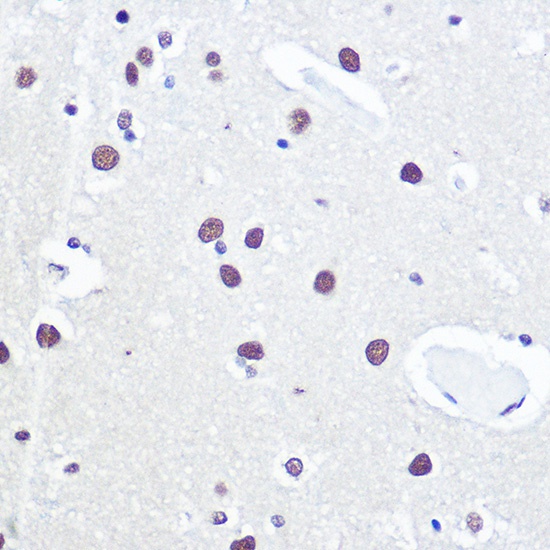
Cellular Localization:
Chromosome, Nucleus, Centromere, Kinetochore.
Calculated MW:
214kDa
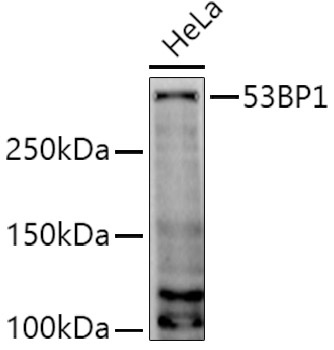
Observed MW:
450kDa
This gene encodes a protein that functions in the DNA double-strand break repair pathway choice, promoting non-homologous end joining (NHEJ) pathways, and limiting homologous recombination. This protein plays multiple roles in the DNA damage response, including promoting checkpoint signaling following DNA damage, acting as a scaffold for recruitment of DNA damage response proteins to damaged chromatin, and promoting NHEJ pathways by limiting end resection following a double-strand break. These roles are also important during V(D)J recombination, class switch recombination and at unprotected telomeres. Alternative splicing results in multiple transcript variants encoding different isoforms.
Purification Method
Affinity purification
Gene ID
7158
RRID
AB_2766511
Buffer Information
Store at -20℃. Avoid freeze / thaw cycles. Buffer: PBS containing 50% glycerol, preserved with proclin300 or sodium azide, pH 7.3.
Western blot analysis of lysates from HeLa cells, using 53BP1 Rabbit pAb (CAB5757) at 1:1000 dilution. Secondary antibody: HRP-conjugated Goat anti-Rabbit IgG (H+L) (CABS014) at 1:10000 dilution. Lysates/proteins: 25μg per lane. Blocking buffer: 3% nonfat dry milk in TBST. Detection: ECL Enhanced Kit (AbGn00021). Exposure time: 90s.
Immunohistochemistry analysis of paraffin-embedded Human brain using 53BP1 Rabbit pAb (CAB5757) at dilution of 1:100 (40x lens). High pressure antigen retrieval performed with 0.01M Citrate buffer (pH 6.0) prior to IHC staining.