
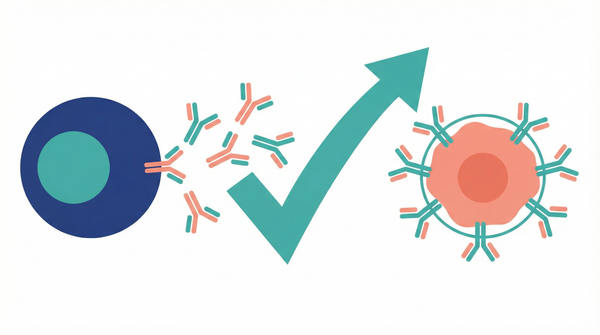
IgG1 Plasma Cells: The Emerging Biomarker for Predicting Cancer Immunotherapy Success
In the relentless fight against cancer, immunotherapy has emerged as a beacon of hope, harnessing the body's own defenses to combat malignant cells. Yet, predicting which patients will respond to these groundbreaking treatments remains a critical challenge. Recent scientific breakthroughs are now pointing towards an unexpected ally in this quest: IgG1 plasma cells, revealing their potential as a powerful new biomarker to forecast the success of cancer immunotherapy.
Introduction
Immunotherapy, particularly immune checkpoint blockade (ICB), has revolutionized cancer treatment, offering durable responses for many patients. However, a significant portion of individuals do not benefit, underscoring the urgent need for reliable biomarkers that can predict treatment efficacy and guide personalized therapeutic strategies. The tumor microenvironment (TME), a complex ecosystem of immune cells, stromal cells, and extracellular matrix, plays a pivotal role in shaping anti-tumor immune responses and, consequently, the outcome of immunotherapy. Understanding the intricate cellular dynamics within this environment is key to unlocking more effective treatments. Recent investigations have begun to shed light on the crucial, yet often overlooked, contributions of B cells and plasma cells to this complex interplay, positioning them as central figures in the future of cancer diagnostics and prognostics.
Unveiling IgG1 Plasma Cells: A New Compass for Immunotherapy Response
For years, the spotlight in cancer immunotherapy has largely been on T cells. However, a groundbreaking study published in Nature Medicine is shifting this paradigm, highlighting the profound impact of humoral IgG1 responses to tumor antigens. This research reveals that the presence and activity of IgG1 plasma cells predict immunotherapy success, offering a novel predictive biomarker for clinical outcomes in immune checkpoint blockade. This finding is particularly significant because it suggests that the humoral arm of the immune system, traditionally considered secondary in anti-tumor immunity, holds critical clues for patient stratification. The ability to identify patients more likely to respond to ICB before treatment initiation could spare non-responders from unnecessary toxicity and allow for earlier alternative therapeutic interventions.
B Cells: Orchestrators of the Tumor Microenvironment
Beyond their role in antibody production, B cells are increasingly recognized as dynamic players in the tumor microenvironment, capable of both promoting and suppressing anti-tumor immunity. Their multifaceted functions include antigen presentation, cytokine production, and the formation of tertiary lymphoid structures (TLS). A comprehensive review in Frontiers in Immunology underscores that B cells orchestrate complex antitumor responses, influencing the efficacy of various immunotherapies. Interestingly, the context-dependent nature of B cell activity means their impact can vary significantly across different cancer types and stages. This dual role necessitates a deeper understanding of their specific subsets and activation states within the TME to effectively harness their therapeutic potential.
The Intricate Dance of B Cells in Bladder and Liver Cancers
The significance of B cells and their derivatives is becoming particularly evident in specific cancer types. In bladder cancer, for instance, the emerging role of B cells and tertiary lymphoid structures is gaining considerable attention. Research indicates that B cells shape bladder cancer immunity, influencing disease progression and response to treatment. Furthermore, a study in Molecular Carcinogenesis highlights how an IGHG1 expression predicts bladder cancer response to anti-PD-L1 therapy, reinforcing the idea that specific immunoglobulin heavy chain genes can serve as valuable predictive markers. Conversely, in hepatocellular carcinoma, B cells can sometimes contribute to immunotherapy resistance. A study in Nature Communications found that B cells mediate acquired immunotherapy resistance to STING agonism and immune checkpoint blockade, suggesting that targeting B cells could enhance treatment efficacy in this context. This highlights the critical need for precision approaches that consider the specific tumor type and the nuanced roles of B cell subsets.
Decoding Stage-Specific Dynamics for Precision Immunotherapy
The effectiveness of immunotherapy is not static; it often varies with the stage of cancer progression. Understanding these stage-specific cellular dynamics is crucial for developing more precise and effective treatment strategies. A study published in Advanced Science, utilizing single-cell RNA sequencing, meticulously characterized the plasma cells show stage-specific dynamics and microenvironmental remodeling in lung adenocarcinoma. This research revealed a marked stage-dependent shift in the tumor microenvironment, moving from a proliferative and immune-activated state in early LUAD to a hypoxia-enriched and immunosuppressive landscape in advanced disease. Such detailed insights into how immune cell populations, including plasma cells, evolve throughout disease progression are invaluable. They pave the way for tailoring immunotherapeutic interventions to the specific biological context of each cancer stage, potentially improving patient outcomes significantly.
The Future of Personalized Cancer Immunotherapy
The emerging understanding of IgG1 plasma cells and the broader role of B cells in the tumor microenvironment marks a significant leap forward in cancer immunotherapy. From predicting treatment responses to influencing disease progression, these immune cells offer a wealth of information that can be leveraged for more personalized and effective therapeutic strategies. As research continues to unravel the intricate mechanisms governing B cell activity in cancer, we move closer to a future where immunotherapy can be precisely tailored to each patient, maximizing benefits and minimizing adverse effects. The journey from discovery to clinical application is complex, but the promise held by IgG1 plasma cells as a biomarker is undeniable, heralding a new era in the fight against cancer.
References
- Gonzalez-Kozlova E, Sweeney R, Figueiredo I, et al. (2026). Humoral IgG1 responses to tumor antigens underpin clinical outcomes in immune checkpoint blockade. Nat Med. Online ahead of print. PMID: 41593194
- Zhou L, Yu G, Zheng Z, et al. (2025). IGHA1 and IGHG1 Expression Panel Predicts Anti-PD-L1 Response in Muscle-Invasive Bladder Cancer. Mol Carcinog. 64(11):1942-1955. PMID: 40919684
- Penunuri A, Greenberg E, Phillips J, et al. (2025). The Emerging Role of B Cells and Tertiary Lymphoid Structures in Bladder Cancer. Curr Urol Rep. 27(1):3. PMID: 41457151
- Qing B, Li X, He X, et al. (2026). Characterizing Stage-Specific Cellular Dynamics and Microenvironmental Remodeling in Lung Adenocarcinoma by Single-Cell RNA Sequencing. Adv Sci (Weinh). 13(9):e10847. PMID: 41313751
- Liu X, Liu Z, Zhu C, et al. (2025). Inhibiting B cells enhances the efficacy of STING agonism or immune checkpoint blockade in hepatocellular carcinoma. Nat Commun. 16(1):10416. PMID: 41360802
- Lv Z, Yang R, Zhang K, et al. (2025). The dual immunomodulatory role of B cells in tumorigenesis: mechanisms, microenvironment crosstalk, and therapeutic implications. Front Immunol. 16:1649812. PMID: 41246318
Recent Posts
-
The Neural Shield: How Cancer-Induced Nerve Injury Drives Immunotherapy Resistance
For years, our understanding of cancer focused primarily on the tumor cells themselves and the immu …29th Mar 2026 -
Metabolic Bloodhounds: Engineering Immune Cells to Track Cancer's Chemical Trail
Imagine a specialized squad of immune cells, meticulously trained and equipped, not just to fight c …27th Mar 2026 -
Mitochondrial Transplantation: A New Frontier in Restoring Neural Function After Ischemic Stroke
Imagine a future where the devastating impact of a stroke could be significantly mitigated, not jus …27th Mar 2026