
Blog

IgG1 Plasma Cells: The Emerging Biomarker for Predicting Cancer Immunotherapy Success
In the relentless fight against cancer, immunotherapy has emerged as a beacon of hope, harnessing the body's own defenses to combat malignant cells. Yet, predicting which patients will respond to these groundbreaking treatments remains a critical challenge. Recent scientific breakthroughs are now pointing towards an unexpected ally in this quest: IgG1 plasma cells, revealing their potential as a powerful new biomarker to forecast the success of cancer immunotherapy.
Introduction
Immunotherapy, particularly immune checkpoint blockade (ICB), has revolutionized cancer treatment, offering durable responses for many patients. However, a significant portion of individuals do not benefit, undersco
…
24th Feb 2026
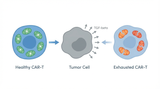
Metabolic Exhaustion: How Mitochondrial Dysfunction Sabotages CAR-T Cell Therapy in Solid Tumors
Imagine engineering a patient's own immune cells into precision-guided missiles against cancer—cells that can seek out and destroy tumors with remarkable specificity. This is the promise of CAR-T cell therapy, and for patients with certain blood cancers like leukemia and lymphoma, it has been nothing short of revolutionary. Yet when these same engineered cells encounter solid tumors—the masses that make up the vast majority of human cancers—they often sputter and fail. The tumor microenvironment, it turns out, is a metabolic battlefield where CAR-T cells arrive ready to fight but quickly find themselves starved, poisoned, and exhausted. Recent research published in 2024 and 2025 is now revea
…
8th Dec 2025
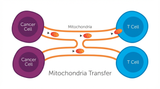
How Cancer Cells Hijack Immune Defenses Through Mitochondrial Transfer
Imagine a battlefield where the enemy doesn't just hide from soldiers—it actively sabotages their weapons. In the tumor microenvironment, cancer cells have evolved a devious strategy: they transfer their own damaged mitochondria to immune T cells, effectively poisoning the very defenders meant to destroy them. This groundbreaking discovery, published in Nature in 2025, reveals a previously unknown mechanism of immune evasion that helps explain why many cancers resist even the most advanced immunotherapies. Understanding this cellular sabotage could unlock new strategies to restore immune function and improve cancer treatment outcomes.
Introduction
The tumor microenvironment is a complex ecos
…
5th Dec 2025
Beyond Burnout: How T Cell Exhaustion Hijacks Cancer Immunity and What We Can Do About It
Imagine a highly trained soldier, elite and effective, sent to the front lines of a relentless war. Day after day, they fight without rest, their supplies dwindle, and the enemy never stops coming. Eventually, even the best soldier burns out. They stop fighting, not from a lack of will, but from sheer exhaustion. This is precisely what happens to our most powerful immune cells—T cells—in the fight against cancer. They become 'exhausted,' a state of cellular burnout that allows tumors to thrive. But what if we could wake them up? Recent breakthroughs are revealing not only how this exhaustion happens, but also how we can reverse it, offering new hope for patients who don't respond to current
…
4th Dec 2025
The Double-Edged Sword: How Neutrophil Traps Can Both Help and Hinder Cancer's Spread
The Double-Edged Sword: How Neutrophil Traps Can Both Help and Hinder Cancer's Spread
In the intricate battlefield of the human body, the immune system’s foot soldiers, neutrophils, have long been recognized for their heroic role in fighting off infections. But what if these same soldiers, in their attempt to protect, inadvertently create pathways for an even greater enemy to advance? Recent research has uncovered a fascinating and complex story about neutrophil extracellular traps (NETs)—web-like structures neutrophils release to ensnare pathogens—and their paradoxical role in cancer metastasis. While these traps can sometimes help the immune system fight tumors, studies are revealing that
…
21st Nov 2025
Tumor-Associated Macrophages: Double Agents in the Cancer Battlefield
Tumor-Associated Macrophages: Double Agents in the Cancer Battlefield
In the intricate theater of the human body, the immune system acts as a vigilant guardian, dispatching cellular soldiers to seek and destroy invaders like cancer. But what happens when some of these soldiers turn traitor? This is the complex reality of tumor-associated macrophages (TAMs), which often act as double agents within the tumor microenvironment (TME). While they possess the ability to eliminate malignant cells, they are frequently co-opted by tumors to support their growth and shield them from attack. Recent research has begun to unravel this dual nature, revealing that TAMs represent the predominant immune cell
…
20th Nov 2025
Mitochondrial Transfer: A Novel Immune Evasion Mechanism in Cancer
In the intricate dance between the immune system and cancer, tumors often deploy cunning strategies to evade destruction. A groundbreaking 2025 study in Nature has unveiled a startling new tactic: cancer cells transfer their damaged mitochondria to immune cells, effectively sabotaging their ability to fight back. This discovery opens a new frontier in our understanding of immune evasion and presents exciting possibilities for the next generation of cancer immunotherapies.
Introduction
The tumor microenvironment (TME) is a complex battlefield where cancer cells and immune cells vie for dominance. A key player in this struggle is the tumor-infiltrating lymphocyte (TIL), a type of T cell that
…
20th Nov 2025
CD25+FOXP3+CD45RA- Treg Cells and Cancer Prognosis
The Role of CD25+FOXP3+CD45RA- Treg Cells in Cancer PrognosisIntroductionRegulatory T-cells (Treg cells) are a specialized subset of T-cells that play a pivotal role in maintaining immune homeostasis and tolerance. These cells are essential for preventing autoimmune diseases and controlling excessive immune responses. However, in the context of cancer, Treg cells have garnered significant attention due to their dual roles in promoting tumor angiogenesis and modulating antitumor immunity. This article delves into the prognostic significance of CD25+FOXP3+CD45RA- Treg cell infiltration in tumor specimens, highlighting their potential as biomarkers for cancer outcomes.Study SummaryIn a comprehe
…
1st Aug 2025
EGFR Pathway and YAP in Non-Small Cell Lung Cancer
Understanding the EGFR Pathway and YAP in Non-Small Cell Lung CancerThe epidermal growth factor receptor (EGFR) pathway plays a pivotal role in the development and progression of non-small cell lung cancer (NSCLC). This article delves into the intricate relationship between the EGFR pathway, Yes-associated protein (YAP), and the tumor microenvironment, highlighting their implications for cancer progression and treatment strategies.IntroductionNon-small cell lung cancer (NSCLC) is one of the most prevalent forms of lung cancer, characterized by its aggressive nature and poor prognosis. The EGFR pathway is a well-established oncogenic pathway that significantly influences tumor growth and meta
…
22nd Jul 2025