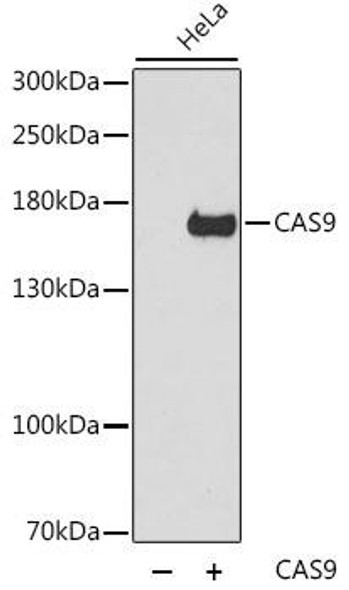
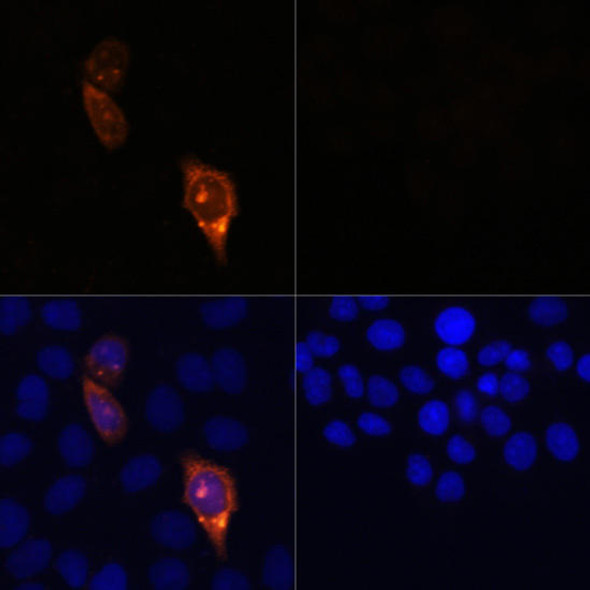
The Cas9 Monoclonal Antibody (CAB23005) is a high-quality antibody developed for reliable detection and analysis of target proteins. This antibody specifically targets the Cas9 protein, a key component of the CRISPR-Cas9 system responsible for precise gene editing. Produced through a unique monoclonal antibody production process, this antibody offers high specificity and sensitivity in detecting Cas9 in various experimental settings. It is suitable for use in Western blotting, immunofluorescence, and immunoprecipitation assays, providing researchers with reliable results for their studies.
This antibody is validated for use in WB, ELISA applications and has demonstrated reactivity against Human, Other (Wide Range Predicted) samples.
Product Name:
Cas9 Monoclonal Antibody
SKU:
CAB23005
Size:
20μL, 100μL
Reactivity:
Human, Other (Wide Range Predicted)
Clone Number:
ARC57839
Conjugate:
Unconjugated
Immunogen:
Recombinant protein (or fragment).This information is considered to be commercially sensitive.
Recommended starting concentration is 1 μg/mL. Please optimize the concentration based on your specific assay requirements.
Synonyms:
CAS9, Cas9
Positive Sample:
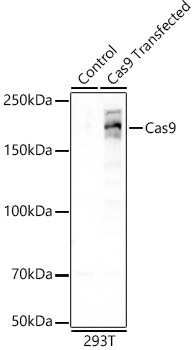
293T transfected with Cas9
Calculated MW:
158kDa
Observed MW:
170kDa
CRISPR-associated protein 9 (Cas9) is an RNA-guided DNA nuclease and is a component of the Streptococcus pyogenes CRISPR-antiviral immune system that provides adaptive immunity against extrachromosomal genetic material . The mechanism of CRISPR antiviral action involves three steps: (i) acquisition of foreign DNA by host bacteria; (ii) synthesis and maturation of CRISPR RNA (crRNA), followed by formation of RNA-Cas nuclease-protein complex; and (iii) acquisition of foreign DNA by the host bacterium; The complex recognizes foreign DNA and undergoes directed interference by cleavage by Cas nuclease activity . The type II CRISPR/Cas antiviral immune system provides a powerful tool for precise genome editing and has the potential for specific regulation of genes and therapeutic applications . The Cas9 protein and guide RNA (comprising a fusion between crRNA and transactivating crRNA (tracrRNA)) must be introduced or expressed in the cell. A 20-nucleotide sequence at the 5' end of the guide RNA guides Cas9 to a specific DNA target site. Thus, Cas9 can be "programmed" to cut a variety of DNA sites in vitro and in cells and organisms. The CRISPR/Cas9 genome editing tool has been used in many organisms, including mouse and human cells. Studies have shown that CRISPR can be used to generate mutant alleles or reporter genes in rodent and primate embryonic stem cells.
Purification Method
Affinity purification
Gene ID
901176
Buffer Information
Store at -20℃. Avoid freeze / thaw cycles. Buffer: PBS containing 50% glycerol and 0.05% BSA, preserved with proclin300 or sodium azide, pH 7.3.
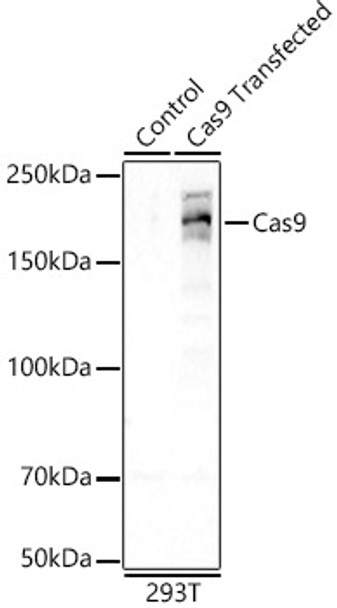
Western blot analysis of lysates from 293T cells, using Cas9 Rabbit mAb (CAB23005) at 1:1000 dilution. Secondary antibody: HRP-conjugated Goat anti-Rabbit IgG (H+L) (CABS014) at 1:10000 dilution. Lysates/proteins: 25μg per lane. Blocking buffer: 3% nonfat dry milk in TBST. Detection: ECL Basic Kit (AbGn00020). Exposure time: 90s.