The F10 Antibody (CAB1452) is a high-quality antibody developed for reliable detection and analysis of target proteins. This antibody, generated in rabbits, is highly specific to human samples and is optimized for use in Western blotting applications. By binding to the F10 protein, this antibody allows for the detection and analysis of F10 levels in a variety of cell types, making it ideal for investigations in hemostasis and thrombosis research.
This antibody is validated for use in WB, IF/ICC, ELISA applications and has demonstrated reactivity against Human, Mouse samples.
Product Name:
F10 Antibody
SKU:
CAB1452
Size:
20μL, 100μL
Reactivity:
Human, Mouse
Conjugate:
Unconjugated
Immunogen:
Recombinant protein (or fragment).This information is considered to be commercially sensitive.
Recommended starting concentration is 1 μg/mL. Please optimize the concentration based on your specific assay requirements.
Synonyms:
FX, FXA, F10
Positive Sample:
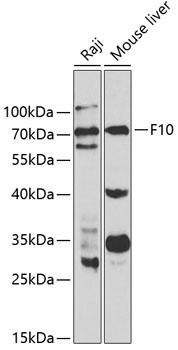
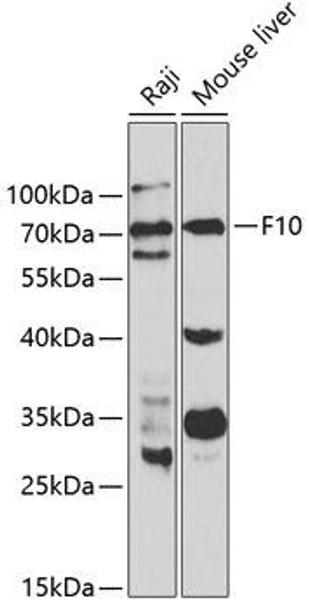
Raji, Mouse liver
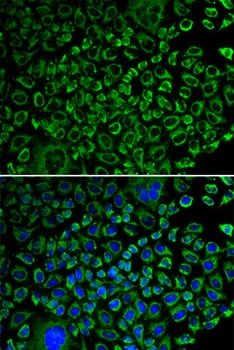
Cellular Localization:
Secreted.
Calculated MW:
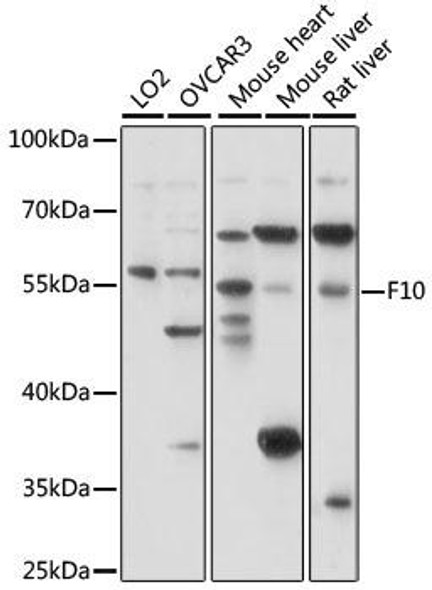
55kDa
Observed MW:
75kDa
This gene encodes the vitamin K-dependent coagulation factor X of the blood coagulation cascade. This factor undergoes multiple processing steps before its preproprotein is converted to a mature two-chain form by the excision of the tripeptide RKR. Two chains of the factor are held together by 1 or more disulfide bonds; the light chain contains 2 EGF-like domains, while the heavy chain contains the catalytic domain which is structurally homologous to those of the other hemostatic serine proteases. The mature factor is activated by the cleavage of the activation peptide by factor IXa (in the intrisic pathway), or by factor VIIa (in the extrinsic pathway). The activated factor then converts prothrombin to thrombin in the presence of factor Va, Ca+2, and phospholipid during blood clotting. Mutations of this gene result in factor X deficiency, a hemorrhagic condition of variable severity. Alternative splicing results in multiple transcript variants encoding different isoforms that may undergo similar proteolytic processing to generate mature polypeptides.
Purification Method
Affinity purification
Gene ID
2159
RRID
AB_2761395
Buffer Information
Store at -20℃. Avoid freeze / thaw cycles. Buffer: PBS containing 50% glycerol, preserved with proclin300 or sodium azide, pH 7.3.
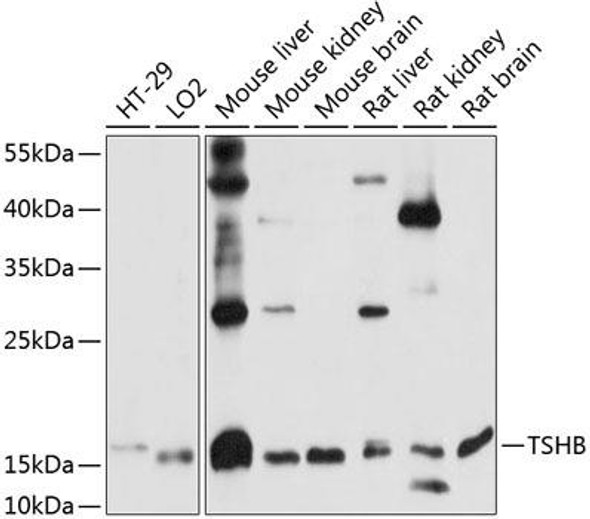
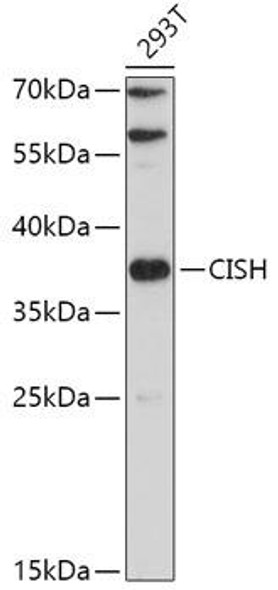
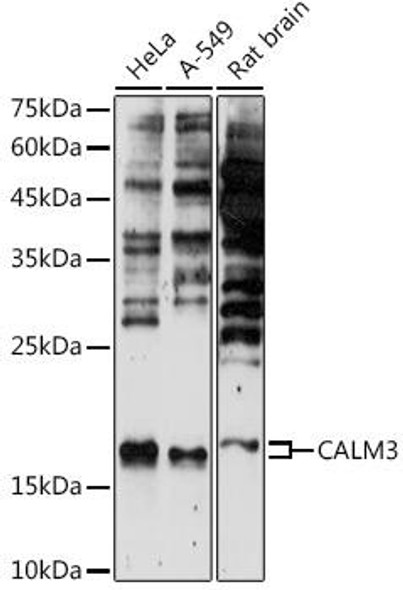
Western blot analysis of various lysates using F10 Rabbit pAb (CAB1452) at 1:1000 dilution. Secondary antibody: HRP-conjugated Goat anti-Rabbit IgG (H+L) (CABS014) at 1:10000 dilution. Lysates/proteins: 25μg per lane. Blocking buffer: 3% nonfat dry milk in TBST.
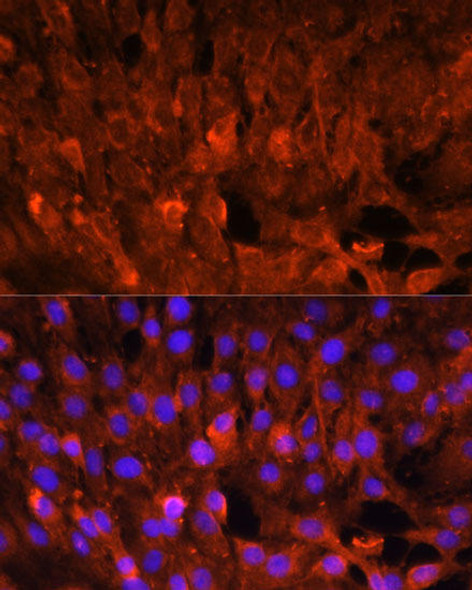
Immunofluorescence analysis of A549 cells using F10 Rabbit pAb (CAB1452). Secondary antibody: Cy3-conjugated Goat anti-Rabbit IgG (H+L) (CABS007) at 1:500 dilution. Blue: DAPI for nuclear staining.