The Glucosylceramidase beta (GBA) Antibody (CAB16860) is a high-quality antibody developed for reliable detection and analysis of target proteins. This antibody, derived from rabbit polyclonal sources, is highly specific to GBA and is ideal for use in various immunological assays, including Western blotting.GBA plays a crucial role in the lysosomal degradation of glucosylceramide, a lipid molecule found in cell membranes. Mutations in the GBA gene are associated with Gaucher disease, a rare lysosomal storage disorder. By targeting GBA with this antibody, researchers can study its expression levels and distribution in different cell types, shedding light on its role in normal cellular processes and disease pathology.
This antibody is validated for use in WB, ELISA applications and has demonstrated reactivity against Human, Rat samples.
Product Name:
Glucosylceramidase beta (GBA) Antibody
SKU:
CAB16860
Size:
20μL, 100μL
Reactivity:
Human, Rat
Immunogen:
Recombinant protein (or fragment).This information is considered to be commercially sensitive.
This gene encodes a lysosomal membrane protein that cleaves the beta-glucosidic linkage of glycosylceramide, an intermediate in glycolipid metabolism. Mutations in this gene cause Gaucher disease, a lysosomal storage disease characterized by an accumulation of glucocerebrosides. A related pseudogene is approximately 12 kb downstream of this gene on chromosome 1. Alternative splicing results in multiple transcript variants.
Purification Method
Affinity purification
Gene ID
2629
RRID
AB_2769581
Buffer Information
Store at -20℃. Avoid freeze / thaw cycles. Buffer: PBS containing 50% glycerol, preserved with proclin300 or sodium azide, pH 7.3.
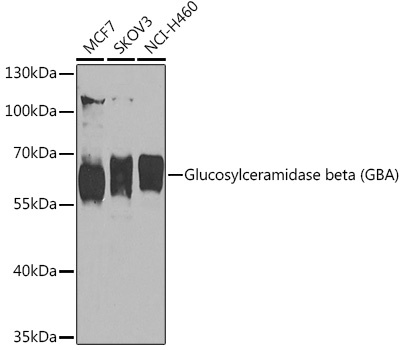
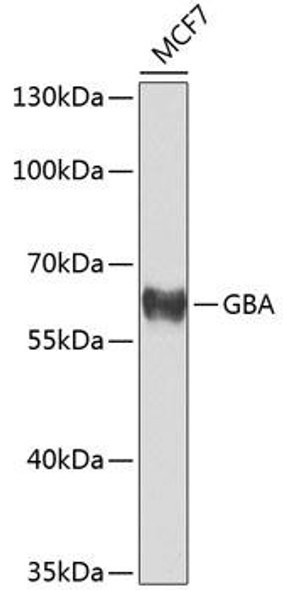
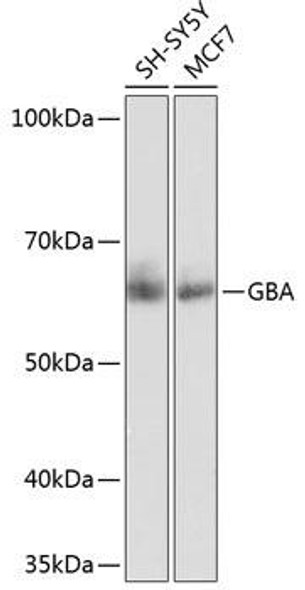
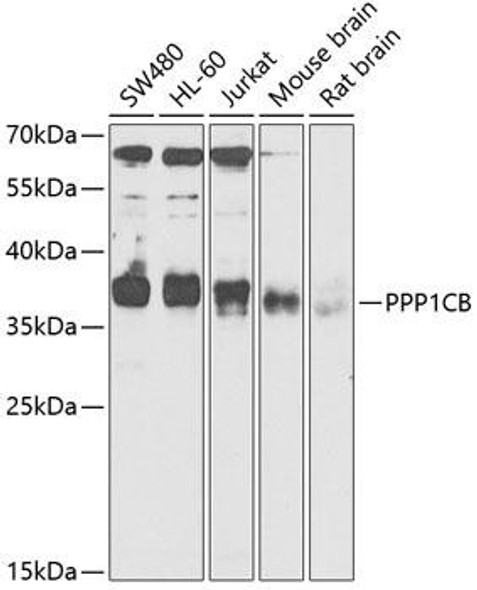
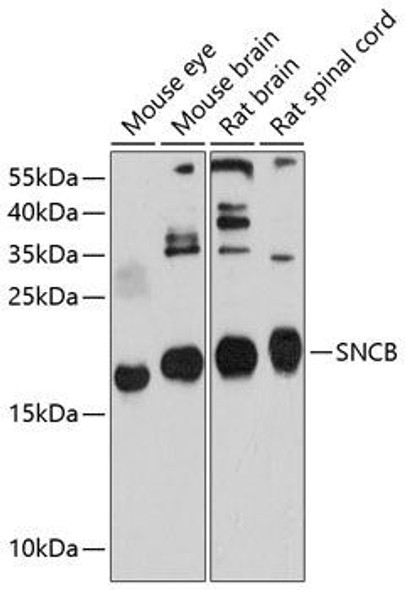
Western blot analysis of various lysates using Glucosylceramidase beta (Glucosylceramidase beta (GBA)) Rabbit pAb (CAB16860) at 1:1000 dilution. Secondary antibody: HRP-conjugated Goat anti-Rabbit IgG (H+L) (CABS014) at 1:10000 dilution. Lysates/proteins: 25μg per lane. Blocking buffer: 3% nonfat dry milk in TBST. Detection: ECL Basic Kit (AbGn00020). Exposure time: 10s.