The Glutamine Synthetase (GLUL) Polyclonal Antibody (CAB21822) is a high-quality antibody developed for reliable detection and analysis of target proteins. GLUL is an enzyme that plays a crucial role in the production of the amino acid glutamine, which is essential for protein synthesis and nitrogen metabolism in cells.This polyclonal antibody, raised in rabbits, is highly specific to human samples and is validated for use in Western blot applications. It binds to the GLUL protein, allowing for detection and analysis in a variety of cell types. This antibody is ideal for studies in metabolism, cellular signaling, and cancer research, where GLUL dysregulation has been implicated in tumor growth and progression.
This antibody is validated for use in WB, IHC-P, IF/ICC, ELISA applications and has demonstrated reactivity against Human, Mouse, Rat samples.
Product Name:
Glutamine Synthetase (GLUL) Polyclonal Antibody
SKU:
CAB21822
Size:
20μL, 100μL
Reactivity:
Human, Mouse, Rat
Conjugate:
Unconjugated
Immunogen:
Recombinant protein (or fragment).This information is considered to be commercially sensitive.
The protein encoded by this gene belongs to the glutamine synthetase family. It catalyzes the synthesis of glutamine from glutamate and ammonia in an ATP-dependent reaction. This protein plays a role in ammonia and glutamate detoxification, acid-base homeostasis, cell signaling, and cell proliferation. Glutamine is an abundant amino acid, and is important to the biosynthesis of several amino acids, pyrimidines, and purines. Mutations in this gene are associated with congenital glutamine deficiency, and overexpression of this gene was observed in some primary liver cancer samples. There are six pseudogenes of this gene found on chromosomes 2, 5, 9, 11, and 12. Alternative splicing results in multiple transcript variants.
Purification Method
Affinity purification
Gene ID
2752
Buffer Information
Store at -20℃. Avoid freeze / thaw cycles. Buffer: PBS containing 50% glycerol, preserved with proclin300 or sodium azide, pH 7.3.
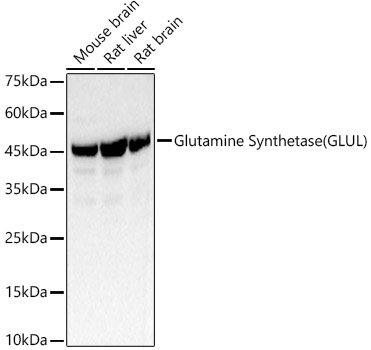
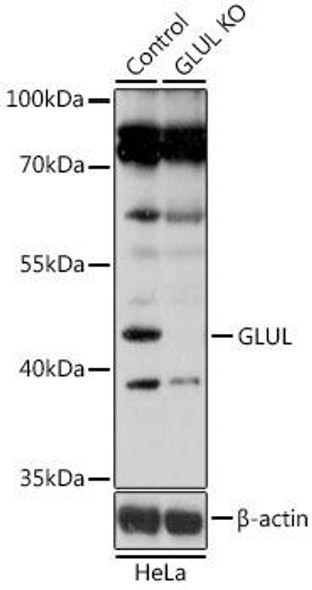
Western blot analysis of various lysates, using Glutamine Synthetase (GLUL) Rabbit pAb (CAB21822) at 1:400 dilution. Secondary antibody: HRP-conjugated Goat anti-Rabbit IgG (H+L) (CABS014) at 1:10000 dilution. Lysates/proteins: 25μg per lane. Blocking buffer: 3% nonfat dry milk in TBST. Detection: ECL Basic Kit (AbGn00020). Exposure time: 10s.
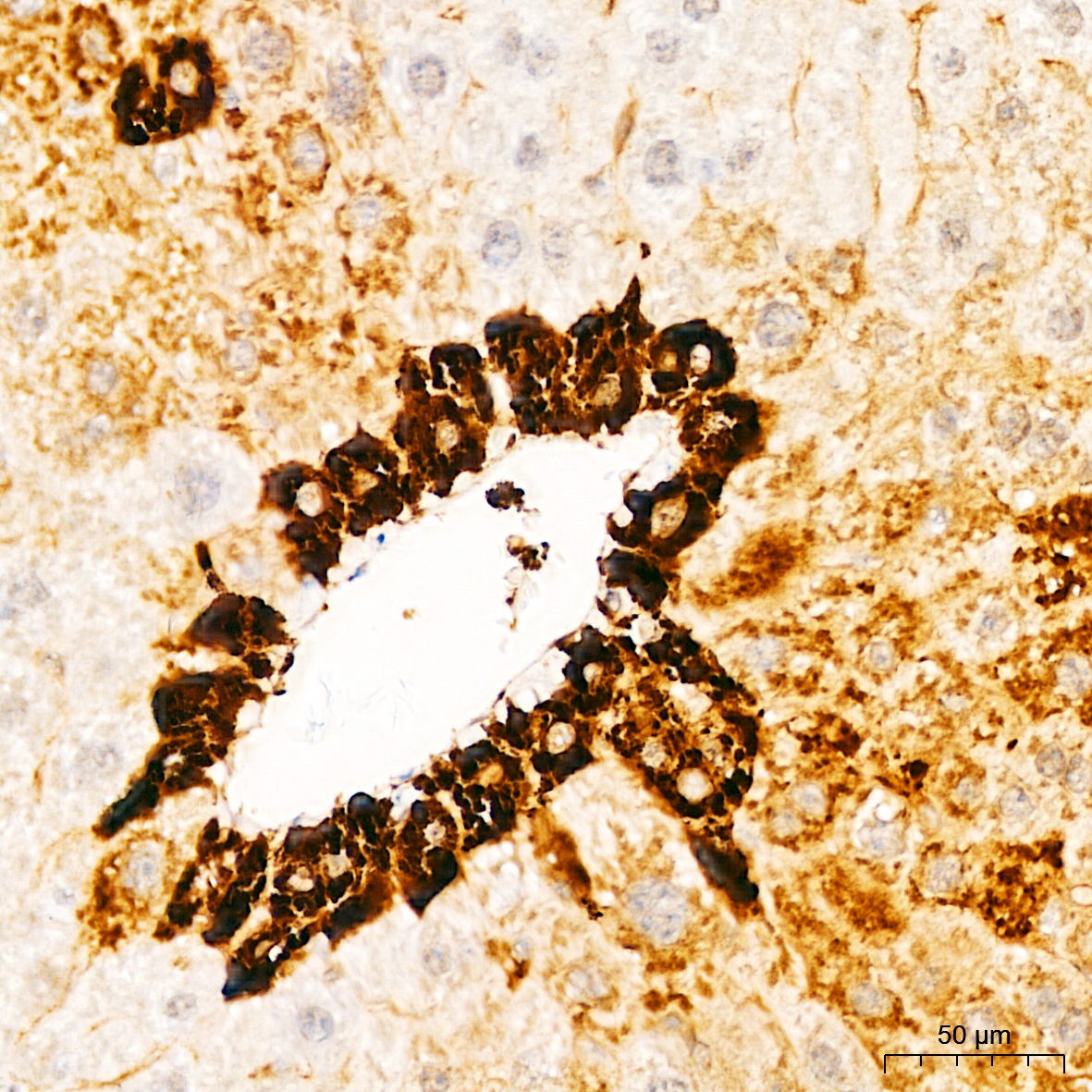
Immunohistochemistry analysis of paraffin-embedded Mouse liver tissue using Glutamine Synthetase (GLUL) Rabbit pAb (CAB21822) at a dilution of 1:1000 (40x lens). High pressure antigen retrieval was performed with 0.01 M Tris-EDTA buffer (pH 9.0) prior to IHC staining.
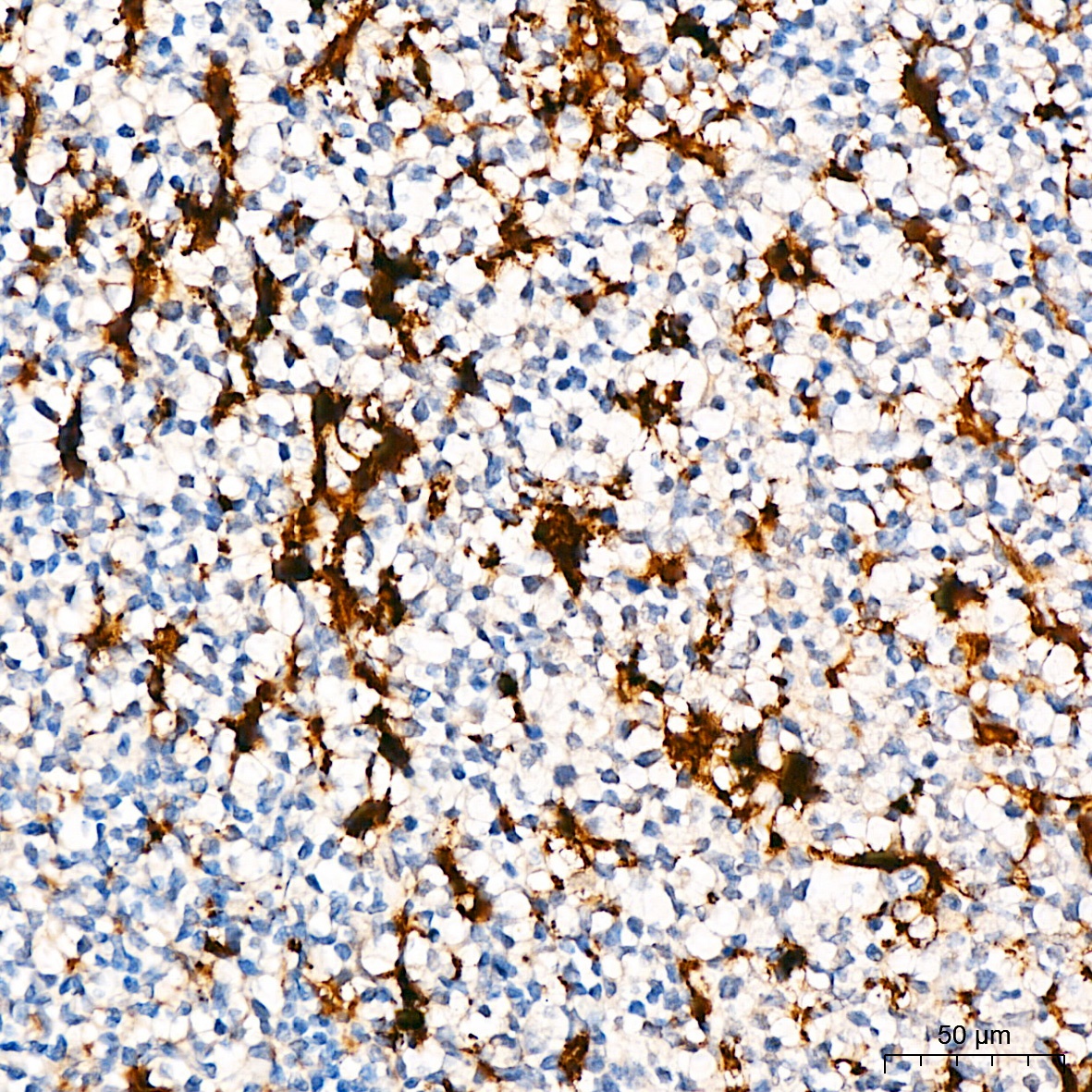
Immunohistochemistry analysis of paraffin-embedded Human tonsil tissue using Glutamine Synthetase (GLUL) Rabbit pAb (CAB21822) at a dilution of 1:1000 (40x lens). High pressure antigen retrieval was performed with 0.01 M Tris-EDTA buffer (pH 9.0) prior to IHC staining.
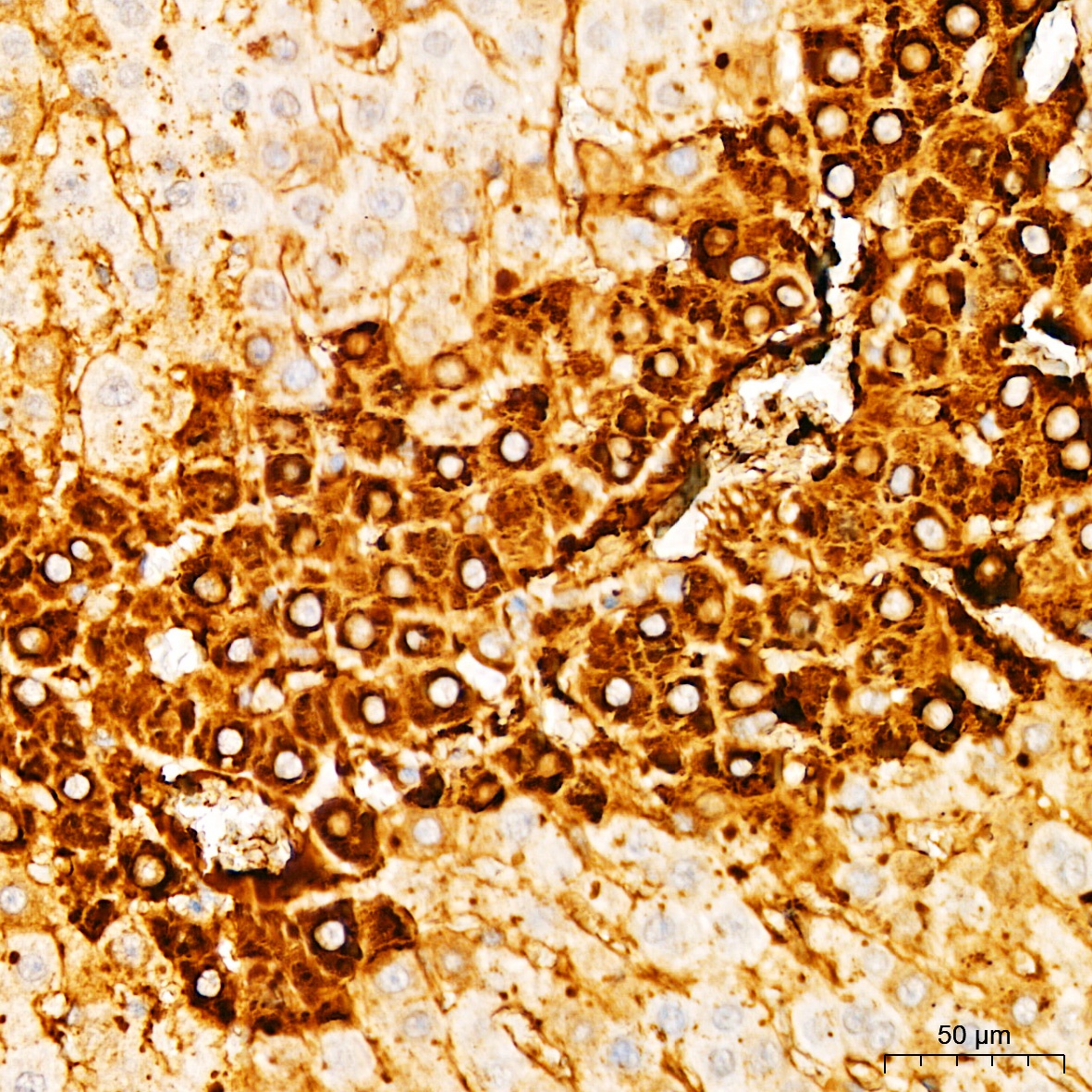
Immunohistochemistry analysis of paraffin-embedded Rat liver tissue using Glutamine Synthetase (GLUL) Rabbit pAb (CAB21822) at a dilution of 1:1000 (40x lens). High pressure antigen retrieval was performed with 0.01 M Tris-EDTA buffer (pH 9.0) prior to IHC staining.
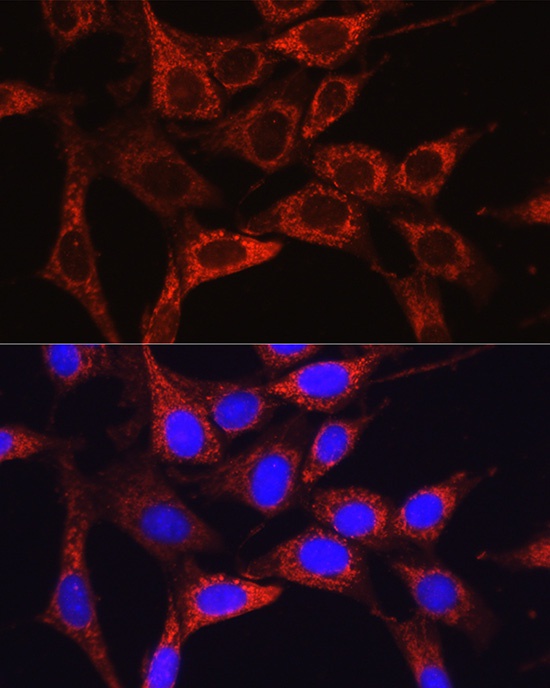
Immunofluorescence analysis of NIH/3T3 cells using Glutamine Synthetase (GLUL) Rabbit pAb (CAB21822) at dilution of 1:100 (40x lens). Secondary antibody: Cy3-conjugated Goat anti-Rabbit IgG (H+L) (CABS007) at 1:500 dilution. Blue: DAPI for nuclear staining.
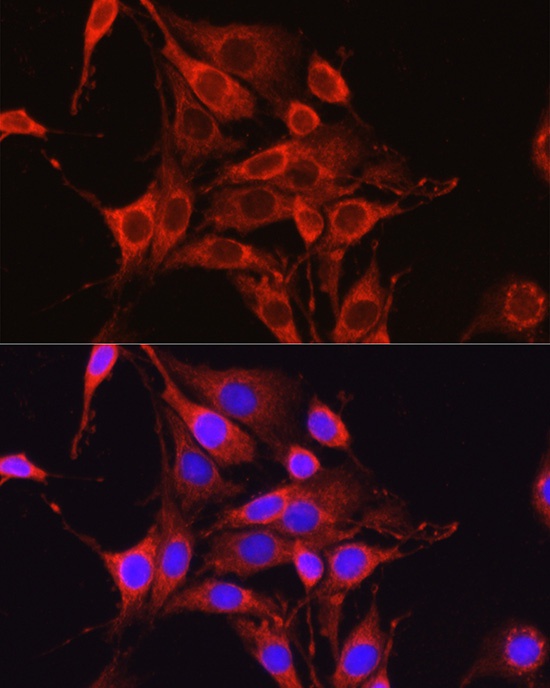
Immunofluorescence analysis of PC-12 cells using Glutamine Synthetase (GLUL) Rabbit pAb (CAB21822) at dilution of 1:100 (40x lens). Secondary antibody: Cy3-conjugated Goat anti-Rabbit IgG (H+L) (CABS007) at 1:500 dilution. Blue: DAPI for nuclear staining.