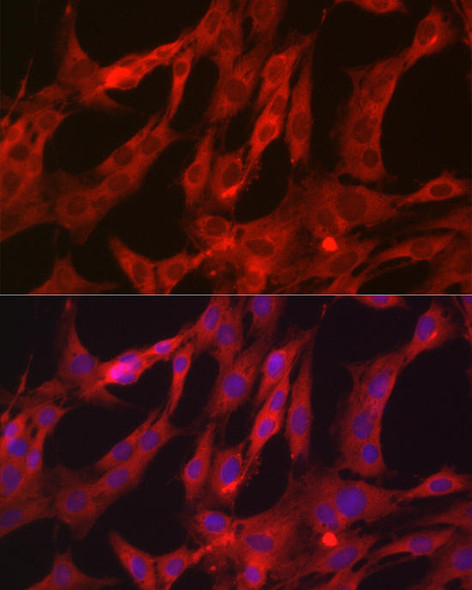
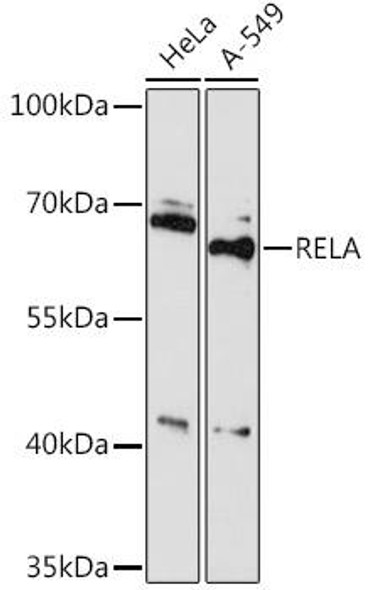
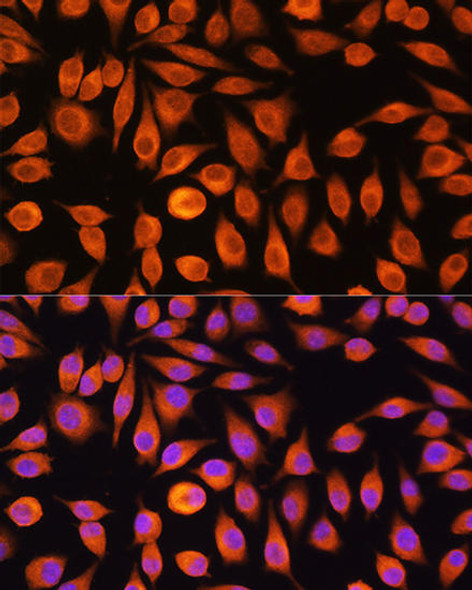
The [KO Validated] NF-kB p65/RelA Monoclonal Antibody (CAB19653) is a high-quality antibody developed for reliable detection and analysis of target proteins. NF-kB p65 is a key transcription factor involved in the regulation of inflammatory and immune responses, making this antibody essential for studies in immunology, cancer research, and inflammatory diseases.This antibody, raised in rabbits, is highly specific and sensitive for detecting NF-kB p65 protein in human samples, providing researchers with reliable and reproducible results in Western blot applications. Its validation in knockout models ensures accurate and specific targeting of NF-kB p65, making it a valuable tool for understanding the role of this transcription factor in various cellular processes.
This antibody is validated for use in WB, IHC-P, IF/ICC, ChIP, ELISA applications and has demonstrated reactivity against Human, Mouse, Rat, Monkey samples.
Product Name:
[KO Validated] NF-kB p65/RelA Monoclonal Antibody
SKU:
CAB19653
Size:
20μL, 100μL
Reactivity:
Human, Mouse, Rat, Monkey
Clone Number:
ARC51086
Conjugate:
Unconjugated
Immunogen:
Synthetic peptide. This information is considered to be commercially sensitive.
Recommended starting concentration is 1 μg/mL. Please optimize the concentration based on your specific assay requirements.
Synonyms:
p65, CMCU, NFKB3, AIF3BL3, NF-kB p65/RelA
Positive Sample:
HeLa, PC-12, COS-7, NIH/3T3
Cellular Localization:
Cytoplasm, Nucleus.
Calculated MW:
60kDa
Observed MW:
65kDa
NF-kappa-B is a ubiquitous transcription factor involved in several biological processes. It is held in the cytoplasm in an inactive state by specific inhibitors. Upon degradation of the inhibitor, NF-kappa-B moves to the nucleus and activates transcription of specific genes. NF-kappa-B is composed of NFKB1 or NFKB2 bound to either REL, RELA, or RELB. The most abundant form of NF-kappa-B is NFKB1 complexed with the product of this gene, RELA. Four transcript variants encoding different isoforms have been found for this gene.
Purification Method
Affinity purification
Gene ID
5970
RRID
AB_2862717
Buffer Information
Store at -20℃. Avoid freeze / thaw cycles. Buffer: PBS with 0.09% Sodium azide,0.05% BSA,50% glycerol,pH7.3.
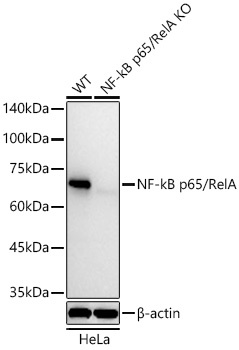
Western blot analysis of lysates from wild type (WT) and NF-kB p65/RelA knockout (KO) HeLa cells using [KO Validated] NF-kB p65/RelA Rabbit mAb (CAB19653) at 1:10000 dilution incubated overnight at 4℃. Secondary antibody: HRP-conjugated Goat anti-Rabbit IgG (H+L) (CABS014) at 1:10000 dilution. Lysates/proteins: 25 μg per lane. Blocking buffer: 3% nonfat dry milk in TBST. Detection: ECL Basic Kit (AbGn00020). Exposure time: 30s.
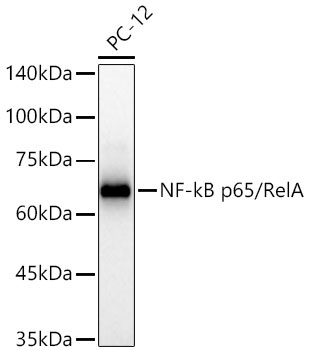
Western blot analysis of lysates from PC-12 cells using [KO Validated] NF-kB p65/RelA Rabbit mAb (CAB19653) at 1:10000 dilution incubated overnight at 4℃. Secondary antibody: HRP-conjugated Goat anti-Rabbit IgG (H+L) (CABS014) at 1:10000 dilution. Lysates/proteins: 25 μg per lane. Blocking buffer: 3% nonfat dry milk in TBST. Detection: ECL Basic Kit (AbGn00020). Exposure time: 30s.
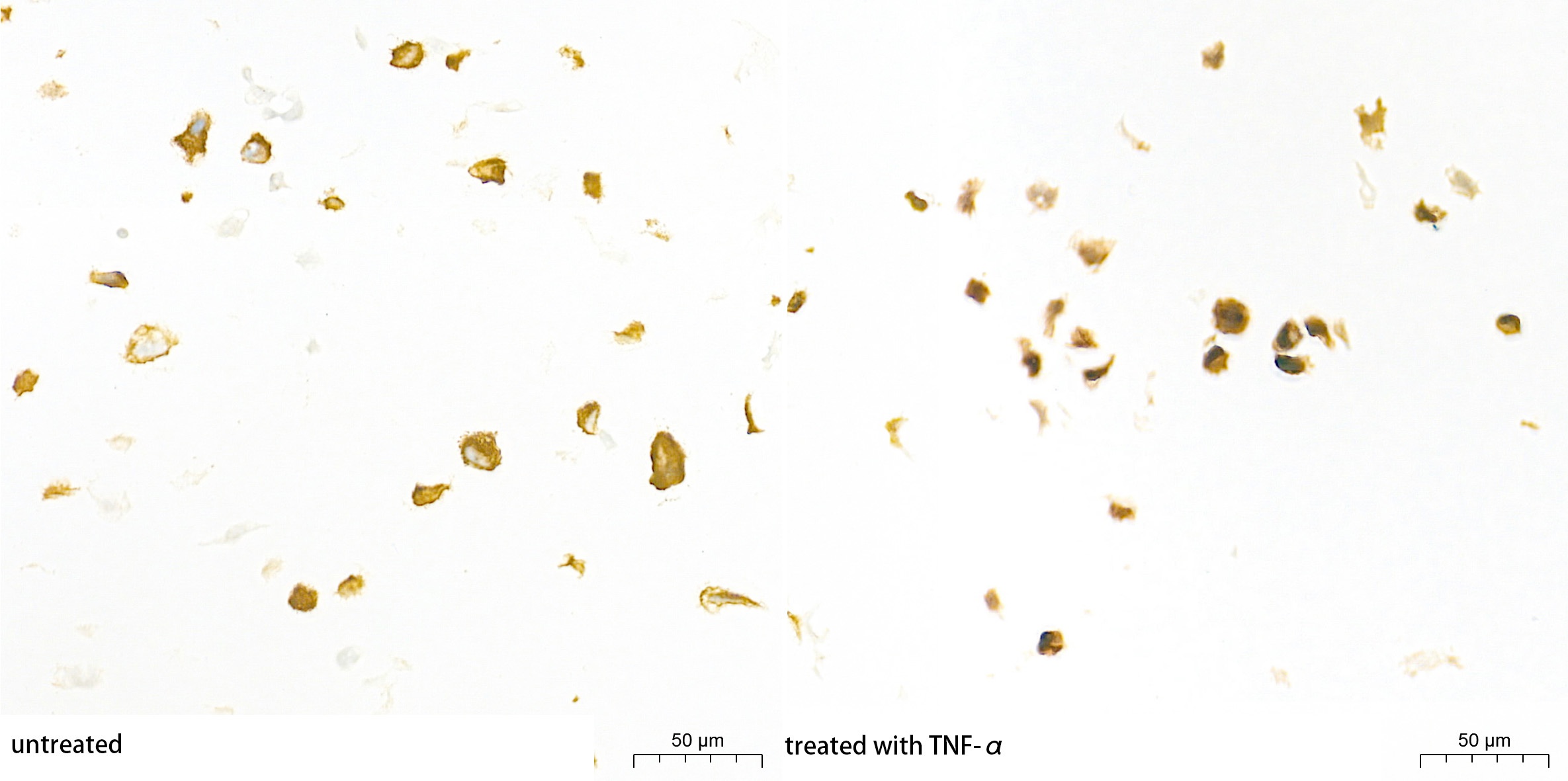
Immunohistochemistry analysis of paraffin-embedded HT-1080 cell lines(untreated and treated with TNF-α) using [KO Validated] NF-kB p65/RelA Rabbit mAb (CAB19653) at a dilution of 1:3000 (40x lens). High pressure antigen retrieval performed with 0.01M Tris-EDTA Buffer (pH 9.0) prior to IHC staining.
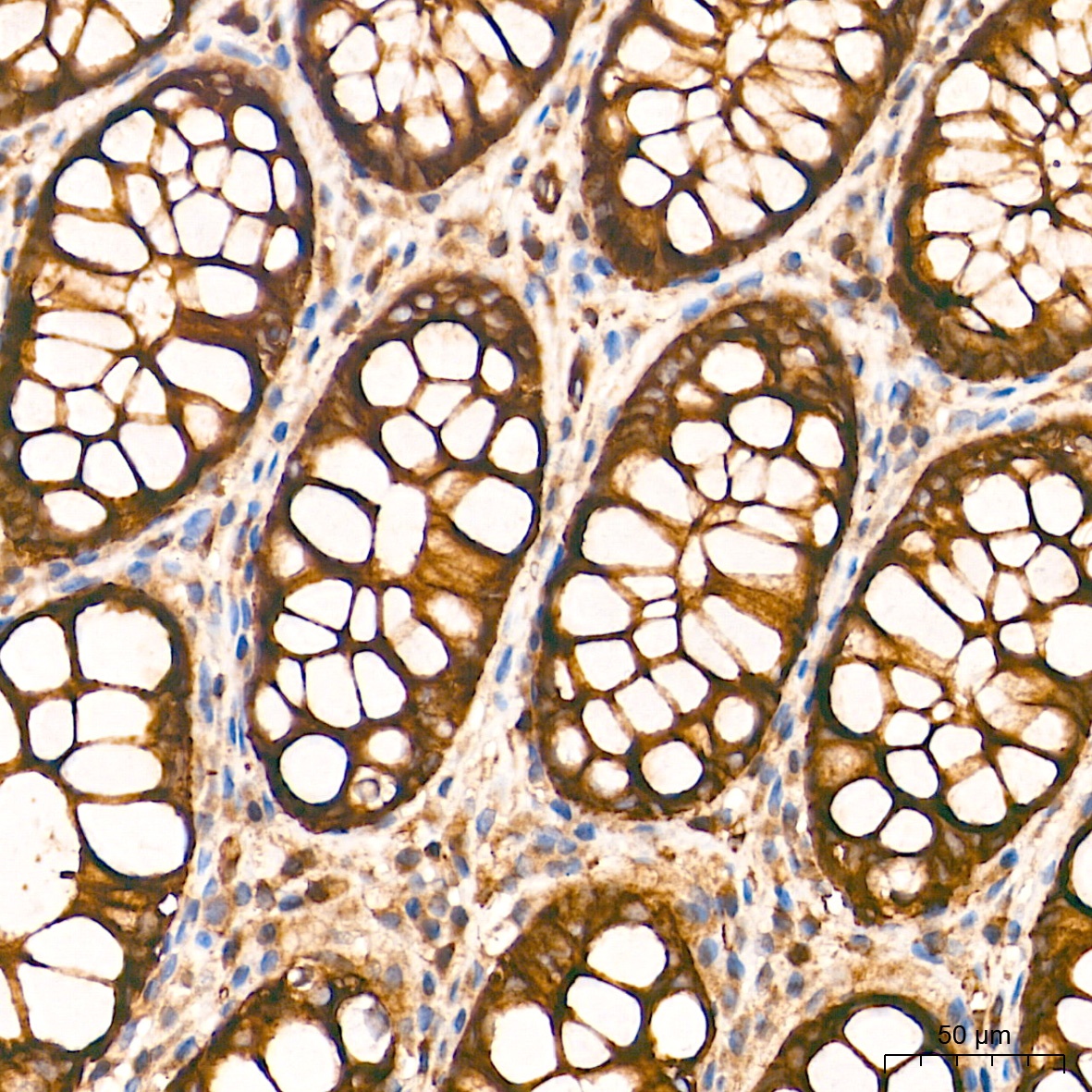
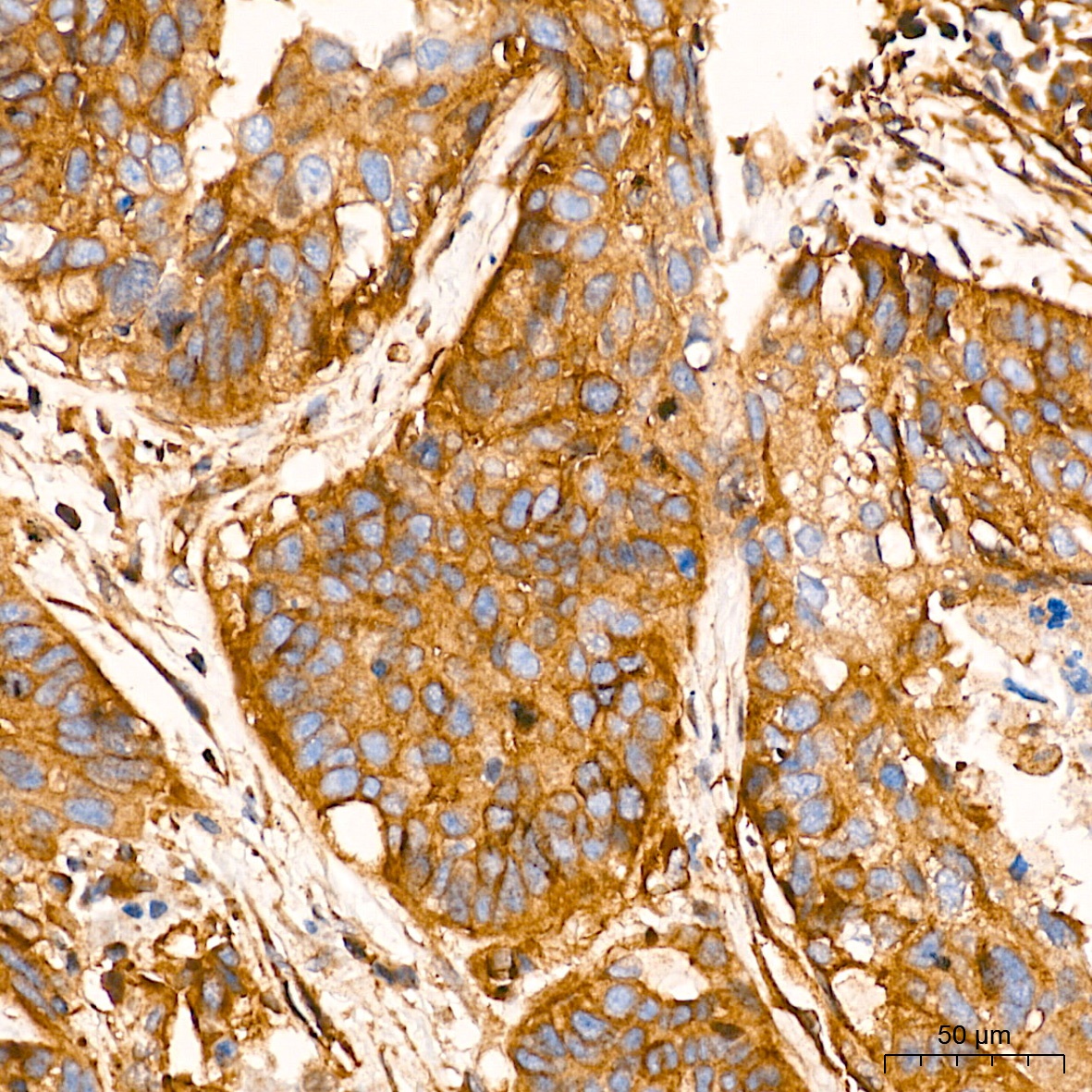
Immunohistochemistry analysis of paraffin-embedded Human colon tissue using [KO Validated] NF-kB p65/RelA Rabbit mAb (CAB19653) at a dilution of 1:3000 (40x lens). High pressure antigen retrieval performed with 0.01M Tris-EDTA Buffer (pH 9.0) prior to IHC staining.
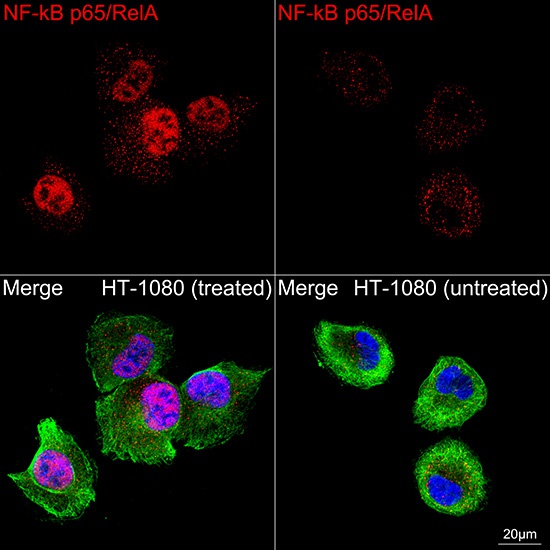
Confocal imaging of HT-1080 cells (treated with TNF-α) and HT-1080 cells (untreated) cells using [KO Validated] NF-kB p65/RelA Rabbit mAb (CAB19653, dilution 1:2100) followed by a further incubation with Cy3 Goat Anti-Rabbit IgG (H+L) (CABS007, dilution 1:500) (Red). The cells were counterstained with α-Tubulin Mouse mAb (AC012, dilution 1:400) followed by incubation with ABflo® 488-conjugated Goat Anti-Mouse IgG (H+L) Ab (CABS076, dilution 1:500) (Green). DAPI was used for nuclear staining (Blue). Objective: 100x.
Confocal imaging of HT-1080 cells (treated with TNF-α) and HT-1080 cells (untreated) cells using [KO Validated] NF-kB p65/RelA Rabbit mAb (CAB19653, dilution 1:2100) followed by a further incubation with Cy3 Goat Anti-Rabbit IgG (H+L) (CABS007, dilution 1:500) (Red). The cells were counterstained with α-Tubulin Mouse mAb (AC012, dilution 1:400) followed by incubation with ABflo® 488-conjugated Goat Anti-Mouse IgG (H+L) Ab (CABS076, dilution 1:500) (Green). DAPI was used for nuclear staining (Blue). Objective: 100x.
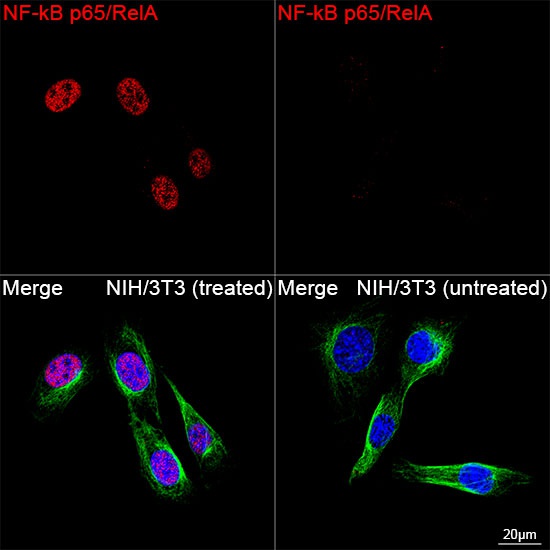
Confocal imaging of NIH/3T3 cells (treated with TNF-α) and NIH/3T3 cells (untreated) cells using [KO Validated] NF-kB p65/RelA Rabbit mAb (CAB19653, dilution 1:2100) followed by a further incubation with Cy3 Goat Anti-Rabbit IgG (H+L) (CABS007, dilution 1:500) (Red). The cells were counterstained with α-Tubulin Mouse mAb (AC012, dilution 1:400) followed by incubation with ABflo® 488-conjugated Goat Anti-Mouse IgG (H+L) Ab (CABS076, dilution 1:500) (Green). DAPI was used for nuclear staining (Blue). Objective: 100x.
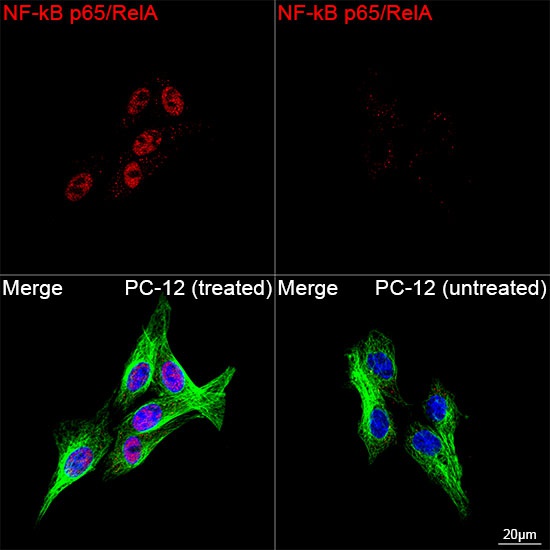
Confocal imaging of PC-12 cells (treated with TNF-α) and PC-12 cells (untreated) cells using [KO Validated] NF-kB p65/RelA Rabbit mAb (CAB19653, dilution 1:2100) followed by a further incubation with Cy3 Goat Anti-Rabbit IgG (H+L) (CABS007, dilution 1:500) (Red). The cells were counterstained with α-Tubulin Mouse mAb (AC012, dilution 1:400) followed by incubation with ABflo® 488-conjugated Goat Anti-Mouse IgG (H+L) Ab (CABS076, dilution 1:500) (Green). DAPI was used for nuclear staining (Blue). Objective: 100x.