The LYVE1 Antibody (CAB6452) is a high-quality antibody developed for reliable detection and analysis of target proteins. This antibody, generated in rabbits, is highly specific to human samples and has been validated for use in various applications, including immunohistochemistry and flow cytometry.LYVE1, also known as lymphatic vessel endothelial hyaluronan receptor-1, is a key player in the regulation of lymphatic vessel formation, maintenance, and inflammation. Its expression in lymphatic endothelial cells makes it an important marker for studying lymphangiogenesis and lymphatic function in health and disease.
This antibody is validated for use in WB, ELISA applications and has demonstrated reactivity against Human, Mouse samples.
Product Name:
LYVE1 Antibody
SKU:
CAB6452
Size:
20μL, 100μL
Reactivity:
Human, Mouse
Conjugate:
Unconjugated
Immunogen:
Recombinant protein (or fragment).This information is considered to be commercially sensitive.
Recommended starting concentration is 1 μg/mL. Please optimize the concentration based on your specific assay requirements.
Synonyms:
HAR, XLKD1, LYVE-1, CRSBP-1, LYVE1
Positive Sample:
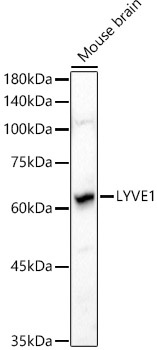
Mouse brain
Cellular Localization:
Membrane, Single-Pass Type I Membrane Protein.
Calculated MW:
35kDa
Observed MW:
60kDa
This gene encodes a type I integral membrane glycoprotein. The encoded protein acts as a receptor and binds to both soluble and immobilized hyaluronan. This protein may function in lymphatic hyaluronan transport and have a role in tumor metastasis.
Purification Method
Affinity purification
Gene ID
10894
RRID
AB_2767054
Buffer Information
Store at -20℃. Avoid freeze / thaw cycles. Buffer: PBS containing 50% glycerol, preserved with proclin300 or sodium azide, pH 7.3.
Western blot analysis of lysates from Mouse brain, using LYVE1 Rabbit pAb (CAB6452) at 1:1000 dilution. Secondary antibody: HRP-conjugated Goat anti-Rabbit IgG (H+L) (CABS014) at 1:10000 dilution. Lysates/proteins: 25μg per lane. Blocking buffer: 3% nonfat dry milk in TBST. Detection: ECL Basic Kit (AbGn00020). Exposure time: 90s.