The Peroxiredoxin 3 (PRDX3) Monoclonal Antibody (CAB2398) is a high-quality antibody developed for reliable detection and analysis of target proteins. This gene encodes a mitochondrial protein with antioxidant function. The protein is similar to the C22 subunit of Salmonella typhimurium alkylhydroperoxide reductase, and it can rescue bacterial resistance to alkylhydroperoxide in E. coli that lack the C22 subunit. The human and mouse genes are highly conserved, and they map to the regions syntenic between mouse and human chromosomes. Sequence comparisons with recently cloned mammalian homologs suggest that these genes consist of a family that is responsible for the regulation of cellular proliferation, differentiation and antioxidant functions. This family member can protect cells from oxidative stress, and it can promote cell survival in prostate cancer. Alternative splicing of this gene results in multiple transcript variants. Related pseudogenes have been identified on chromosomes 1, 3, 13 and 22. RRID AB_2863001 Gene ID 10935 Swiss Prot Synonym AOP1; MER5; AOP-1; PPPCD; SP-22; HBC189; SCAR32; PRO1748; prx-III; Peroxiredoxin 3 (PRDX3)
This antibody is validated for use in WB, IHC-P, IF/ICC, ELISA applications and has demonstrated reactivity against Human, Mouse samples.
Product Name:
Peroxiredoxin 3 (PRDX3) Monoclonal Antibody
SKU:
CAB2398
Size:
100μL, 20μL
Reactivity:
Human, Mouse
Clone Number:
ARC0747
Conjugate:
Unconjugated
Immunogen:
Synthetic peptide. This information is considered to be commercially sensitive.
Tested Applications:
WBIHC-PIF/ICCELISA
Recommended Dilution:
WB
1:500 - 1:1000
IHC-P
1:50 - 1:200
IF/ICC
1:50 - 1:200
ELISA
Recommended starting concentration is 1 μg/mL. Please optimize the concentration based on your specific assay requirements.
This gene encodes a mitochondrial protein with antioxidant function. The protein is similar to the C22 subunit of Salmonella typhimurium alkylhydroperoxide reductase, and it can rescue bacterial resistance to alkylhydroperoxide in E. coli that lack the C22 subunit. The human and mouse genes are highly conserved, and they map to the regions syntenic between mouse and human chromosomes. Sequence comparisons with recently cloned mammalian homologs suggest that these genes consist of a family that is responsible for the regulation of cellular proliferation, differentiation and antioxidant functions. This family member can protect cells from oxidative stress, and it can promote cell survival in prostate cancer. Alternative splicing of this gene results in multiple transcript variants. Related pseudogenes have been identified on chromosomes 1, 3, 13 and 22. RRID AB_2863001 Gene ID 10935 Swiss Prot Synonym AOP1; MER5; AOP-1; PPPCD; SP-22; HBC189; SCAR32; PRO1748; prx-III; Peroxiredoxin 3 (PRDX3)
Purification Method
Affinity purification
Gene ID
10935
RRID
AB_2863001
Buffer Information
Store at -20℃. Avoid freeze / thaw cycles. Buffer: PBS containing 50% glycerol and 0.05% BSA, preserved with proclin300 or sodium azide, pH 7.3.
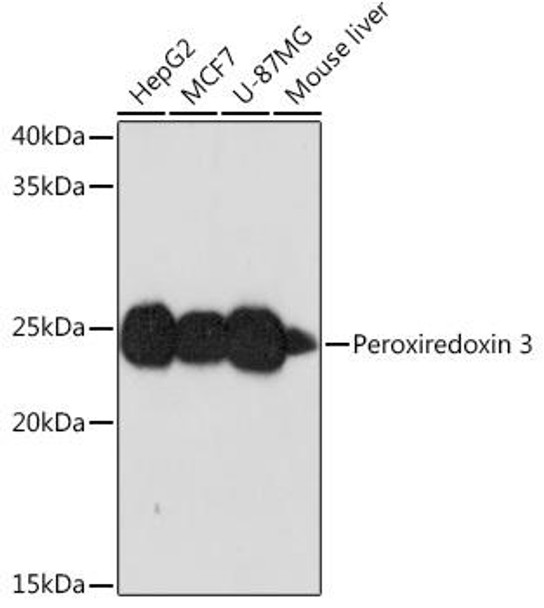
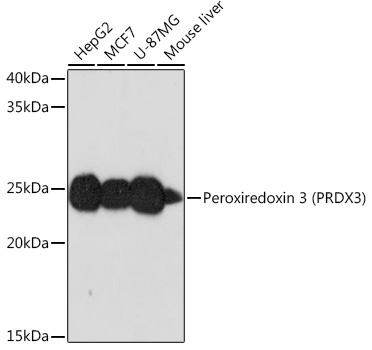
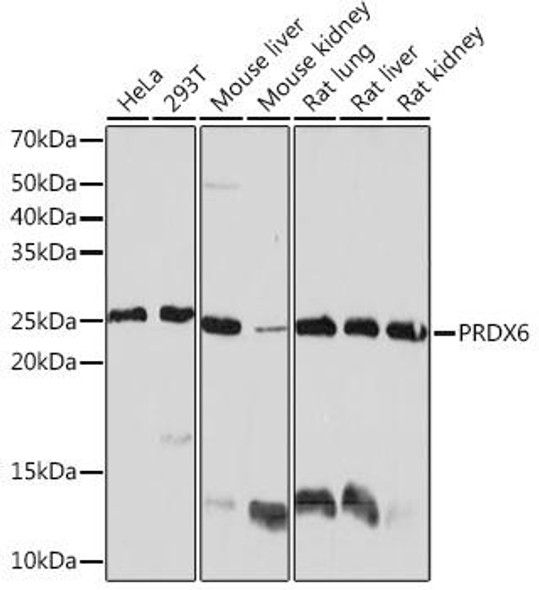
Western blot analysis of various lysates using Peroxiredoxin 3 (PRDX3) Rabbit mAb (CAB2398) at 1:1000 dilution incubated overnight at 4℃. Secondary antibody: HRP-conjugated Goat anti-Rabbit IgG (H+L) (AS014) at 1:10000 dilution. Lysates/proteins: 25μg per lane. Blocking buffer: 3% nonfat dry milk in TBST. Detection: ECL Basic Kit (AbGn00020). Exposure time: 90s.
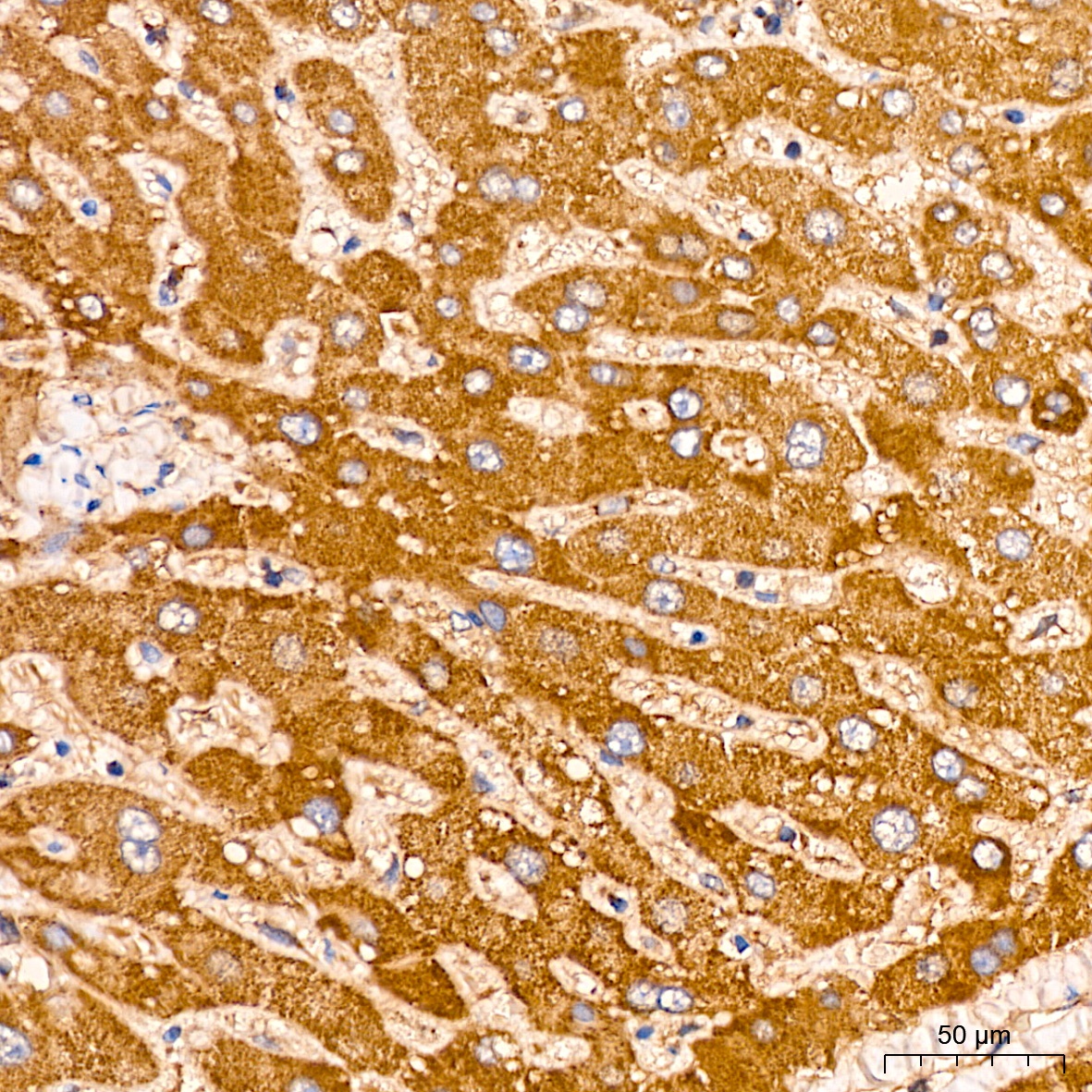
Immunohistochemistry analysis of paraffin-embedded Human liver tissue using Peroxiredoxin 3 (PRDX3) Rabbit mAb (CAB2398) at a dilution of 1:200 (40x lens). High pressure antigen retrieval performed with 0.01M Citrate buffer (pH 6.0) prior to IHC staining.
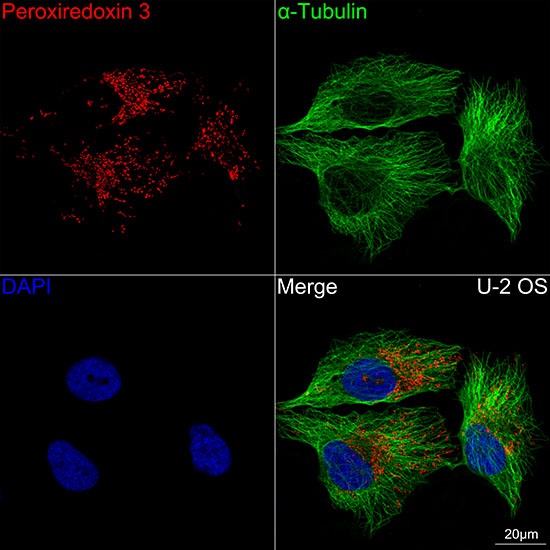
Confocal imaging of U-2 OS cells using Peroxiredoxin 3 (PRDX3) Rabbit mAb (CAB2398,at dilution of 1:100) (Red). The cells were counterstained with α-Tubulin Mouse mAb (AC012,dilution 1:400) (Green). DAPI was used for nuclear staining (blue). Objective: 100x.