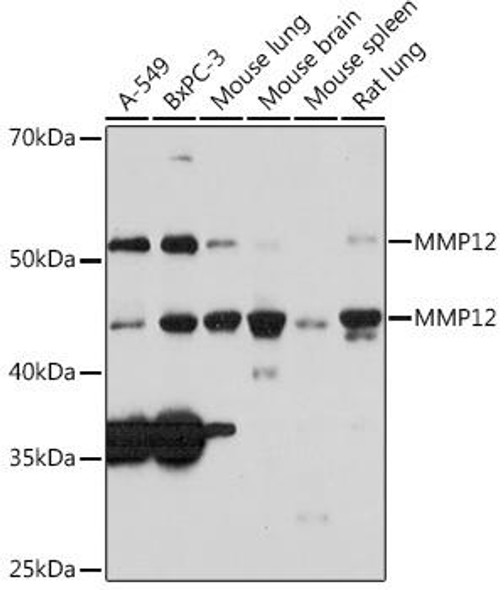
The ROR2 Monoclonal Antibody (CAB5120) is a high-quality antibody developed for reliable detection and analysis of target proteins. This antibody, generated in rabbits, exhibits high specificity and sensitivity when detecting ROR2 in human samples, making it ideal for use in Western blot applications.ROR2 plays a crucial role in various biological processes, including skeletal and cardiovascular development, making it a target of interest in developmental biology and regenerative medicine research. The ability of the ROR2 Rabbit Monoclonal Antibody to specifically bind to ROR2 enables researchers to study its expression and function in different cell types and experimental models, providing insights into its role in both normal and disease states.
This antibody is validated for use in WB, ELISA applications and has demonstrated reactivity against Mouse samples.
Product Name:
ROR2 Monoclonal Antibody
SKU:
CAB5120
Size:
20μL, 100μL
Reactivity:
Mouse
Clone Number:
ARC1197
Conjugate:
Unconjugated
Immunogen:
Synthetic peptide. This information is considered to be commercially sensitive.
Recommended starting concentration is 1 μg/mL. Please optimize the concentration based on your specific assay requirements.
Synonyms:
BDB, BDB1, NTRKR2, ROR2
Positive Sample:
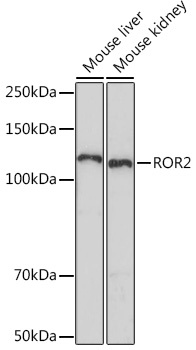
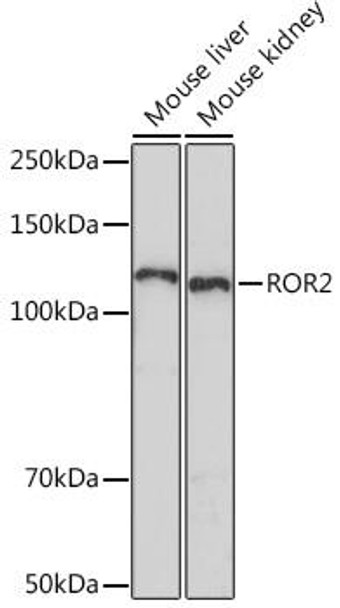
Mouse liver, Mouse kidney
Cellular Localization:
Cell Membrane, Single-Pass Type I Membrane Protein.
Calculated MW:
105kDa
Observed MW:
135kDa
The protein encoded by this gene is a receptor protein tyrosine kinase and type I transmembrane protein that belongs to the ROR subfamily of cell surface receptors. The protein may be involved in the early formation of the chondrocytes and may be required for cartilage and growth plate development. Mutations in this gene can cause brachydactyly type B, a skeletal disorder characterized by hypoplasia/aplasia of distal phalanges and nails. In addition, mutations in this gene can cause the autosomal recessive form of Robinow syndrome, which is characterized by skeletal dysplasia with generalized limb bone shortening, segmental defects of the spine, brachydactyly, and a dysmorphic facial appearance.
Purification Method
Affinity purification
Gene ID
4920
RRID
AB_2863454
Buffer Information
Store at -20℃. Avoid freeze / thaw cycles. Buffer: PBS containing 50% glycerol and 0.05% BSA, preserved with proclin300 or sodium azide, pH 7.3.
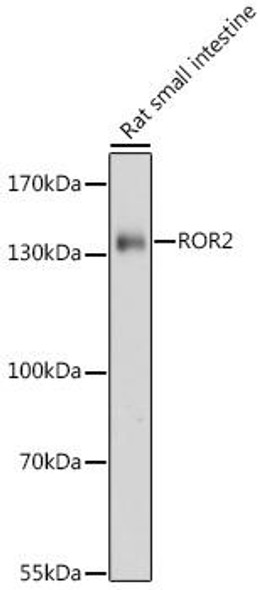
Western blot analysis of various lysates using ROR2 Rabbit mAb (CAB5120) at 1:1000 dilution. Secondary antibody: HRP-conjugated Goat anti-Rabbit IgG (H+L) (CABS014) at 1:10000 dilution. Lysates/proteins: 25μg per lane. Blocking buffer: 3% nonfat dry milk in TBST. Detection: ECL Enhanced Kit (AbGn00021). Exposure time: 90s.