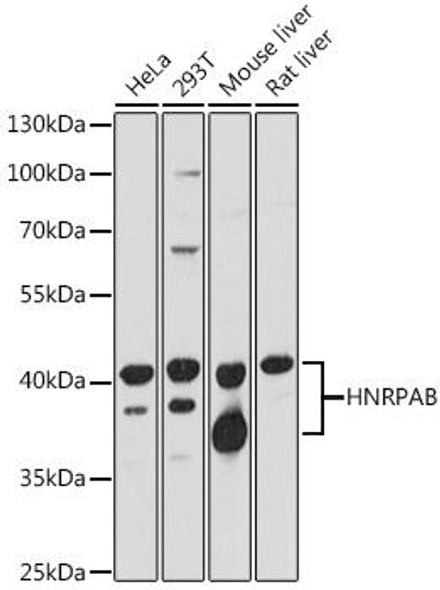
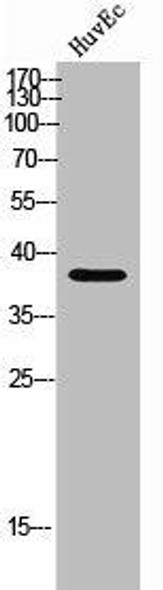
The TRMT5 Polyclonal Antibody (PAC012933) is a valuable tool for researchers studying TRMT5, a tRNA methyltransferase enzyme involved in the modification of transfer RNA molecules. This antibody, produced in rabbits, shows high reactivity with human samples and has been validated for use in Western blot applications. It specifically targets the TRMT5 protein, allowing for accurate detection and analysis in various cell types.TRMT5 plays a crucial role in tRNA methylation, a process essential for proper protein synthesis and cellular function.
Dysregulation of tRNA modifications has been implicated in various diseases, including cancer and neurological disorders. Research into TRMT5 can provide valuable insights into these conditions and may lead to the development of novel therapeutic approaches.By utilizing the TRMT5 Polyclonal Antibody, researchers can further investigate the role of TRMT5 in various biological processes and disease states. Its high specificity and sensitivity make it an ideal tool for studies in molecular biology, biochemistry, and translational medicine.
TRM5 tRNA methyltransferase 5 homolog (S. cerevisiae);TRMT5;KIAA1393;MGC111453;TRM5 ;
UniProt Protein Function:
TRMT5: Specifically methylates the N1 position of guanosine-37 in various cytoplasmic and mitochondrial tRNAs. Methylation is not dependent on the nature of the nucleoside 5' of the target nucleoside. This is the first step in the biosynthesis of wybutosine (yW), a modified base adjacent to the anticodon of tRNAs and required for accurate decoding. Belongs to the TRM5 / TYW2 family.Protein type: EC 2.1.1.228; MethyltransferaseChromosomal Location of Human Ortholog: 14q23.1Cellular Component: mitochondrial matrix; nucleusBiological Process: tRNA methylationDisease: Combined Oxidative Phosphorylation Deficiency 26
UniProt Protein Details:
NCBI Summary:
tRNAs contain as many as 13 or 14 nucleotides that are modified posttranscriptionally by enzymes that are highly specific for particular nucleotides in the tRNA structure. TRMT5 methylates the N1 position of guanosine-37 (G37) in selected tRNAs using S-adenosyl methionine (Brule et al., 2004 [PubMed 15248782]).[supplied by OMIM, Mar 2008]