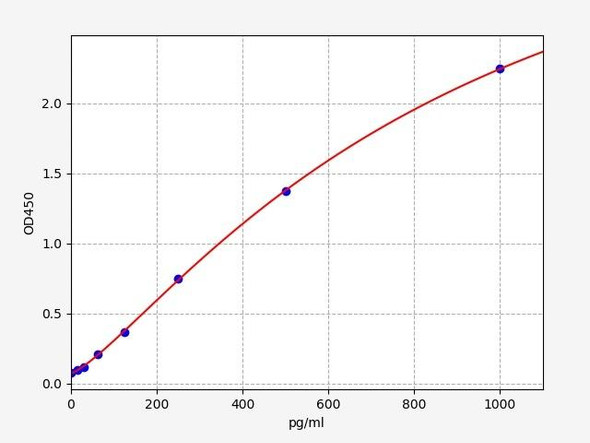
The Mouse Aβ1-42 (Amyloid Beta 1-42) ELISA Kit is a cutting-edge tool designed for the precise quantification of amyloid beta 1-42 levels in various mouse-derived biological samples. Amyloid beta peptides, particularly Aβ1-42, are key players in the development and progression of neurodegenerative diseases, notably Alzheimer's disease, where Aβ1-42 is known for its implication in amyloid plaque formation and neuronal toxicity. With the Mouse Aβ1-42 ELISA Kit offered by Assay Genie, researchers gain an instrumental resource to delve into the intricate roles of amyloid beta 1-42 in neurodegenerative pathways. This kit is characterized by exceptional sensitivity and specificity, ensuring accurate and reproducible results. Manufactured under stringent quality control measures, the Mouse Aβ1-42 ELISA Kit provides robust performance, making it an excellent choice for cutting-edge research endeavors aimed at unraveling the mechanisms underpinning Alzheimer's disease and related neurodegenerative conditions.
Product Name:
Mouse A beta 1-42 (Amyloid Beta 1-42) ELISA Kit
SKU:
AEES00205
Size:
96 Assays
Detection Method:
Colorimetric method, ELISA, Sandwich
Assay type:
Sandwich-ELISA
Assay time:
3 h 30 min
Sensitivity:
1.88 pg/mL
Detection range:
3.13-200 pg/mL
Reovery:
80%-120%
This ELISA kit uses the Sandwich-ELISA principle. The micro ELISA plate provided in this kit has been pre-coated with an antibody specific to the target protein. Standards or samples are added to the micro ELISA plate wells and bind to the immobilized antibody. A biotinylated detection antibody specific to the target protein is then added, followed by Avidin-Horseradish Peroxidase (HRP) conjugate. Free components are washed away. The substrate solution is added to each well, resulting in a color change. Only wells containing the target protein, detection antibody, and HRP conjugate will develop a blue color. The reaction is terminated by the addition of stop solution, resulting in a yellow color. The optical density (OD) is measured at 450 nm ± 2 nm. The OD value is directly proportional to the concentration of the target protein in the sample and is determined using a standard curve.