The Mouse Casp1 (Caspase-1) ELISA Kit is specifically designed for the quantitative detection of mouse caspase-1 levels in various samples, including serum, plasma, and cell culture supernatants. With its high sensitivity and specificity, this kit ensures accurate and reliable results for research purposes.Caspase-1 is an important enzyme involved in inflammation and immune responses, playing a key role in the activation of pro-inflammatory cytokines. Dysregulation of caspase-1 has been linked to various diseases, including autoimmune disorders and inflammatory conditions, making it a valuable biomarker for studying and understanding these pathologies. This ELISA kit provides a valuable tool for researchers looking to investigate the role of caspase-1 in disease pathways and developing potential therapeutic interventions. Its easy-to-use format, along with its high performance, makes it an essential component in any research laboratory studying inflammation and immune-related conditions in mice.
Product Name:
Mouse CASP1 (Caspase 1) ELISA Kit
SKU:
MOES00780
Size:
96 Assays
Detection Method:
Colorimetric method, ELISA, Sandwich
Assay type:
Sandwich-ELISA
Assay time:
3 h 30 min
Sensitivity:
18.75 pg/mL
Detection range:
31.25-2000 pg/mL
Reovery:
80%-120%
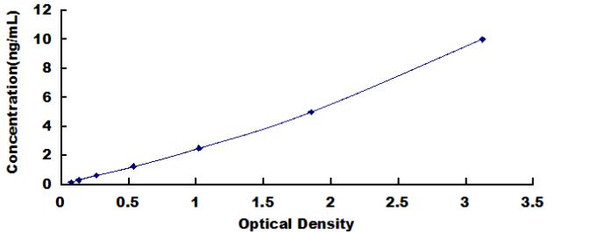
This ELISA kit uses the Sandwich-ELISA principle. The micro ELISA plate provided in this kit has been pre-coated with an antibody specific to the target protein. Standards or samples are added to the micro ELISA plate wells and bind to the immobilized antibody. A biotinylated detection antibody specific to the target protein is then added, followed by Avidin-Horseradish Peroxidase (HRP) conjugate. Free components are washed away. The substrate solution is added to each well, resulting in a color change. Only wells containing the target protein, detection antibody, and HRP conjugate will develop a blue color. The reaction is terminated by the addition of stop solution, resulting in a yellow color. The optical density (OD) is measured at 450 nm ± 2 nm. The OD value is directly proportional to the concentration of the target protein in the sample and is determined using a standard curve.