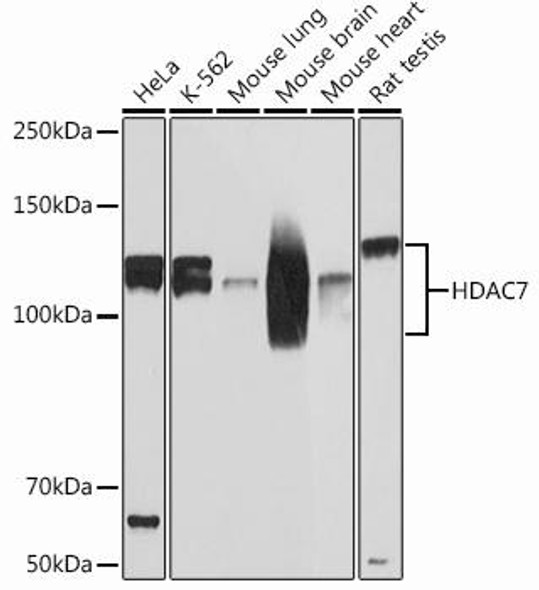
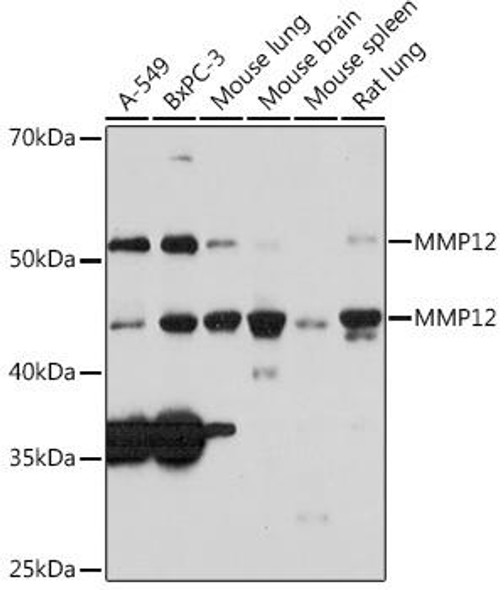
The NRF1 Monoclonal Antibody (CAB3252) is a high-quality antibody developed for reliable detection and analysis of target proteins. This antibody, generated in rabbits, is highly specific and reactive with human samples, making it an excellent tool for studying NRF1 in various biological systems. Validated for use in Western blot applications, the NRF1 Rabbit Monoclonal Antibody binds specifically to the NRF1 protein, allowing for accurate detection and analysis in a variety of cell types.
This antibody is validated for use in WB, IHC-P, IP, ChIP, ELISA, CUT&Tag applications and has demonstrated reactivity against Human, Mouse, Rat samples.
Product Name:
NRF1 Monoclonal Antibody
SKU:
CAB3252
Size:
20μL, 100μL
Reactivity:
Human, Mouse, Rat
Clone Number:
ARC0768
Conjugate:
Unconjugated
Immunogen:
Synthetic peptide. This information is considered to be commercially sensitive.
0.5μg-4μg antibody for 200μg-400μg extracts of whole cells
ELISA
Recommended starting concentration is 1 μg/mL. Please optimize the concentration based on your specific assay requirements.
ChIP
5μg antibody for 10μg-15μg of Chromatin
CUT&Tag
10⁵ cells /1 μg
Synonyms:
ALPHA-PAL, NRF1
Positive Sample:
HeLa, 293T, HepG2, Mouse brain, Rat heart, Rat brain
Cellular Localization:
Nucleus.
Calculated MW:
54kDa
Observed MW:
68-70kDa
This gene encodes a protein that homodimerizes and functions as a transcription factor which activates the expression of some key metabolic genes regulating cellular growth and nuclear genes required for respiration, heme biosynthesis, and mitochondrial DNA transcription and replication. The protein has also been associated with the regulation of neurite outgrowth. Alternative splicing results in multiple transcript variants. Confusion has occurred in bibliographic databases due to the shared symbol of NRF1 for this gene and for "nuclear factor (erythroid-derived 2)-like 1" which has an official symbol of NFE2L1.
Purification Method
Affinity purification
Gene ID
4899
RRID
AB_2863032
Buffer Information
Store at -20℃. Avoid freeze / thaw cycles. Buffer: PBS containing 50% glycerol and 0.05% BSA, preserved with proclin300 or sodium azide, pH 7.3.
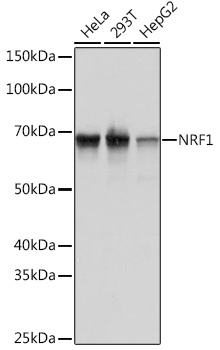
Western blot analysis of various lysates using NRF1 Rabbit mAb (CAB3252) at 1:1000 dilution. Secondary antibody: HRP-conjugated Goat anti-Rabbit IgG (H+L) (CABS014) at 1:10000 dilution. Lysates/proteins: 25 μg per lane. Blocking buffer: 3% nonfat dry milk in TBST. Detection: ECL Basic Kit (AbGn00020). Exposure time: 1 s.
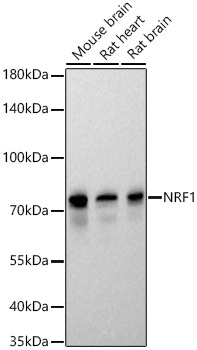
Western blot analysis of various lysates using NRF1 Rabbit mAb (CAB3252) at 1:3000 dilution incubated overnight at 4℃. Secondary antibody: HRP-conjugated Goat anti-Rabbit IgG (H+L) (CABS014) at 1:10000 dilution. Lysates/proteins: 25 μg per lane. Blocking buffer: 3% nonfat dry milk in TBST. Detection: ECL Basic Kit (AbGn00020). Exposure time: 45 s.
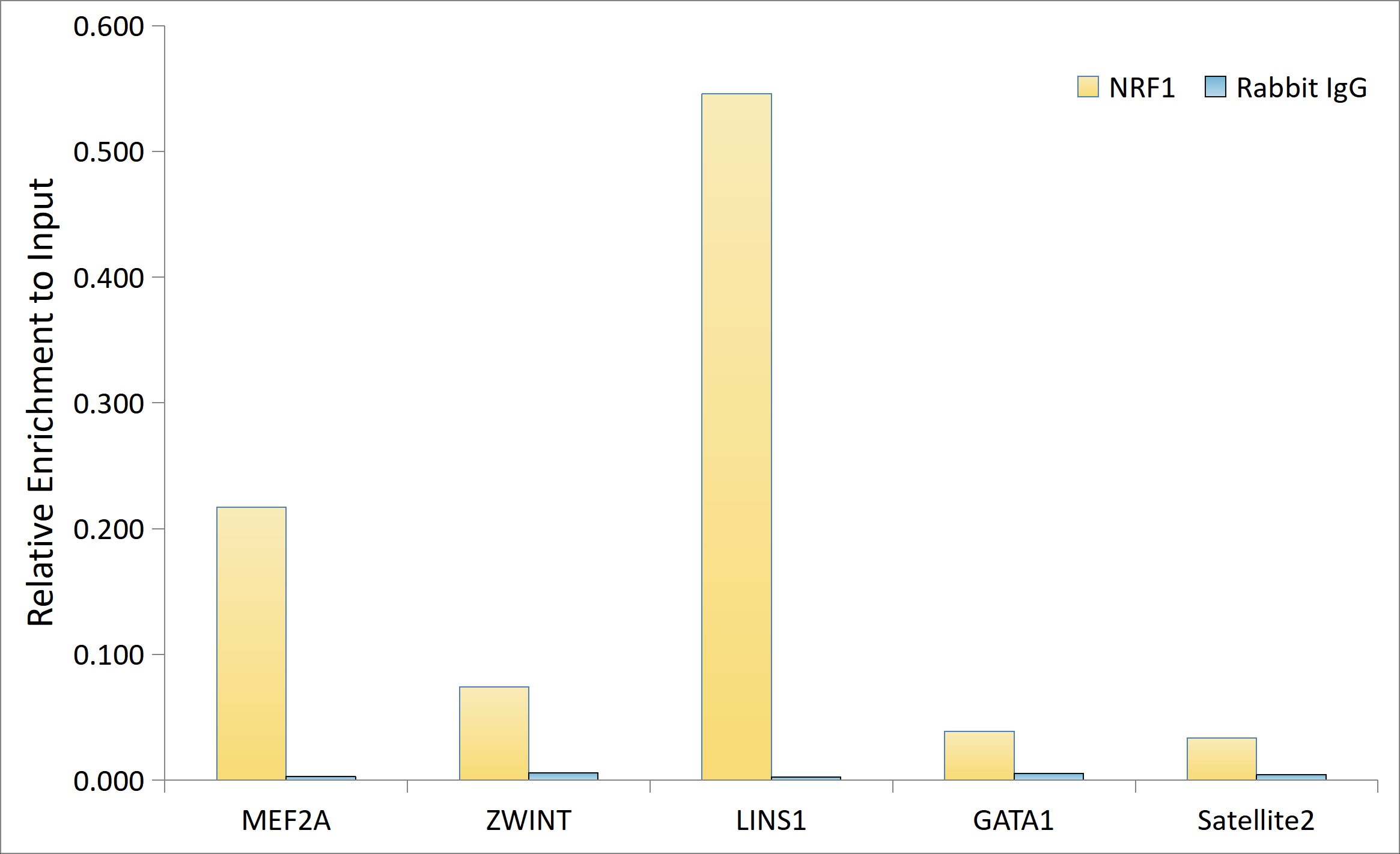
Chromatin immunoprecipitation analysis of extracts of HepG2 cells, using NRF1 antibody (CAB3252) and rabbit IgG.The amount of immunoprecipitated DNA was checked by quantitative PCR. Histogram was constructed by the ratios of the immunoprecipitated DNA to the input.
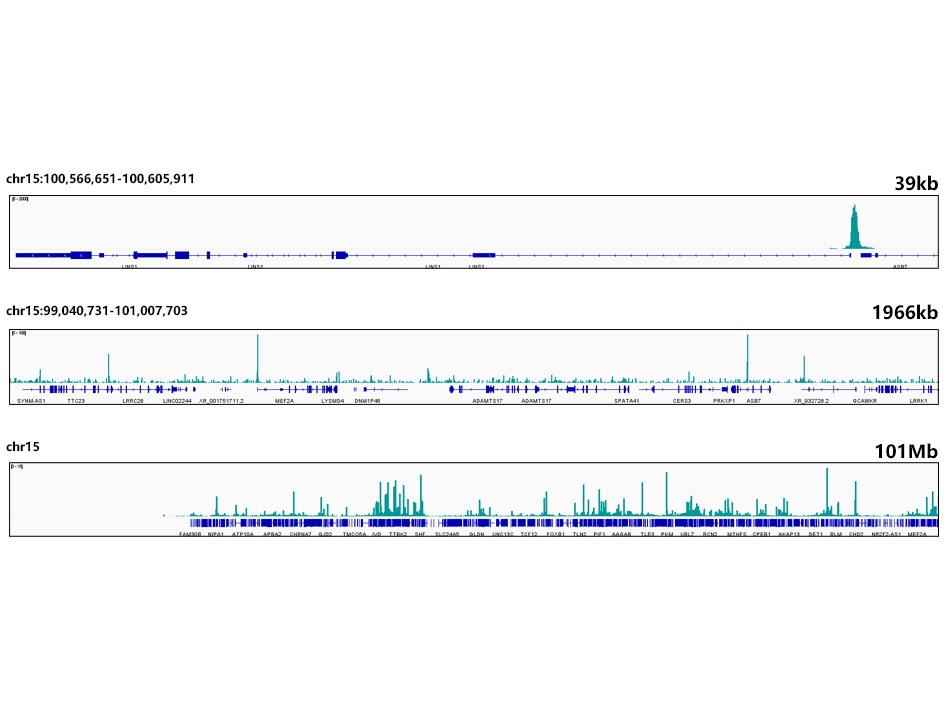
CUT&Tag was performed using the CUT&Tag Assay Kit (pAG-Tn5) for Illumina(RK20265) from 10⁵ HepG2 cells with 1 μg NRF1 Rabbit mAb (CAB3252), along with a Goat Anti-Rabbit IgG(H+L). The CUT&Tag results indicate the enrichment pattern of NRF1 in representative gene loci (LINS1), as shown in figure.