Description
| SKU: | RPCB3244 |
| Size: | 20 μg, 50 μg, 100 μg |
| Tag: | C-6His |
| Reactivity: | Human |
| Protein Description: | Alkaline phosphatase can be considered "our favorite enzyme" for reasons apparent to those who diagnose and treat metabolic bone diseases or who study skeletal biology. Few might know, however, that alkaline phosphatase likely represents the most frequently assayed enzyme in all of medicine. Elevated activity in the circulation is universally recognized as a marker for skeletal or hepatobiliary disease. |
| Endotoxin: | < 0.01 EU/μg of the protein by LAL method |
| Purity: | ≥ 95 % as determined by SDS-PAGE;≥ 95 % as determined by HPLC. |
| Formulation: | Lyophilized from a 0.22 μm filtered solution of 20mM Tris-HCl, 150mM NaCl, 0.2mM CaCl2,pH 7.5. |
| Gene ID: | 250 |
| Storage: | Store at -20℃.Store the lyophilized protein at -20℃ to -80 ℃ up to 1 year from the date of receipt. After reconstitution, the protein solution is stable at -20℃ for 3 months, at 2-8℃ for up to 1 week. |
| Reconstitution: | Centrifuge the vial before opening. Reconstitute to a concentration of 0.1-0.5 mg/mL in sterile distilled water. Avoid vortex or vigorously pipetting the protein. For long term storage, it is recommended to add a carrier protein or stablizer (e.g. 0.1% BSA, 5% HSA, 10% FBS or 5% Trehalose), and aliquot the reconstituted protein solution to minimize free-thaw cycles. |
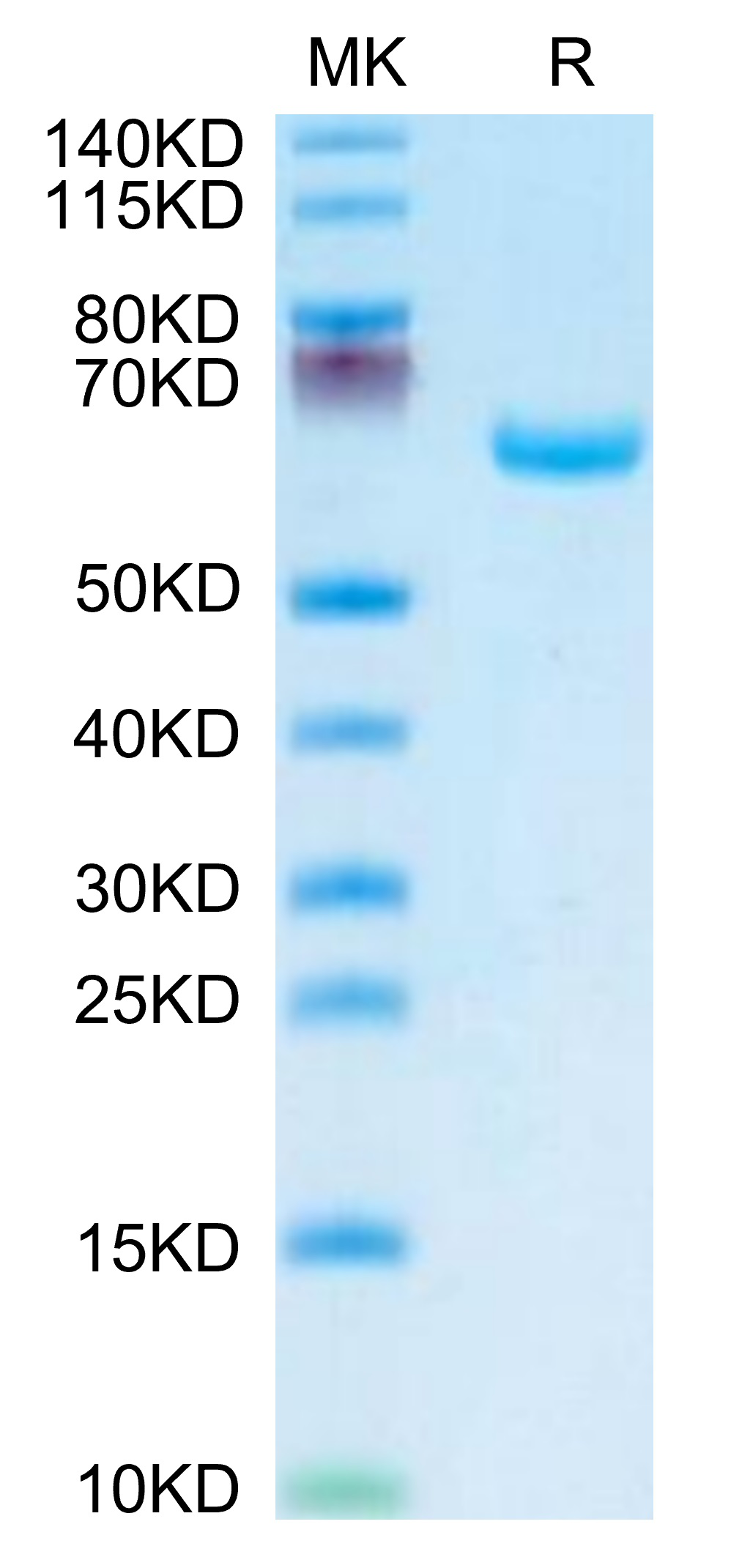 | Recombinant Human Alkaline phosphatase (Placental type) /ALPP Protein was determined by Tris-Bis PAGE under reducing conditions. |
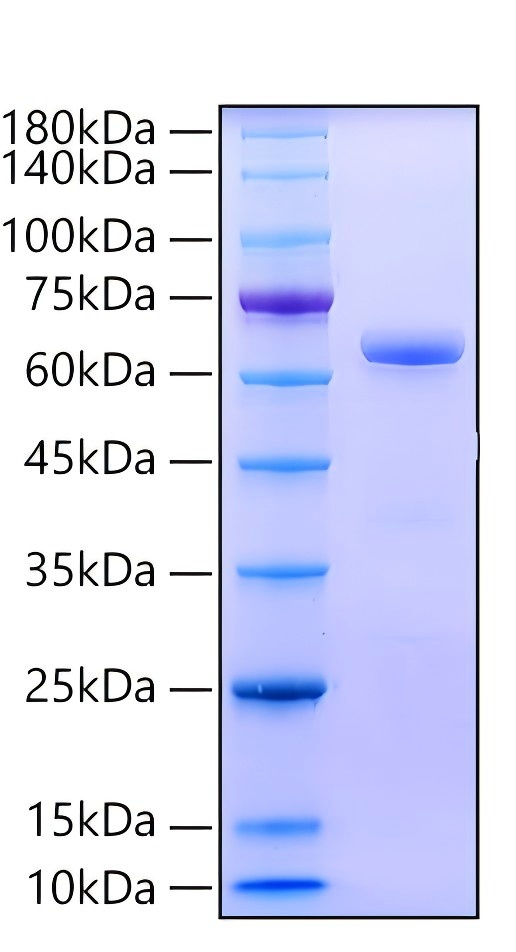 | Recombinant Human Alkaline phosphatase (Placental type) /ALPP Protein was determined by SDS- PAGE under reducing conditions with Coomassie Blue. |