

Description
| SKU: | RPCB3049 |
| Size: | 10 μg, 20 μg, 50 μg, 100 μg |
| Tag: | No-Tag |
| Reactivity: | Human |
| Protein Description: | BMP-7 (Bone morphogenetic protein 7) is a bone morphogenetic protein which belongs to the TGF-β superfamily. OP-1 is expressed in the brain, kidneys, and bladder. BMP-7 may be involved in bone homeostasis and plays a key role in the transformation of mesenchymal cells into bone and cartilage. The phosphorylation of SMAD1 and SMAD5 can be induced by BMP-7, which in turn induce transcription of numerous osteogenic genes. BMP-7 treatment can also induce all of the genetic markers of osteoblast differentiation in many cell types. Human recombinant BMP-7 protein can be used to aid in the fusion of vertebral bodies to prevent neurologic trauma. It also functions in the treatment of tibial non-union, frequently in cases where a bone graft has failed. It is found that BMP7 has the potential for treatment of chronic kidney disease. |
| Endotoxin: | < 0.1 EU/μg of the protein by LAL method. |
| Purity: | ≥ 95 % as determined by SDS-PAGE. |
| Formulation: | Lyophilized from a 0.22 μm filtered solution of 50mM acetic acid,pH3.6. |
| Gene ID: | 655 |
| Storage: | Store at -20℃.Store the lyophilized protein at -20℃ to -80 ℃ up to 1 year from the date of receipt. After reconstitution, the protein solution is stable at -20℃ for 3 months, at 2-8℃ for up to 1 week. |
| Reconstitution: | Centrifμge the vial before opening. Reconstitute to a concentration of 0.1-0.5 mg/mL in sterile distilled water. Avoid vortex or vigorously pipetting the protein. For long term storage, it is recommended to add a carrier protein or stablizer (e.g. 0.1% BSA, 5% HSA, 10% FBS or 5% Trehalose), and aliquot the reconstituted protein solution to minimize free-thaw cycles. |
| Swiss-Prot: | NP_001710.1 |
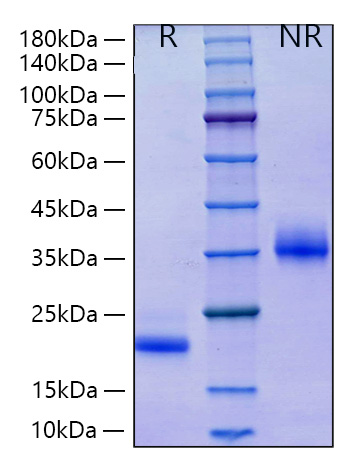 | Recombinant Human Mature BMP-7 Protein was determined by SDS- PAGE under reducing (R) and non- reducing (NR) conditions. |
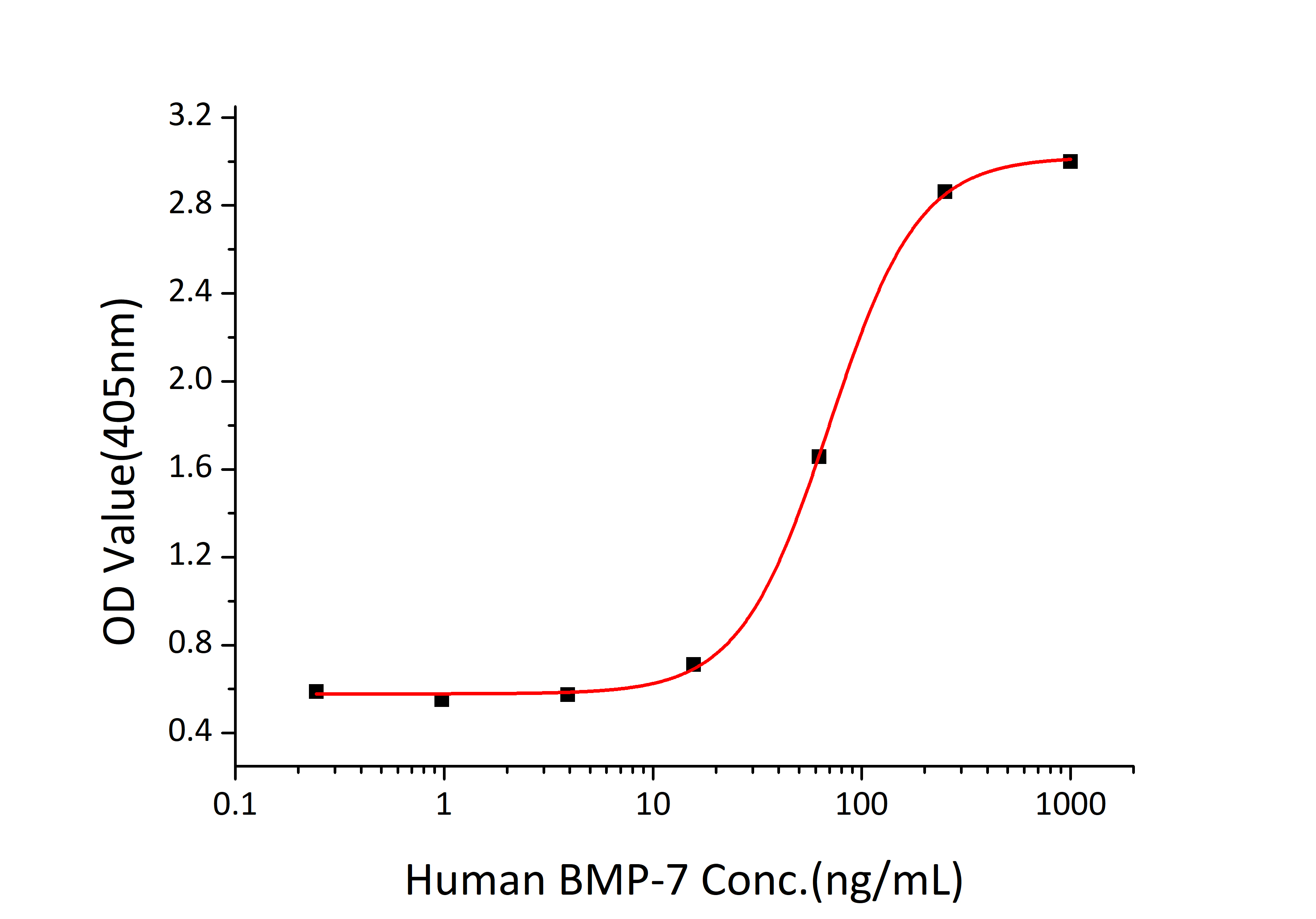 | Recombinant Human Mature BMP-7 Protein induce alkaline phosphatase production by ATDC5 mouse chondrogenic cells. The ED50 for this effect is 34. 9-139.58 ng/mL, corresponding to a specific activity of 7. 2×10 3~2. 87×10 4 units/mg. |
