The Thioredoxin reductase 1 (TXNRD1 ) Antibody (CAB16631) is a high-quality antibody developed for reliable detection and analysis of target proteins. This antibody, produced in rabbits, exhibits high specificity and sensitivity for human samples, making it suitable for use in Western blot applications. By targeting the TXNRD1 protein, this antibody allows for accurate detection and analysis in a variety of cell types, making it an invaluable tool for studies in areas such as oxidative stress, cancer biology, and neurodegenerative diseases. TXNRD1, also known as thioredoxin reductase 1, is a crucial enzyme involved in maintaining proper redox balance within cells and preventing oxidative damage.
This antibody is validated for use in WB, IHC-P, IF/ICC, ELISA applications and has demonstrated reactivity against Human, Mouse, Rat samples.
Product Name:
Thioredoxin reductase 1 (TXNRD1 ) Antibody
SKU:
CAB16631
Size:
20μL, 100μL
Reactivity:
Human, Mouse, Rat
Conjugate:
Unconjugated
Immunogen:
Recombinant protein (or fragment).This information is considered to be commercially sensitive.
Cytosol, Extracellular Exosome, Fibrillar Center, Mitochondrion, Nucleoplasm.
Calculated MW:
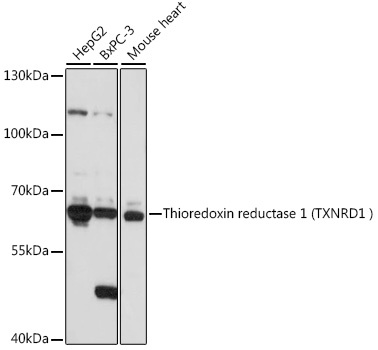
71kDa
Observed MW:
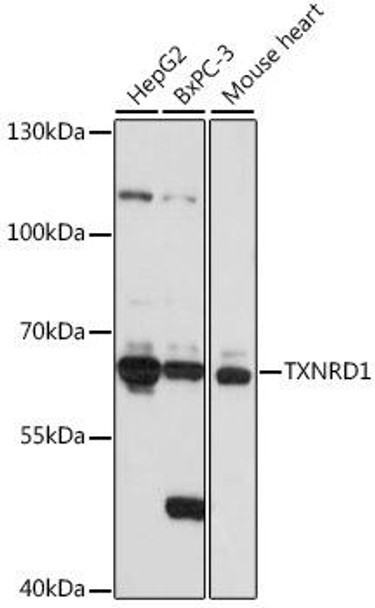
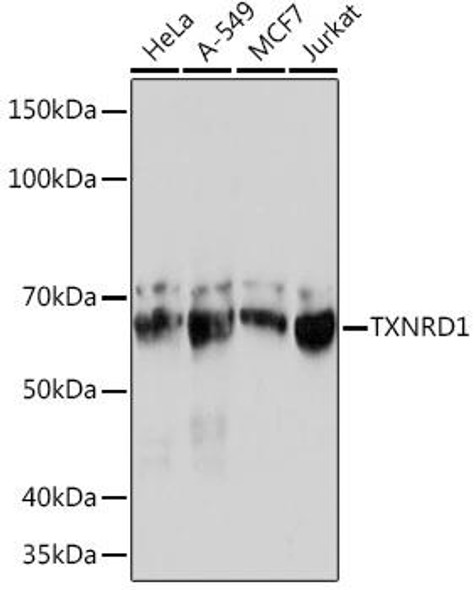
65kDa
The protein encoded by this gene belongs to the pyridine nucleotide-disulfide oxidoreductase family, and is a member of the thioredoxin (Trx) system. Three thioredoxin reductase (TrxR) isozymes are found in mammals. TrxRs are selenocysteine-containing flavoenzymes, which reduce thioredoxins, as well as other substrates, and play a key role in redox homoeostasis. This gene encodes an ubiquitously expressed, cytosolic form of TrxR, which functions as a homodimer containing FAD, and selenocysteine (Sec) at the active site. Sec is encoded by UGA codon that normally signals translation termination. The 3' UTRs of selenoprotein mRNAs contain a conserved stem-loop structure, the Sec insertion sequence (SECIS) element, which is necessary for the recognition of UGA as a Sec codon rather than as a stop signal. Alternative splicing, primarily at the 5' end, results in transcript variants encoding same or different isoforms, including a glutaredoxin-containing isoform that is predominantly expressed in testis.
Purification Method
Affinity purification
Gene ID
7296
RRID
AB_2772766
Buffer Information
Store at -20℃. Avoid freeze / thaw cycles. Buffer: PBS with 0.09% Sodium azide,50% glycerol,pH7.3.
Western blot analysis of various lysates using Thioredoxin reductase 1 (TXNRD1 ) Rabbit pAb (CAB16631) at 1:1000 dilution. Secondary antibody: HRP-conjugated Goat anti-Rabbit IgG (H+L) (CABS014) at 1:10000 dilution. Lysates/proteins: 25μg per lane. Blocking buffer: 3% nonfat dry milk in TBST. Detection: ECL Basic Kit (AbGn00020). Exposure time: 90s.
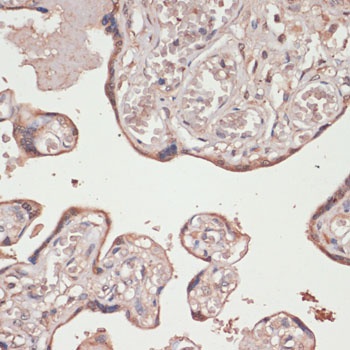
Immunohistochemistry analysis of paraffin-embedded Human placenta using Thioredoxin reductase 1 (Thioredoxin reductase 1 (TXNRD1 ) ) antibody (CAB16631) at dilution of 1:100 (40x lens). Microwave antigen retrieval performed with 0.01M PBS Buffer (pH 7.2) prior to IHC staining.
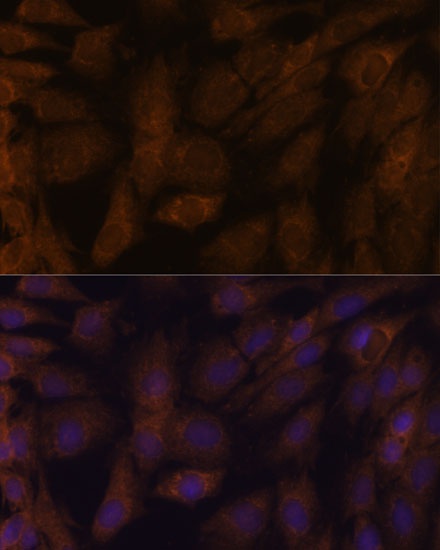
Immunofluorescence analysis of C6 cells using Thioredoxin reductase 1 (TXNRD1 ) Rabbit pAb (CAB16631) at dilution of 1:100. Secondary antibody: Cy3-conjugated Goat anti-Rabbit IgG (H+L) (CABS007) at 1:500 dilution. Blue: DAPI for nuclear staining.
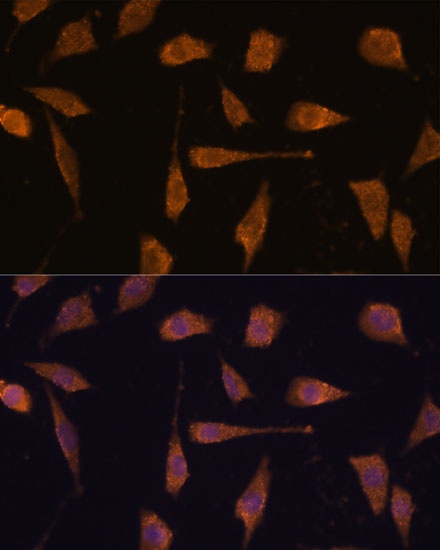
Immunofluorescence analysis of L929 cells using Thioredoxin reductase 1 (TXNRD1 ) Rabbit pAb (CAB16631) at dilution of 1:100. Secondary antibody: Cy3-conjugated Goat anti-Rabbit IgG (H+L) (CABS007) at 1:500 dilution. Blue: DAPI for nuclear staining.