The UBE3A Antibody (CAB1757) is a high-quality antibody developed for reliable detection and analysis of target proteins. This antibody, generated in rabbits, exhibits high specificity and sensitivity towards human UBE3A samples, making it suitable for Western blot applications. By binding to the UBE3A protein, researchers can effectively detect and analyze its expression in different cell types, making it an ideal choice for studies in molecular biology and neurological disorders.
This antibody is validated for use in WB, IHC-P, IF/ICC, ELISA applications and has demonstrated reactivity against Human, Mouse, Rat samples.
Product Name:
UBE3A Antibody
SKU:
CAB1757
Size:
20μL, 100μL
Reactivity:
Human, Mouse, Rat
Conjugate:
Unconjugated
Immunogen:
Recombinant protein (or fragment).This information is considered to be commercially sensitive.
Recommended starting concentration is 1 μg/mL. Please optimize the concentration based on your specific assay requirements.
Synonyms:
AS, ANCR, PIX1, E6-AP, HPVE6A, EPVE6AP, UBE3A
Positive Sample:
HeLa, K-562, 293F
Cellular Localization:
Cytoplasm, Nucleus.
Calculated MW:
101kDa
Observed MW:
100kDa
This gene encodes an E3 ubiquitin-protein ligase, part of the ubiquitin protein degradation system. This imprinted gene is maternally expressed in brain and biallelically expressed in other tissues. Maternally inherited deletion of this gene causes Angelman Syndrome, characterized by severe motor and intellectual retardation, ataxia, hypotonia, epilepsy, absence of speech, and characteristic facies. The protein also interacts with the E6 protein of human papillomavirus types 16 and 18, resulting in ubiquitination and proteolysis of tumor protein p53. Alternative splicing of this gene results in three transcript variants encoding three isoforms with different N-termini. Additional transcript variants have been described, but their full length nature has not been determined.
Purification Method
Affinity purification
Gene ID
7337
RRID
AB_2763801
Buffer Information
Store at -20℃. Avoid freeze / thaw cycles. Buffer: PBS containing 50% glycerol, preserved with proclin300 or sodium azide, pH 7.3.
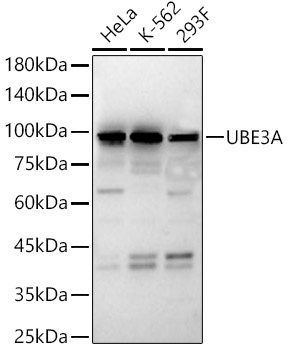
Western blot analysis of various lysates, using UBE3A Rabbit pAb (CAB1757) at 1:500 dilution. Secondary antibody: HRP-conjugated Goat anti-Rabbit IgG (H+L) (CABS014) at 1:10000 dilution. Lysates/proteins: 25μg per lane. Blocking buffer: 3% nonfat dry milk in TBST. Detection: ECL Basic Kit (AbGn00020). Exposure time: 60s.
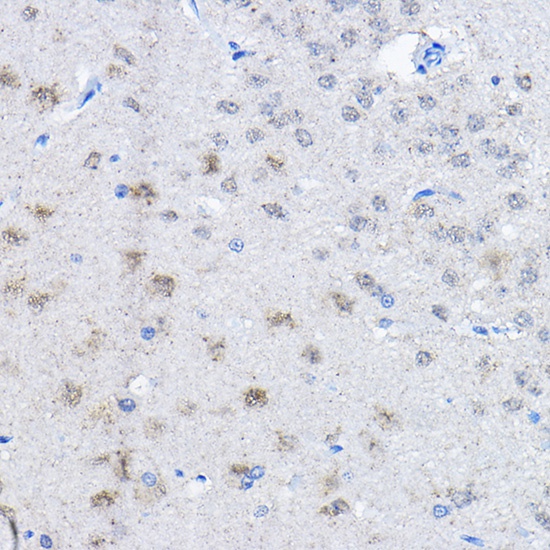
Immunohistochemistry analysis of paraffin-embedded Rat brain using UBE3A Rabbit pAb (CAB1757) at dilution of 1:100 (40x lens). High pressure antigen retrieval performed with 0.01M Citrate buffer (pH 6.0) prior to IHC staining.
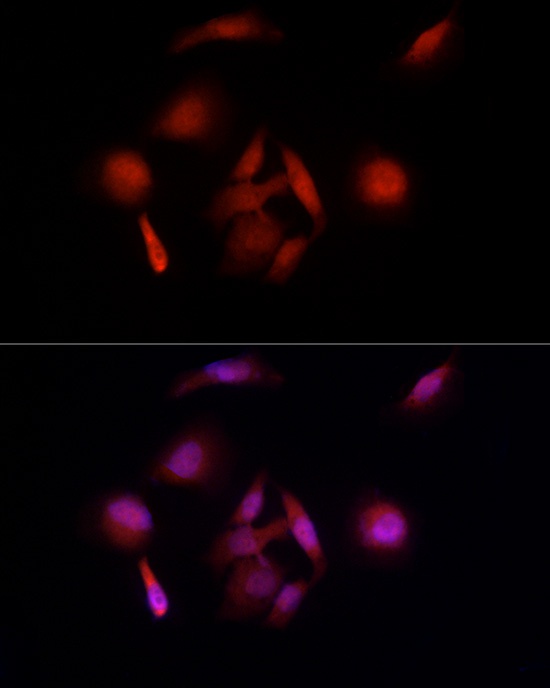
Immunofluorescence analysis of HeLa cells using UBE3A Rabbit pAb (CAB1757) at dilution of 1:50 (40x lens). Secondary antibody: Cy3-conjugated Goat anti-Rabbit IgG (H+L) (CABS007) at 1:500 dilution. Blue: DAPI for nuclear staining.