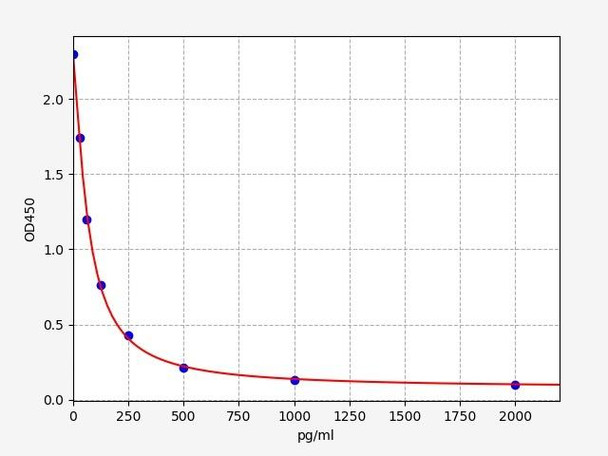
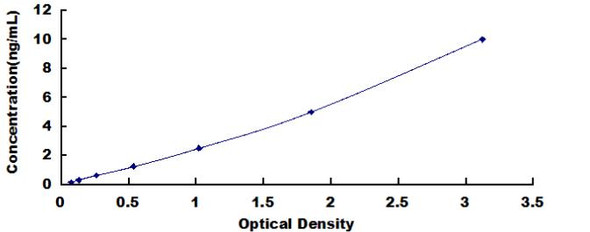
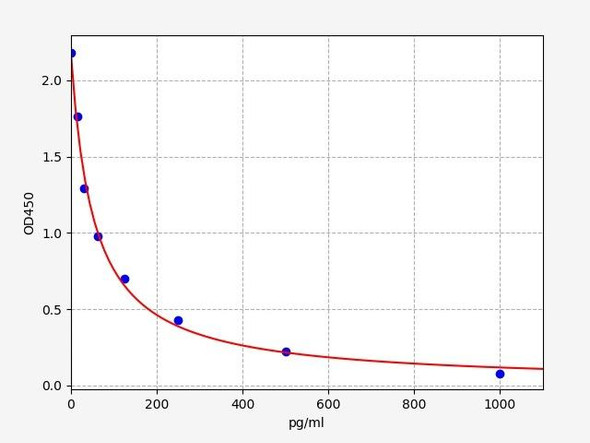
The Goat GnRH (Gonadotropin-Releasing Hormone) ELISA Kit is specifically designed for the accurate measurement of GnRH levels in goat serum, plasma, and cell culture supernatants. This kit offers high sensitivity and specificity, ensuring precise and reliable results for a variety of research applications. GnRH is a key hormone that plays a crucial role in the regulation of reproductive functions in animals. It is essential for the control of the reproductive cycle and fertility in goats. Abnormalities in GnRH levels can lead to reproductive disorders and infertility in goats, making it a valuable biomarker for studying and managing reproductive health in these animals.
The Goat GnRH ELISA Kit is easy to use and provides fast results, making it a valuable tool for researchers and veterinarians working in the fields of animal reproduction and endocrinology. Whether studying reproductive biology, developing breeding programs, or monitoring reproductive health in goats, this kit is essential for accurate GnRH level detection.
Serum, Plasma, Cell Culture Supernatant, Cell or Tissue Lysate, Other Liquid Samples
Storage:
2-8°C(Sealed), Don't cryopreserve.
Linearity:
Sample
1:2
1:4
1:8
Serum (n = 10)
87-97%
85-102%
88-105%
EDTA Plasma (n = 10)
83-100%
87-97%
86-101%
Heparin Plasma (n = 10)
83-100%
82-100%
80-95%
Recovery:
Sample
Recovery Range (%)
Average (%)
Serum (n = 10)
87-102
92
EDTA Plasma (n = 10)
87-103
95
Heparin Plasma (n = 10)
88-103
95
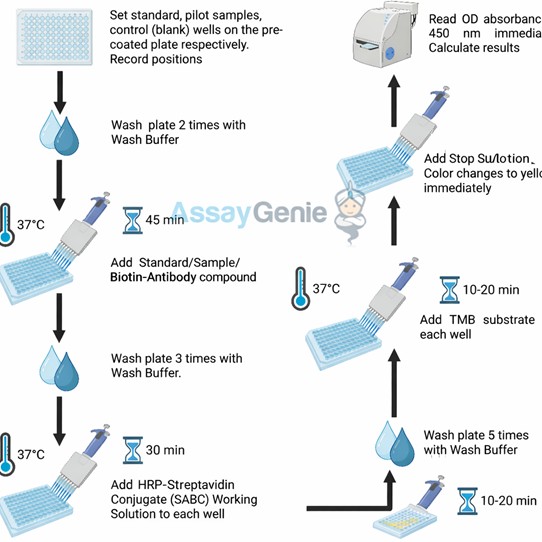
Note: The below protocol is a sample protocol. Protocols are specific to each batch/lot. For the correct instructions please follow the protocol included in your kit.
Step
Procedure
1
Reagent & Plate Preparation: Equilibrate TMB substrate for 30 minutes at room temperature. Prepare standards, samples (minimum 1:2 dilution), blanks, assign wells, and pre-wash the plate twice.
2
Sample & Biotin-Antibody Binding: Add 50 µL standard or sample followed by 50 µL biotin-labeled antibody to each well. Mix gently and incubate at 37°C for 45 minutes.
3
Washing: Wash the plate 5 times with wash buffer, allowing 1 minute soak time per wash.
4
Color Development: Add TMB substrate and incubate in the dark at 37°C for 10-20 minutes until color develops.
5
Stop Reaction: Add stop solution to terminate the reaction. The color changes from blue to yellow immediately.
6
Reading: Measure absorbance at 450 nm using a microplate reader.
Sample Type
Protocol
Serum
Allow blood to clot, centrifuge at 1000 × g for 20 minutes, collect supernatant and store appropriately.
Plasma
Collect using EDTA anticoagulant, centrifuge at 1000 × g for 15 minutes at 2–8°C and collect plasma.
Cell Culture Supernatant
Centrifuge at 1000 × g for 20 minutes at 4°C and collect clarified supernatant.
Cell Lysate
Lyse cells using recommended lysis buffer with protease inhibitors, centrifuge at 10,000 rpm for 10 minutes, and collect protein supernatant.
Tissue Homogenate
Homogenize tissue in PBS with protease inhibitors, centrifuge at 5000 × g for 5 minutes, and collect supernatant.
Other Sample Types
Centrifuge samples at 1000 × g for 15 minutes at 2–8°C and collect supernatant. For additional guidance, please contact techsupport@assaygenie.com.
Component
Quantity
Storage
48T
96T
ELISA Microplate (Dismountable)
8×6
8×12
Place the test strips into a sealed foil bag with the desiccant. Store for 1 month at 2-8°C; Store for 12 months at -20°C.
Lyophilized Standard
1 vial
2 vial
Place the standards into a sealed foil bag with the desiccant. Store for 1 month at 2-8°C; Store for 12 months at -20°C.
Biotin-labeled Antibody (Lyophilized)
1 vial
1 vial
Place the standards into a sealed foil bag with the desiccant. Store for 1 month at 2-8°C; Store for 12 months at -20°C.