The Human VTN (Vitronectin) CLIA Kit is a cutting-edge diagnostic tool designed for the precise measurement of vitronectin levels in human samples such as serum, plasma, and cell culture supernatants. This advanced kit offers superior sensitivity and specificity, ensuring accurate and consistent results for various research applications.Vitronectin is a key glycoprotein involved in cell adhesion and spreading, as well as in regulating the coagulation and fibrinolytic systems. It plays a crucial role in processes such as wound healing, tissue repair, and immune response modulation. Abnormal levels of vitronectin have been associated with various diseases, including cancer, cardiovascular disorders, and inflammatory conditions, making it a valuable biomarker for studying these pathologies and developing potential treatment strategies.With its high-performance capabilities and versatility, the Human VTN CLIA Kit is an essential tool for researchers and clinicians seeking to investigate the role of vitronectin in health and disease. Trust in its precision and reliability to advance your research and diagnostic efforts with confidence.
Product Name:
Human VTN (Vitronectin) CLIA Kit
SKU:
HUES00643
Size:
96 Assays
Detection Method:
Chemiluminescence
Assay type:
Sandwich-CLIA
Assay time:
3 h 30 min
Sensitivity:
0.56 ng/mL
Detection range:
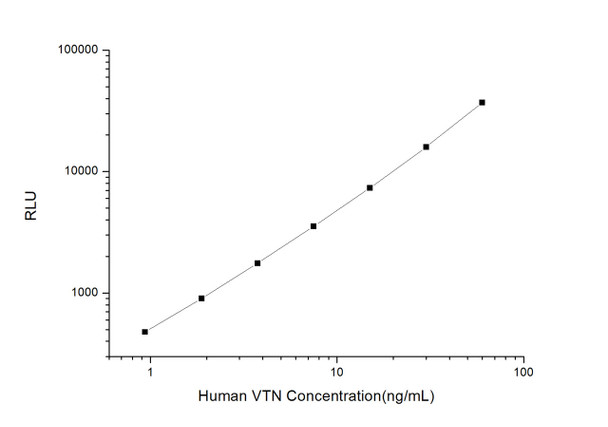
0.94-60 ng/mL
Reovery:
80%-120%
This kit uses a sandwich chemiluminescence immunoassay (CLIA) principle. The microplate is pre-coated with an antibody specific to the target protein. Standards or samples are added to the wells and bind to the immobilized antibody. A biotinylated detection antibody is then added, followed by HRP-conjugated streptavidin to form a sandwich complex. After washing to remove unbound components, a chemiluminescent substrate is added. The HRP enzyme catalyzes a light-emitting reaction. The intensity of the emitted light is directly proportional to the concentration of the target protein in the sample. The signal is measured using a luminometer, and the concentration of the analyte is calculated based on a standard curve.