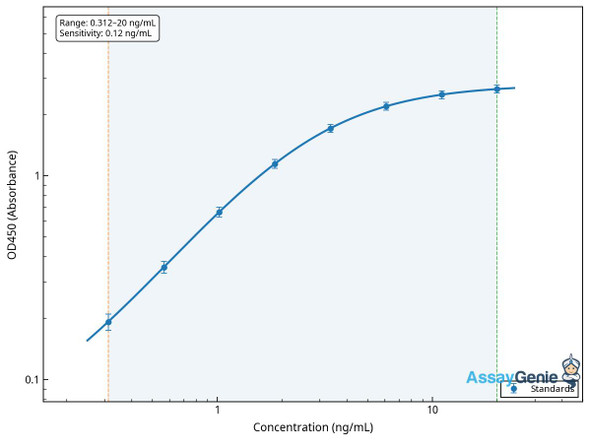
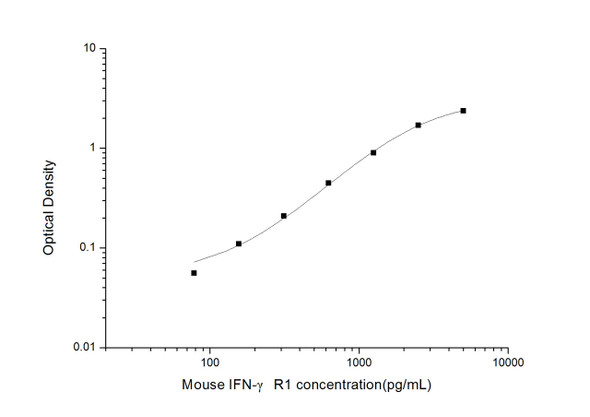
The Mouse IFN-gamma R1 (Interferon Gamma Receptor 1) ELISA Kit - High Sensitivity is a cutting-edge assay meticulously crafted for the precise and quantitative measurement of IFN-gamma R1 levels in various biological samples from mouse models. IFN-gamma R1 is a key receptor involved in mediating the effects of interferon-gamma, a pivotal cytokine with multifaceted roles in immune responses, inflammation, and anti-pathogen defense. By offering high sensitivity and specificity, this ELISA kit empowers researchers to delve into the intricate interactions of IFN-gamma R1 and its downstream signaling pathways, shedding light on its role in immune regulation, host defense mechanisms, and potential implications across different disease contexts. Accurate quantification of IFN-gamma R1 levels using this specialized kit serves as a crucial stepping stone in unraveling the complexity of immune responses and cytokine signaling cascades. Manufactured with stringent quality control measures by Assay Genie, the Mouse IFN-gamma R1 ELISA Kit - High Sensitivity ensures robust performance, reliable and reproducible results, and ease of use. Its exceptional sensitivity makes it an ideal choice for researchers seeking to explore the nuances of IFN-gamma R1 biology and its impact on immune modulation, inflammation, and disease pathogenesis in mouse models.
This ELISA kit uses the Sandwich-ELISA principle. The micro ELISA plate provided in this kit has been pre-coated with an antibody specific to the target protein. Standards or samples are added to the micro ELISA plate wells and bind to the immobilized antibody. A biotinylated detection antibody specific to the target protein is then added, followed by Avidin-Horseradish Peroxidase (HRP) conjugate. Free components are washed away. The substrate solution is added to each well, resulting in a color change. Only wells containing the target protein, detection antibody, and HRP conjugate will develop a blue color. The reaction is terminated by the addition of stop solution, resulting in a yellow color. The optical density (OD) is measured at 450 nm ± 2 nm. The OD value is directly proportional to the concentration of the target protein in the sample and is determined using a standard curve.