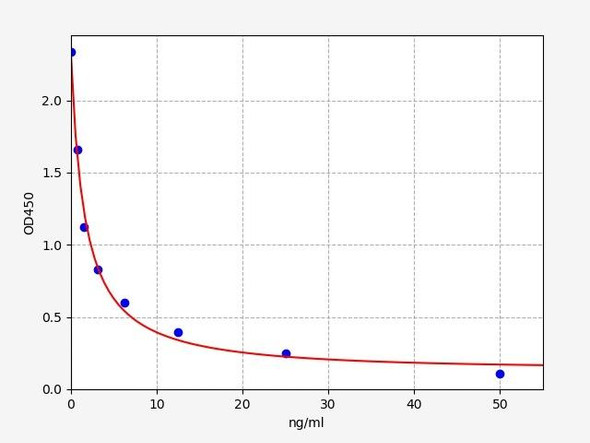
The E3 (Estriol) ELISA Kit is designed for the quantitative detection of Estriol (E3) levels in various biological samples. Estriol is a primary estrogen that is predominantly produced during pregnancy and plays a significant role in fetal development and maternal health. It is a crucial biomarker involved in a variety of cellular activities, including cell proliferation, differentiation, and apoptosis. Accurate measurement of E3 is necessary for understanding its involvement in pregnancy-related mechanisms, reproductive health, and for monitoring relevant therapeutic interventions. Assay Genie's E3 (Estriol) ELISA Kit offers exemplary sensitivity and specificity, ensuring reliable and reproducible results. Manufactured under stringent quality control standards, this kit provides robust performance and is easy to use, making it an excellent choice for both research and clinical applications. Trust Assay Genie's E3 (Estriol) ELISA Kit for precise and reliable detection of this crucial biomarker in your studies.
Product Name:
E3 (Estriol) ELISA Kit
SKU:
AEES00015
Size:
96 Assays
Detection Method:
Colorimetric method, ELISA, Competitive
Assay type:
Competitive-ELISA
Assay time:
2 h 30 min
Sensitivity:
3.7 pg/mL
Detection range:
7.81-500 pg/mL
Reovery:
80%-120%
This ELISA kit uses the Competitive-ELISA principle. The micro ELISA plate provided in this kit has been pre-coated with the target antigen. Standards or samples are added along with a biotinylated detection antibody. The target antigen present in the sample competes with the immobilized antigen for binding to the detection antibody. After incubation, Avidin-Horseradish Peroxidase (HRP) conjugate is added. Free components are washed away. The substrate solution is then added, resulting in a color change. The intensity of the color is inversely proportional to the concentration of the target antigen in the sample. The reaction is stopped by the addition of stop solution, and the color changes from blue to yellow. The optical density (OD) is measured at 450 nm ± 2 nm. The concentration of the target protein is calculated by comparing the OD values of the samples to the standard curve.