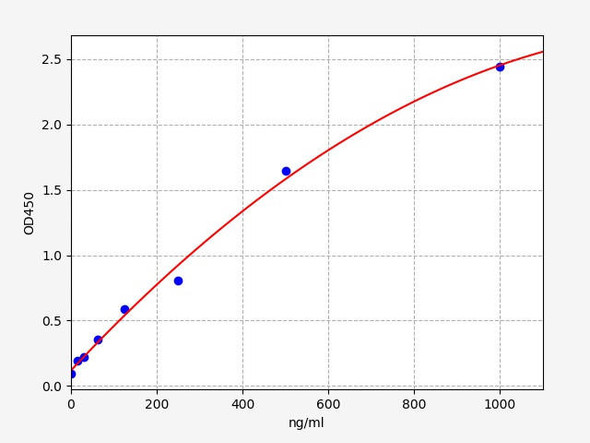
The Mouse ApoA1 (Apolipoprotein A1) ELISA Kit is meticulously crafted to enable the precise and sensitive quantification of Apolipoprotein A1 levels in various mouse biological samples. Apolipoprotein A1 is a major component of high-density lipoprotein (HDL) particles and plays a crucial role in lipid metabolism and cholesterol transport. As a fundamental factor in cardiovascular health, ApoA1 is involved in the reverse cholesterol transport pathway, contributing to the prevention of atherosclerosis and cardiovascular diseases. With exceptional sensitivity and specificity, our Mouse ApoA1 ELISA Kit from Assay Genie ensures accurate and reproducible results, essential for insightful investigations into lipid metabolism, cardiovascular health, and related disorders. Manufactured under stringent quality control measures, this kit delivers robust and reliable performance, offering researchers a user-friendly and efficient tool for exploring ApoA1-related mechanisms and potential therapeutic targets.
Product Name:
Mouse ApoA1 (Apolipoprotein A1) ELISA Kit
SKU:
AEES00211
Size:
96 Assays
Detection Method:
Colorimetric method, ELISA, Sandwich
Assay type:
Sandwich-ELISA
Assay time:
3 h 30 min
Sensitivity:
0.38 ng/mL
Detection range:
0.63-40 ng/mL
Reovery:
80%-120%
This ELISA kit uses the Sandwich-ELISA principle. The micro ELISA plate provided in this kit has been pre-coated with an antibody specific to the target protein. Standards or samples are added to the micro ELISA plate wells and bind to the immobilized antibody. A biotinylated detection antibody specific to the target protein is then added, followed by Avidin-Horseradish Peroxidase (HRP) conjugate. Free components are washed away. The substrate solution is added to each well, resulting in a color change. Only wells containing the target protein, detection antibody, and HRP conjugate will develop a blue color. The reaction is terminated by the addition of stop solution, resulting in a yellow color. The optical density (OD) is measured at 450 nm ± 2 nm. The OD value is directly proportional to the concentration of the target protein in the sample and is determined using a standard curve.