The Mouse Neurofilament, Light Polypeptide (NEFL) ELISA Kit is innovatively developed to facilitate the precise quantification of NEFL levels in mouse biological samples. NEFL, an essential component of the neuronal cytoskeleton, plays a critical role in neuronal function, axonal transport, and overall neuronal integrity. As a neurofilament protein, variations in NEFL levels can reflect neural damage, neurodegenerative processes, and neurological disorders, providing insights into neuronal health and pathology. This ELISA kit enables researchers to accurately measure NEFL levels, offering valuable information about neuronal injury, neurodegeneration, and neurodevelopment in mouse models. Quantitative assessment of NEFL can help unravel the underlying mechanisms of neurodegenerative diseases, monitor neural damage, and explore potential therapeutic interventions aimed at preserving neuronal function and health. With superior sensitivity and specificity, the Mouse NEFL ELISA Kit delivers reliable and reproducible results, empowering researchers to investigate neurofilament dynamics, neuronal disorders, and neuroprotective strategies with confidence. Manufactured under stringent quality control measures, this kit ensures robust performance and user-friendly operation, making it an indispensable tool for neuroscience research and preclinical investigations in mouse models.
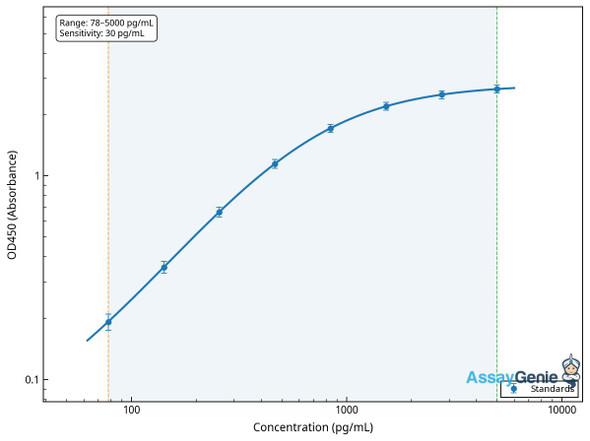
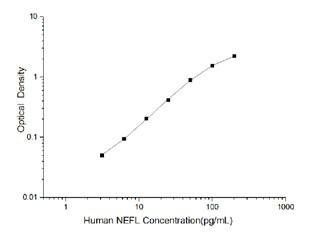
This ELISA kit uses the Sandwich-ELISA principle. The micro ELISA plate provided in this kit has been pre-coated with an antibody specific to the target protein. Standards or samples are added to the micro ELISA plate wells and bind to the immobilized antibody. A biotinylated detection antibody specific to the target protein is then added, followed by Avidin-Horseradish Peroxidase (HRP) conjugate. Free components are washed away. The substrate solution is added to each well, resulting in a color change. Only wells containing the target protein, detection antibody, and HRP conjugate will develop a blue color. The reaction is terminated by the addition of stop solution, resulting in a yellow color. The optical density (OD) is measured at 450 nm ± 2 nm. The OD value is directly proportional to the concentration of the target protein in the sample and is determined using a standard curve.