Description
| SKU: | RPCB2479 |
| Size: | 50 μg, 100 μg |
| Tag: | NO-Tag |
| Reactivity: | Human |
| Protein Description: | Long R3 IGF-1 (LR3 IGF-1) is a synthetic analog of IGF-1 that is generated by modifying the AA sequence for mature human IGF-1. These modifications include the substitution of an Arg for Glu at position three of the mature IGF-1 sequence and the addition of a thirteen aa N-terminal extension, which is derived from methionyl porcine Growth Hormone. These aa changes generate a protein that is still capable of binding to IGF-1 and Insulin receptors, but shows considerably lower affinity binding to IGFBPs compared to wild-type IGF-1. As a result, LR3 IGF-1 has an increased half-life and displays increased biological potency compared to IGF-1. |
| Endotoxin: | < 1 EU/μg of the protein by LAL method. |
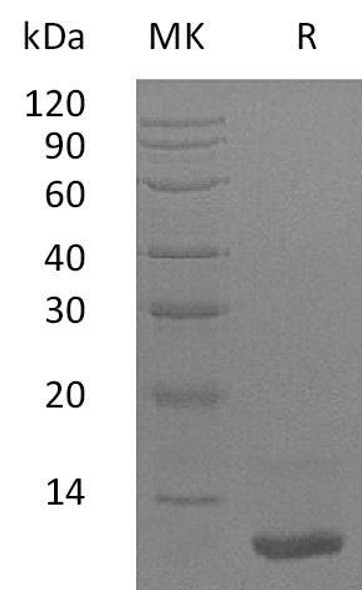
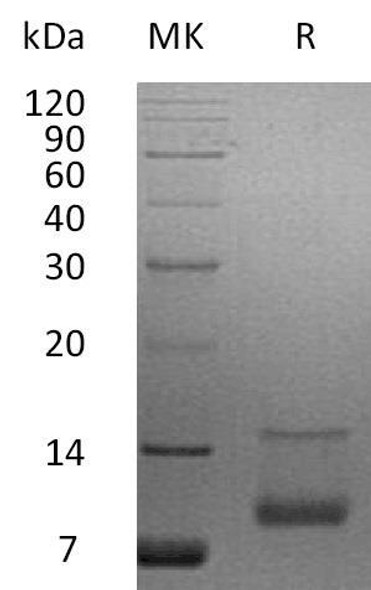
| Purity: | ≥ 95 % as determined by SDS-PAGE. |
| Formulation: | Lyophilized from a 0.2 μm filtered solution of PBS, pH 7.4. |
| Gene ID: | 3479 |
| Storage: | Store at -20℃.Store the lyophilized protein at -20℃ to -80 ℃ up to 1 year from the date of receipt. After reconstitution, the protein solution is stable at -20℃ for 3 months, at 2-8℃ for up to 1 week. |
| Reconstitution: | Centrifuge the vial before opening. Reconstitute to a concentration of 0.1-0.5 mg/mL in sterile distilled water. Avoid vortex or vigorously pipetting the protein. For long term storage, it is recommended to add a carrier protein or stablizer (e.g. 0.1% BSA, 5% HSA, 10% FBS or 5% Trehalose), and aliquot the reconstituted protein solution to minimize free-thaw cycles. |
| Swiss-Prot: | P05019 |
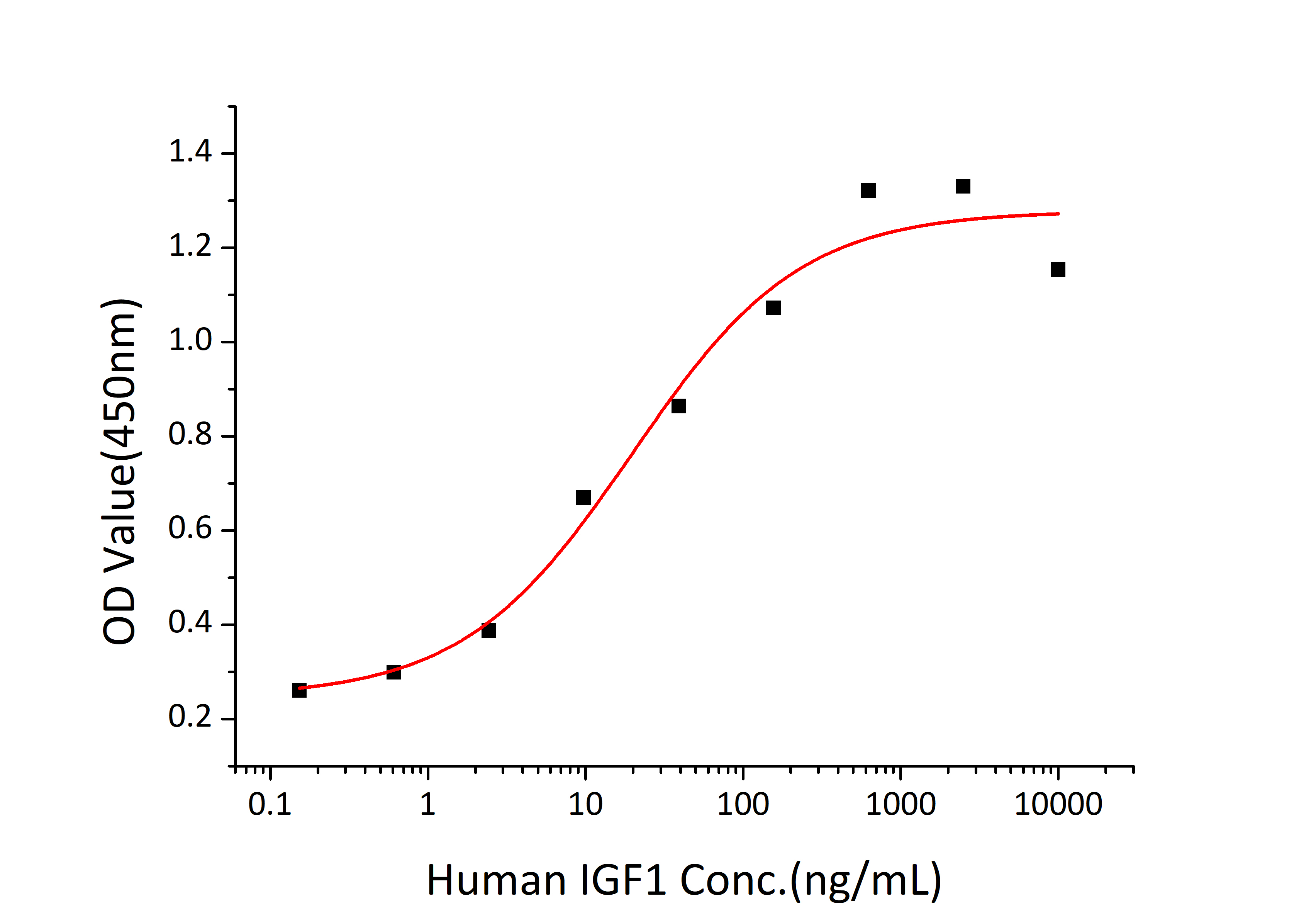 | Measured in a cell proliferation assay using FDC-P1 cells. The ED50 for this effect is 9. 85-39.4 ng/mL, corresponding to a specific activity of 2. 54×10 4~1. 01×10 5 units/mg. |