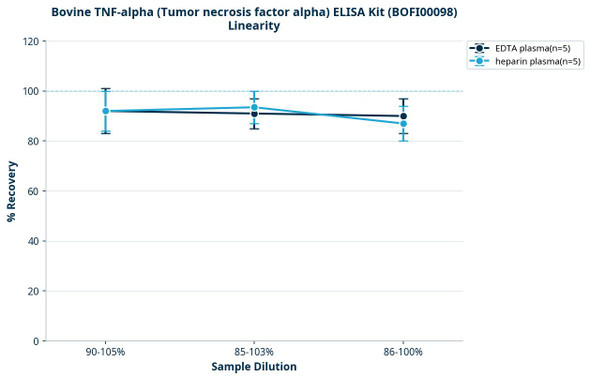
The Porcine TNF-α (Tumor Necrosis Factor Alpha) ELISA Kit is a specialized tool designed for the precise and quantitative detection of Tumor Necrosis Factor Alpha (TNF-α) levels in various biological samples obtained from porcine models. TNF-α is a pivotal pro-inflammatory cytokine that plays a crucial role in modulating cellular processes such as cell proliferation, differentiation, and programmed cell death. It serves as a key mediator in the body's immune response by regulating inflammatory reactions and has been associated with various inflammatory conditions, autoimmune disorders, and infections. Accurate measurement of TNF-α is essential for comprehending its involvement in disease mechanisms and for developing targeted therapeutic interventions. The Porcine TNF-α ELISA Kit offered by Assay Genie provides exceptional sensitivity and specificity, ensuring dependable and reproducible results. With manufacturing processes adhering to stringent quality control standards, this ELISA kit delivers robust performance that researchers can rely on for their investigations. Its user-friendly nature facilitates ease of use, making it a preferred choice for researchers engaged in porcine immunological studies and inflammatory research, allowing for comprehensive analysis of TNF-α dynamics and immune responses in porcine systems.
This ELISA kit uses the Sandwich-ELISA principle. The micro ELISA plate provided in this kit has been pre-coated with an antibody specific to the target protein. Standards or samples are added to the micro ELISA plate wells and bind to the immobilized antibody. A biotinylated detection antibody specific to the target protein is then added, followed by Avidin-Horseradish Peroxidase (HRP) conjugate. Free components are washed away. The substrate solution is added to each well, resulting in a color change. Only wells containing the target protein, detection antibody, and HRP conjugate will develop a blue color. The reaction is terminated by the addition of stop solution, resulting in a yellow color. The optical density (OD) is measured at 450 nm ± 2 nm. The OD value is directly proportional to the concentration of the target protein in the sample and is determined using a standard curve.