
Blog
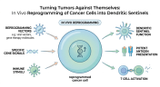
Turning Tumors Against Themselves: In Vivo Reprogramming of Cancer Cells into Dendritic Sentinels
Imagine a future where cancer cells, once masters of disguise, are forced to reveal themselves and even train the body's immune system to fight back. This isn't science fiction; it's the groundbreaking reality emerging from the latest advancements in cancer immunotherapy. Researchers are now exploring a revolutionary strategy: turning tumors against themselves by reprogramming their very cells into powerful immune sentinels.
Introduction
For decades, the fight against cancer has been a relentless pursuit, marked by both triumphs and formidable challenges. While traditional treatments like chemotherapy and radiation have saved countless lives, they often come with significant side effects an
…
3rd Apr 2026
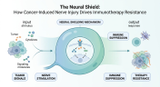
The Neural Shield: How Cancer-Induced Nerve Injury Drives Immunotherapy Resistance
For years, our understanding of cancer focused primarily on the tumor cells themselves and the immune system's response. However, a groundbreaking wave of research is revealing a startling truth: nerves, long considered mere conduits for pain or sensation, are actively co-opted by cancer to build a formidable 'neural shield,' driving resistance to even our most advanced immunotherapies. This paradigm shift is reshaping how we view the battle against cancer.
Introduction
Immunotherapy has revolutionized cancer treatment, offering unprecedented hope for many patients by harnessing the body's own immune system to fight malignant cells. Yet, a significant challenge remains: a substantial portio
…
29th Mar 2026
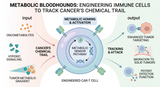
Metabolic Bloodhounds: Engineering Immune Cells to Track Cancer's Chemical Trail
Imagine a specialized squad of immune cells, meticulously trained and equipped, not just to fight cancer, but to sniff it out by its unique metabolic scent. This isn't science fiction; it's the groundbreaking reality emerging from cutting-edge immunology research. Scientists are now engineering these 'metabolic bloodhounds' to track down and eliminate tumors, offering a revolutionary new strategy in the relentless battle against cancer.
Introduction
For decades, the fight against cancer has been a complex dance between aggressive treatments and the elusive nature of tumor cells. While immunotherapies like CAR-T cell therapy have revolutionized the treatment of hematological malignancies, so
…
27th Mar 2026
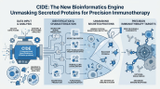
CIDE: The New Bioinformatics Engine Unmasking Secreted Proteins for Precision Immunotherapy
For decades, the battle against cancer has focused on the cellular 'soldiers' and the genetic 'blueprints' within them. Yet, a vast, invisible world of communication exists between these cells—a secret language of proteins released into the extracellular space. These secreted molecules often hold the key to why some patients respond to immunotherapy while others do not, but until now, mapping this complex 'secretome' has been an insurmountable challenge for modern oncology.
Introduction
The landscape of cancer treatment was forever changed by the advent of immunotherapy, yet the 'holy grail' of precision medicine remains elusive: the ability to predict with certainty which patient will bene
…
27th Mar 2026

IgG1 Plasma Cells: The Emerging Biomarker for Predicting Cancer Immunotherapy Success
In the relentless fight against cancer, immunotherapy has emerged as a beacon of hope, harnessing the body's own defenses to combat malignant cells. Yet, predicting which patients will respond to these groundbreaking treatments remains a critical challenge. Recent scientific breakthroughs are now pointing towards an unexpected ally in this quest: IgG1 plasma cells, revealing their potential as a powerful new biomarker to forecast the success of cancer immunotherapy.
Introduction
Immunotherapy, particularly immune checkpoint blockade (ICB), has revolutionized cancer treatment, offering durable responses for many patients. However, a significant portion of individuals do not benefit, undersco
…
24th Feb 2026
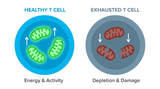
The Powerhouse of Immunity: How Mitochondrial Fitness Fuels the Fight Against Cancer
Why do powerful cancer immunotherapies work wonders for some patients but fail for others? The answer may lie not just in the cancer cells themselves, but in the energy levels of our own immune warriors. T cells, the elite soldiers of our immune system, often run out of steam in the hostile environment of a tumor, a phenomenon known as 'exhaustion.' But what if we could recharge their batteries? Emerging research reveals that the metabolic fitness of T cells—specifically the health of their mitochondria—is a critical battleground in the war on cancer, and scientists are now learning how to turn the tide.
Introduction
Our immune system is constantly on patrol, with CD8+ T cells acting as spec
…
5th Dec 2025
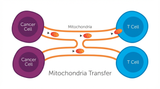
How Cancer Cells Hijack Immune Defenses Through Mitochondrial Transfer
Imagine a battlefield where the enemy doesn't just hide from soldiers—it actively sabotages their weapons. In the tumor microenvironment, cancer cells have evolved a devious strategy: they transfer their own damaged mitochondria to immune T cells, effectively poisoning the very defenders meant to destroy them. This groundbreaking discovery, published in Nature in 2025, reveals a previously unknown mechanism of immune evasion that helps explain why many cancers resist even the most advanced immunotherapies. Understanding this cellular sabotage could unlock new strategies to restore immune function and improve cancer treatment outcomes.
Introduction
The tumor microenvironment is a complex ecos
…
5th Dec 2025
Beyond Burnout: How T Cell Exhaustion Hijacks Cancer Immunity and What We Can Do About It
Imagine a highly trained soldier, elite and effective, sent to the front lines of a relentless war. Day after day, they fight without rest, their supplies dwindle, and the enemy never stops coming. Eventually, even the best soldier burns out. They stop fighting, not from a lack of will, but from sheer exhaustion. This is precisely what happens to our most powerful immune cells—T cells—in the fight against cancer. They become 'exhausted,' a state of cellular burnout that allows tumors to thrive. But what if we could wake them up? Recent breakthroughs are revealing not only how this exhaustion happens, but also how we can reverse it, offering new hope for patients who don't respond to current
…
4th Dec 2025
PD-L1 in Cancer Immunotherapy: Key Insights
PD-L1 in Cancer Immunotherapy: Insights from Recent ResearchRecent advancements in cancer immunotherapy have underscored the critical role of programmed death-ligand 1 (PD-L1) in mediating immune evasion by tumors. This article delves into how PD-L1 expression influences T-cell mediated immune evasion in cancer, contributing to improved biomarker targeting for immunotherapy. By exploring the molecular mechanisms, clinical implications, and future directions of PD-L1 research, we aim to provide a comprehensive understanding of its significance in the evolving landscape of cancer treatment.Introduction to PD-L1PD-L1, a protein expressed on the surface of various cells, plays a pivotal role in
…
21st Aug 2025
Enhancing PD-L1 Stability Through EZH2 Inhibition
Enhancing PD-L1 Stability: The Role of EZH2 InhibitionIn recent years, the role of PD-L1 (Programmed Death-Ligand 1) in cancer immunotherapy has garnered significant attention, particularly regarding its expression and stability. This study, led by Seán Mac Fhearraigh, PhD, investigates how inhibiting EZH2 (Enhancer of Zeste Homolog 2) enhances PD-L1 protein stability, with the deubiquitinase USP22 (ubiquitin-specific peptidase 22) identified as a key regulator in this process. The findings provide valuable insights into potential therapeutic strategies for improving cancer treatment outcomes.Study SummaryThe research highlights a novel interaction between EZH2 inhibition and PD-L1 expressio
…
1st Aug 2025
Key Players in T Cell Regulation: Lag-3, Tim-3, and TIGIT
Understanding Lag-3, Tim-3, and TIGIT: Key Players in T Cell RegulationThe immune system's ability to regulate T cell responses is crucial for maintaining homeostasis and combating diseases such as cancer and autoimmune disorders. Co-inhibitory receptors, including Lag-3, Tim-3, and TIGIT, play specialized roles in this regulation. This article explores their functions and potential as therapeutic targets in cancer treatment, drawing insights from recent research.Study SummaryRecent studies have highlighted the importance of co-inhibitory receptors in T cell regulation. Lag-3 (LAG3), Tim-3 (TIM3), and TIGIT (TIGIT) are integral to the immune checkpoint pathways that modulate T cell activatio
…
31st Jul 2025
PD-1 Blockade in B-Cell Lymphomas: A Comprehensive Overview
Understanding PD-1 Blockade in B-Cell Lymphomas
Understanding PD-1 Blockade in B-Cell Lymphomas
Introduction
The programmed cell death protein 1 (PD-1) and its ligand PD-L1 have emerged as pivotal players in the landscape of cancer immunotherapy, particularly in B-cell lymphomas. This article explores the role of PD-1 and PD-L1 in these malignancies, highlighting the potential of PD-1 blockade as a therapeutic strategy. We will review ongoing clinical trials and discuss the implications for patient treatment.
Study Summary
In recent years, the expression of PD-1 and PD-L1 has been extensively studied in B-cell lymph
…
21st Jul 2025