

Rat IL-6 ELISA Kit (RTFI00034) in Colon Carcinogenesis

Summary
Assay Genie's Rat IL-6 ELISA Kit (RTFI00034) is a double-antibody sandwich ELISA for rat interleukin-6. The citation record for Kattan et al. (2026) lists it as the IL-6 assay in a 10-week study of 1,2-dimethylhydrazine (DMH)-induced colon carcinogenesis in Wistar rats, comparing free honokiol (HNK) with liposomal honokiol nanoparticles (HNK-LNPs). IL-6 was one of the inflammatory mediators that DMH raised.
Key takeaways
- RTFI00034 is recorded as the IL-6 assay in a DMH colon carcinogenesis study in Wistar rats [1].
- The abstract reports that DMH raised IL-6 together with NF-κB, COX-2, TNF-α, IL-1β and nitric oxide.
- The article is subscription-only: sample type, preparation and IL-6 values were not accessible, and none are stated here.
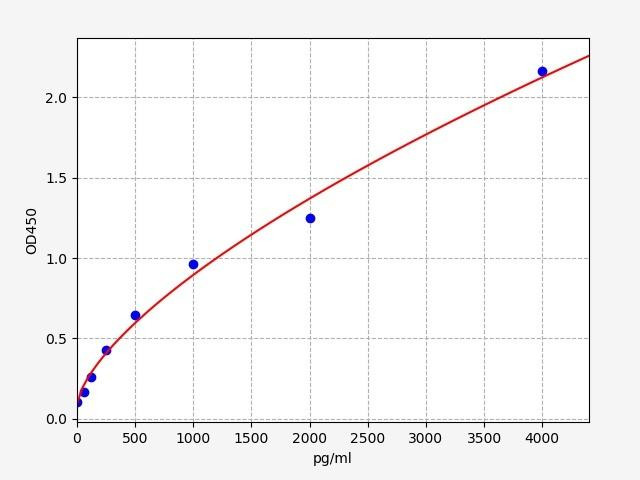
- The kit is a sandwich ELISA with a listed range of 62.5–4000 pg/mL.
Product cited in this study
Rat IL-6 ELISA Kit (RTFI00034)
Recorded as the IL-6 assay in a published DMH colon carcinogenesis study in Wistar rats.
View kit →At a glance
| Study | Model / species | Sample type | Product | What it measured | Key role in study |
|---|---|---|---|---|---|
| Kattan et al., 2026, Medical Oncology [1] | Wistar rats; DMH ± HNK or HNK-LNPs for 10 weeks; six groups of 10 | Methods detail not accessible (abstract only) | Rat IL-6 ELISA Kit (RTFI00034) | IL-6, within a panel with NF-κB, COX-2, TNF-α, IL-1β and nitric oxide | Inflammatory endpoint raised by DMH |
Why measure IL-6 in a DMH colon model?
IL-6 is a pleiotropic cytokine produced by macrophages, epithelial and stromal cells. Its transcription is driven largely by NF-κB p65, often downstream of TNF-α and IL-1β signalling. Secreted IL-6 binds the IL-6 receptor with the gp130 co-receptor (IL6ST), activating JAK kinases and STAT3.
In the colon, sustained IL-6/STAT3 signalling supports epithelial proliferation and resistance to apoptosis, which links chronic inflammation to tumour promotion. DMH is a colon-selective carcinogen used to model this process in rodents, so IL-6 is a routine endpoint when testing whether a compound limits inflammation in the DMH model. It is usually read alongside TNF-α, IL-1β and COX-2, and against Nrf2-regulated antioxidant markers.

How the product was used
Kattan et al. (2026): liposomal honokiol in DMH-induced colon carcinogenesis
Research question. Honokiol has anticancer activity but poor bioavailability and low aqueous solubility. The authors asked whether liposomal honokiol nanoparticles give stronger chemoprotection than free honokiol against DMH-induced colon carcinogenesis in Wistar rats [1].
Experimental design (from the abstract). Sixty rats were randomly allocated to six groups of ten: normal control, HNK, HNK-LNPs, DMH, DMH + HNK and DMH + HNK-LNPs. Treatments continued for 10 weeks. Endpoints covered serum tumour markers (AFP, CEA, CA19-9, CA125, CA15-3) and VEGF; oxidative stress (MDA, total antioxidant capacity, SOD, catalase, GPx) and NRF2/HO-1; inflammatory mediators; autophagy (LC3-II, Beclin-1); PI3K/AKT/mTOR/SREBP-1c with FASN and ACC1; apoptosis markers (BAX, caspase-3, TP53, BCL-2); and histopathology with ultrastructure.
Samples and assay workflow. The article is subscription-only and the full text was not accessible, so the sample in which IL-6 was measured (serum or colon tissue), dose and route of DMH and honokiol, sample preparation, dilutions and replicates are methods detail not accessible. The attribution of IL-6 to RTFI00034 rests on the catalogue number recorded for this paper in the citation record and on this paper's listing among the product page's citations.
How the readout supported the conclusion. The abstract reports that DMH “significantly increased inflammatory mediators, including NF-κB, COX-2, TNF-α, IL-6, IL-1β, and nitric oxide (NO)” [1]. IL-6 therefore served as one marker of the inflammatory state that accompanied DMH-induced carcinogenesis, alongside oxidative stress, suppressed NRF2/HO-1 signalling, disrupted autophagy, reduced apoptosis and activated lipogenic signalling.
Free honokiol partly reversed these changes, while HNK-LNPs gave substantially greater protection, including suppression of inflammatory and lipogenic signalling. The abstract does not give an IL-6-specific comparison between the two formulations, so this note claims no IL-6 value, fold change or formulation difference for IL-6. The authors concluded that liposomal delivery enhances honokiol's chemoprotective efficacy in this model [1].

Practical considerations for a rat IL-6 ELISA
These are general good-practice points and product-page information, not steps reported by the study. Follow the protocol supplied with your kit lot.
- Know the working range. The RTFI00034 product page gives a sensitivity of 37.5 pg/mL and a range of 62.5–4000 pg/mL. Pilot a dilution series so that control and DMH groups both fall on the standard curve.
- Match the matrix. The page lists serum, plasma, cell culture supernatant, cell or tissue lysate and other liquid samples. For tissue, it advises homogenising in PBS with protease inhibitors, centrifuging and collecting the supernatant.
- Normalise tissue values. Measure total protein in the same supernatant and report IL-6 per mg protein, so groups with different homogenate yields can be compared.
- Store and handle samples cold. Freeze aliquots at −80 °C, avoid repeated freeze–thaw cycles, and follow the lot-specific kit manual.
Measuring IL-6 in rat samples?
The Rat IL-6 ELISA Kit cited in this study is available from Assay Genie, with expert technical support.
View the Rat IL-6 ELISA Kit →Frequently asked questions
What samples does the Rat IL-6 ELISA Kit (RTFI00034) accept?
The product page lists serum, plasma, cell culture supernatant, cell or tissue lysate and other liquid samples, with a range of 62.5–4000 pg/mL and a sensitivity of 37.5 pg/mL. For tissue, homogenise in PBS with protease inhibitors and use the cleared supernatant. Validate any new matrix with spike-recovery and dilution-linearity checks.
Why is IL-6 measured in DMH colon cancer models?
DMH drives chronic colonic inflammation alongside carcinogenesis. IL-6, induced by NF-κB and signalling through gp130 to STAT3, promotes epithelial proliferation and survival, so it is a standard inflammatory endpoint. Kattan et al. (2026) reported that DMH raised IL-6 together with NF-κB, COX-2, TNF-α, IL-1β and nitric oxide.
Does liposomal honokiol lower IL-6 in rats?
Kattan et al. (2026) report that liposomal honokiol gave substantially greater protection than free honokiol in DMH-treated rats, including suppression of inflammatory signalling. The abstract does not give IL-6-specific results for each formulation, and the full text was not accessible, so no IL-6 value or between-formulation comparison is stated here.
How does a sandwich ELISA for rat IL-6 work?
A capture antibody coated on the plate binds IL-6 in the sample. A biotin-labelled detection antibody then binds a second epitope, HRP-streptavidin attaches to the biotin, and TMB substrate produces a colour read at 450 nm. Signal rises with IL-6 concentration, which is read from the standard curve.
References
- Kattan SW, Almars AI, Elmorsy EM, Al-Ghafari AB, Al Doghaither HA, Elwakeel EE, Alawam MK, Elshopakey GE. Liposomal honokiol attenuates dimethylhydrazine-induced colon carcinogenesis in rats through modulation of oxidative stress, inflammation, apoptosis, autophagy, and lipid metabolism pathways. Medical Oncology. 2026;43(8):215. doi:10.1007/s12032-026-03330-6.
Recent Posts
-
Rat IL-6 ELISA Kit (RTFI00034) in Colon Carcinogenesis
SummaryAssay Genie's Rat IL-6 ELISA Kit (RTFI00034) is a double-antibody sandwich ELISA for rat in …27th Nov 2026 -
Rat iNOS ELISA Kit (RTFI00088) in Toxic Organ Injury Models
SummaryAssay Genie's Rat iNOS/Nitric oxide synthase, inducible ELISA Kit (RTFI00088) is a sandwich …27th Nov 2026 -
Rat GSH ELISA Kit (RTEB1811) in Diabetes and Brain Research
SummaryAssay Genie's Rat Glutathione (GSH) ELISA Kit (RTEB1811) is a competitive ELISA that three …27th Nov 2026