
Blood Coagulation Signaling Pathways: A Critical Overview
Blood Coagulation Signaling Pathways: A Critical Overview
Blood coagulation is a tightly regulated cascade in which circulating clotting factors are sequentially activated to convert fibrinogen into a stable fibrin clot. This guide reviews the coagulation cascade, the extrinsic, intrinsic and common signalling pathways, the key factors and biomarkers involved, and the therapeutic strategies that target them.
Browse ELISA Kits →The Coagulation Cascade: An Overview
The coagulation cascade is traditionally divided into three pathways: the intrinsic, extrinsic, and common pathways. These pathways converge to activate Factor X (FX), which is crucial for converting prothrombin to thrombin. Thrombin then catalyzes the conversion of fibrinogen to fibrin, forming the stable clot.
The Intrinsic Pathway
Initiated by the activation of Factor XII (FXII) upon contact with negatively charged surfaces, the intrinsic pathway involves a series of activations leading to the activation of FX. This pathway is essential for amplifying the coagulation process.
The Extrinsic Pathway
The extrinsic pathway begins with tissue factor (TF) exposure following vascular injury. TF forms a complex with Factor VIIa (FVIIa), leading to the activation of FX. This pathway is the primary initiator of the coagulation cascade.
The Common Pathway
The common pathway starts with the activation of FX, leading to the generation of thrombin. Thrombin plays a pivotal role, not only by converting fibrinogen to fibrin but also by activating platelets and factors V, VIII, and XI, further amplifying the coagulation responses.
Assay Genie offers validated ELISA kits for key coagulation factors and haemostasis markers:

Human Tissue Factor ELISA Kit
Quantify tissue factor (Factor III), the initiator of the extrinsic coagulation pathway.
View product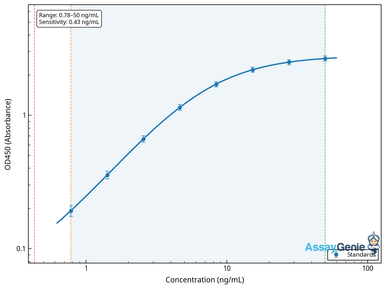
Human Prothrombin (F2) ELISA Kit
Measure prothrombin (Factor II), the circulating precursor of thrombin in the common pathway.
View product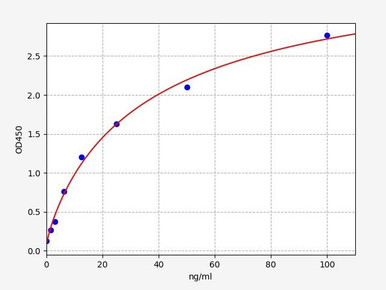
Human von Willebrand Factor ELISA Kit
Detect von Willebrand factor, essential for platelet adhesion in primary haemostasis.
View productIntrinsic, Extrinsic and Common Pathways
Coagulation proceeds through three interlinked routes that converge on a single common pathway. Understanding where each begins explains how the cascade is triggered by injury and how it is controlled therapeutically.
Extrinsic pathway
Triggered when vascular injury exposes tissue factor (Factor III) to the blood. Tissue factor forms a complex with Factor VIIa that rapidly activates Factor X, providing the initial, fast burst of thrombin generation.
Intrinsic pathway
Also called the contact-activation pathway, it begins with Factor XII and proceeds through Factors XI, IX and VIII. Although slower to initiate, it amplifies thrombin production and sustains clot formation.
Common pathway
Both routes converge on Factor X. Activated Factor Xa, with Factor Va, converts prothrombin (Factor II) into thrombin, which in turn cleaves fibrinogen into fibrin to form the stable clot.
Key Signaling Pathways in Coagulation
The Protein C Pathway
The protein C pathway serves as a critical anticoagulant mechanism, regulating the coagulation cascade. Activated protein C (APC), in conjunction with its cofactor protein S, degrades activated factors V and VIII, thereby inhibiting further thrombin formation.
The Tissue Factor Pathway Inhibitor (TFPI) System
TFPI directly inhibits the TF/FVIIa complex and FXa, providing a regulatory check on the extrinsic pathway. This system plays a significant role in modulating the initiation phase of coagulation.
The Role of Cellular Receptors
Cellular receptors, including glycoprotein VI (GPVI) on platelets and endothelial protein C receptor (EPCR) on endothelial cells, are essential for sensing injury and initiating coagulation or anticoagulation responses. GPVI is involved in platelet activation, while EPCR enhances the activation of protein C, promoting anticoagulation.
Therapeutic Implications
Understanding the signaling pathways in blood coagulation has significant implications for developing treatments for coagulation disorders. Anticoagulants, such as warfarin and direct oral anticoagulants (DOACs), target specific factors within these pathways to prevent thrombosis. Conversely, treatments aimed at enhancing coagulation are used in conditions with bleeding tendencies.
Frequently Asked Questions
What are the three coagulation pathways?
The extrinsic (tissue factor) pathway, the intrinsic (contact-activation) pathway, and the common pathway, where both converge on Factor X, thrombin and fibrin.
What is the role of thrombin in coagulation?
Thrombin converts soluble fibrinogen into insoluble fibrin, activates platelets, and amplifies the cascade by activating Factors V, VIII and XI.
How do anticoagulant drugs work?
They target specific steps — warfarin inhibits vitamin-K-dependent factor synthesis, heparin potentiates antithrombin, and direct oral anticoagulants inhibit thrombin or Factor Xa.
Which biomarkers are used to assess coagulation?
Prothrombin, tissue factor, von Willebrand factor, fibrinogen and D-dimer are commonly quantified to study haemostasis and thrombosis.
Conclusion
The signaling pathways involved in blood coagulation are intricate and highly regulated, ensuring a balance between bleeding and clotting. Advances in our understanding of these pathways not only elucidate the complex nature of hemostasis but also open avenues for targeted therapeutic interventions in coagulation disorders.
References
- Hoffman M, Monroe DM. A cell-based model of hemostasis. Thromb Haemost. 2001.
- Furie B, Furie BC. Mechanisms of thrombus formation. N Engl J Med. 2008.
- Esmon CT. The protein C pathway. Chest. 2003.
- Crawley JTB, Zanardelli S, Chion CK, Lane DA. The central role of thrombin in hemostasis. J Thromb Haemost. 2007.
- Mackman N, Tilley RE, Key NS. Role of the tissue factor pathway in hemostasis and thrombosis. Blood Cells Mol Dis. 2007.
- Griffin JH, Fernandez JA, Mosnier LO. Activated protein C. J Thromb Haemost. 2007.
- Versteeg HH, Heemskerk JWM, Levi M, Reitsma PH. New fundamentals in hemostasis. Physiol Rev. 2013.
- Coughlin SR. Thrombin signalling and protease-activated receptors. Nature. 2000.
Written by Tehreem Ali
Tehreem Ali completed her MS in Bioinformatics and conducted her research work at the IOMM lab at GCUF, Pakistan.
Tehreem Ali is a scientific contributor at Assay Genie, writing on cell signalling, haemostasis and molecular biology.
Related reading
Researching haemostasis & thrombosis?
From coagulation factor and D-dimer ELISA kits to validated antibodies, Assay Genie supplies the reagents behind haemostasis research — backed by expert technical support.
Browse ELISA Kits →Recent Posts
-
Techniciens/chercheurs : choisir plaque ELISA selon liaison et optique
Techniciens/chercheurs : choisir plaque ELISA selon liaison et optique Pour la plupart des ELISA co …9th Sep 2026 -
5 controles para validar anticuerpos para western blot en investigación
5 controles para validar anticuerpos para western blot en investigación Para un western blot fiable …9th Sep 2026 -
ELISA in 10 Minuten prüfen: Praxisleitfaden für Forschende mit Checkliste
ELISA in 10 Minuten prüfen: Praxisleitfaden für Forschende mit Checkliste Wenn Ihre ELISA-Platte ke …9th Sep 2026